
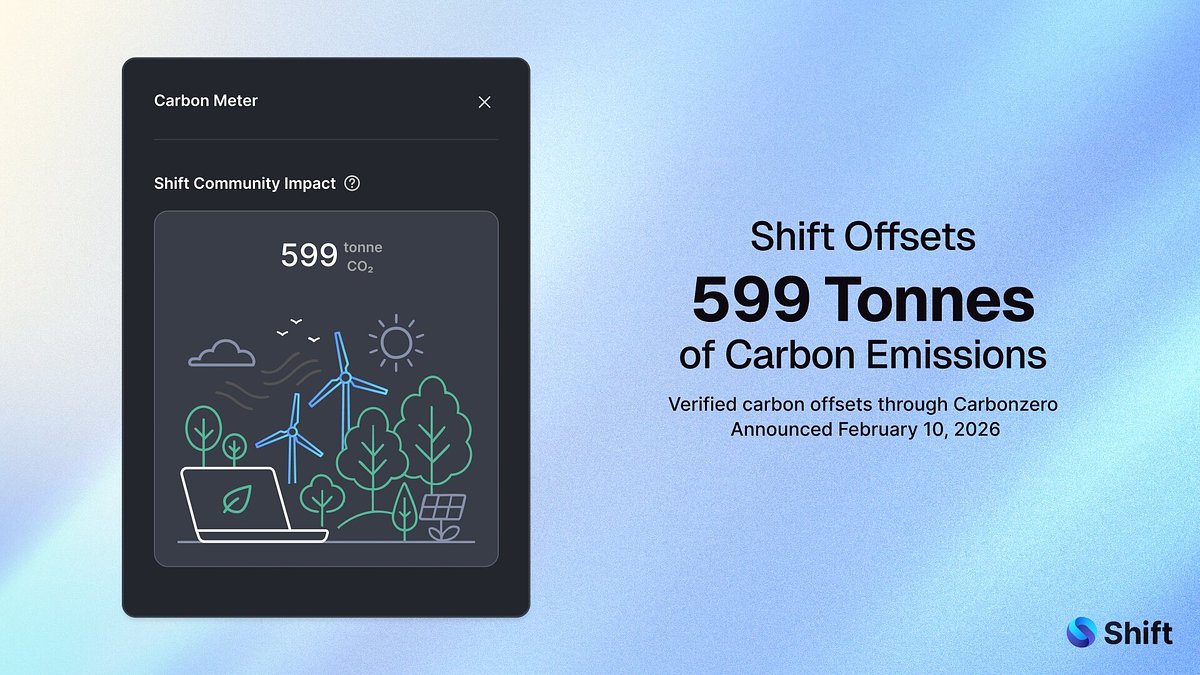
- 599 tonnes of carbon emissions offset by Shift Browser for its users in the second half of 2025.
- Two verified climate projects supported: Great Bear Rainforest (Canada) and Low-Carbon Cement Initiatives (U.S.).
- Certified B Corp status ensures Shift meets high sustainability standards.
Experts would likely view Shift Browser's initiative as a meaningful step toward transparency in digital carbon footprints, though they may caution that verified offsets should complement—not replace—direct emissions reductions.
Shift Browser Tackles Digital Carbon Footprint with Verified Offsets
VICTORIA, BC – February 10, 2026 – In an era where digital life is expanding exponentially, the hidden environmental cost of our clicks, streams, and searches is coming into focus. Tech company Shift is stepping into this conversation with a tangible response, announcing it has offset 599 tonnes of carbon emissions generated by its users in the last half of 2025. The move, facilitated by a new in-browser "Carbon Meter," signals a growing trend in the tech industry to make the environmental impact of software not only visible but actionable.
This initiative is part of a broader strategy that positions the company, known for its highly customizable browser aimed at power users, as a pioneer in what it calls "carbon-neutral browsing." By purchasing verified carbon credits, Shift is attempting to neutralize the footprint of its community's digital activity, turning an abstract concept into a measured and compensated reality.
Making the Invisible Visible
At the heart of Shift's user-facing effort is the Carbon Meter, a feature launched in July 2025. The tool is designed to give users a window into the environmental footprint associated with their daily digital workflows. While the internet feels ethereal, it runs on a massive physical infrastructure of servers, data centers, and network cables that consume vast amounts of electricity, much of it generated from fossil fuels.
The methodology behind the Carbon Meter was developed in partnership with Synergy Enterprises, a firm specializing in corporate climate action, and is aligned with the principles of the Sustainable Web Design Model (SWDM). This model advocates for practices that reduce the energy consumption of digital products, such as optimizing code, minimizing data transfer, and promoting efficient design. While not a single, rigid standard, the SWDM represents a collection of best practices gaining traction among environmentally conscious developers. Accurately calculating the carbon footprint of a single browsing session is notoriously complex, but by providing a visible metric, Shift aims to foster awareness and empower users to understand their digital impact.
This move places Shift in a nascent but growing market for sustainable digital tools. It competes for attention not just with major browsers but also with eco-focused services like the search engine Ecosia, which uses its ad revenue to fund tree-planting projects. Shift's approach is different, focusing on direct measurement and offsetting, giving users a sense of personal accountability for their specific browsing habits.
The Mechanics of a Meaningful Offset
The 599 tonnes of emissions offset by Shift represent the collective browsing activity of its user base over a six-month period. To translate this number into real-world impact, the company purchased verified carbon credits through Carbonzero, a provider that ensures projects are independently validated and deliver measurable emissions reductions.
The credits support two distinct North American climate projects. The first is the Great Bear Rainforest Project in British Columbia, Canada. This initiative, developed in collaboration with Coastal First Nations, protects one of the planet's largest intact temperate rainforests from logging. By preserving this critical carbon sink, the project not only sequesters CO2 but also directs revenue from the carbon offsets to support Indigenous communities, funding stewardship jobs and local development.
The second project tackles a less scenic but equally critical area: Low-Carbon Cement Initiatives in the United States. Cement production is one of the most carbon-intensive industrial sectors, responsible for an estimated 8% of global CO2 emissions. This project supports the use of supplementary materials that reduce the amount of clinker—the primary ingredient in traditional cement—needed in production, thereby cutting emissions at the source.
The legitimacy of such programs hinges on rigorous verification. Carbonzero utilizes standards from registries like Verra and Gold Standard to prevent double-counting and ensure "additionality"—that the emissions reductions would not have occurred without the carbon credit funding. However, the carbon market is not without its critics. Watchdog groups have raised concerns about the consistency and effectiveness of some offset projects, cautioning that they should not be seen as a substitute for direct emissions reductions. For Shift, the key is transparency and verification. "We believe in accountability: measuring our impact first, and then taking tangible, verified action," said Neil Henderson, CEO of Shift, in a statement.
Beyond Browsing: A Corporate Commitment
Shift's initiative extends beyond its user base, reflecting a deeper corporate-level commitment to sustainability that aims to counter claims of "greenwashing." The company is a Certified B Corp, a designation that requires businesses to meet high standards of social and environmental performance, accountability, and transparency, as verified by the non-profit B Lab. This certification legally obligates the company to consider the impact of its decisions on all stakeholders, not just shareholders.
Since 2023, Shift has been tracking its own corporate greenhouse gas (GHG) emissions, completing its second annual inventory in 2024. This inventory covers Scopes 1, 2, and 3 emissions—encompassing everything from office heating and electricity to business travel and the full value chain. The company has partnered with Carbonzero to offset these corporate emissions for both 2023 and 2024, demonstrating a consistent approach to its own operational footprint.
"Carbon neutrality for us isn't a one-time claim, it's an ongoing responsibility," Henderson added. This philosophy of "measure first, act second" appears to be the guiding principle, grounding their sustainability claims in a foundation of data and third-party validation provided by partners like Synergy Enterprises.
As our lives become increasingly intertwined with digital tools, the question of their environmental cost will only become more pressing. Initiatives like Shift's Carbon Meter represent a significant step in bringing this hidden impact to light. By combining user-facing tools with a comprehensive corporate strategy rooted in measurement and verified offsets, the company is making a case that technology can be a part of the solution, not just the problem, pioneering a model that other software companies may soon be compelled to follow.