
- $5 million gift from David Evans Shaw to fund UNE's new Public & Planetary Health Institute
- One Health principle applied to address interconnected public and environmental health challenges in Maine
- Partnership with Maine Public Health Association to create a statewide training pipeline for students
Experts would likely conclude that this initiative represents a significant step forward in addressing complex public and planetary health challenges through interdisciplinary collaboration and workforce development.
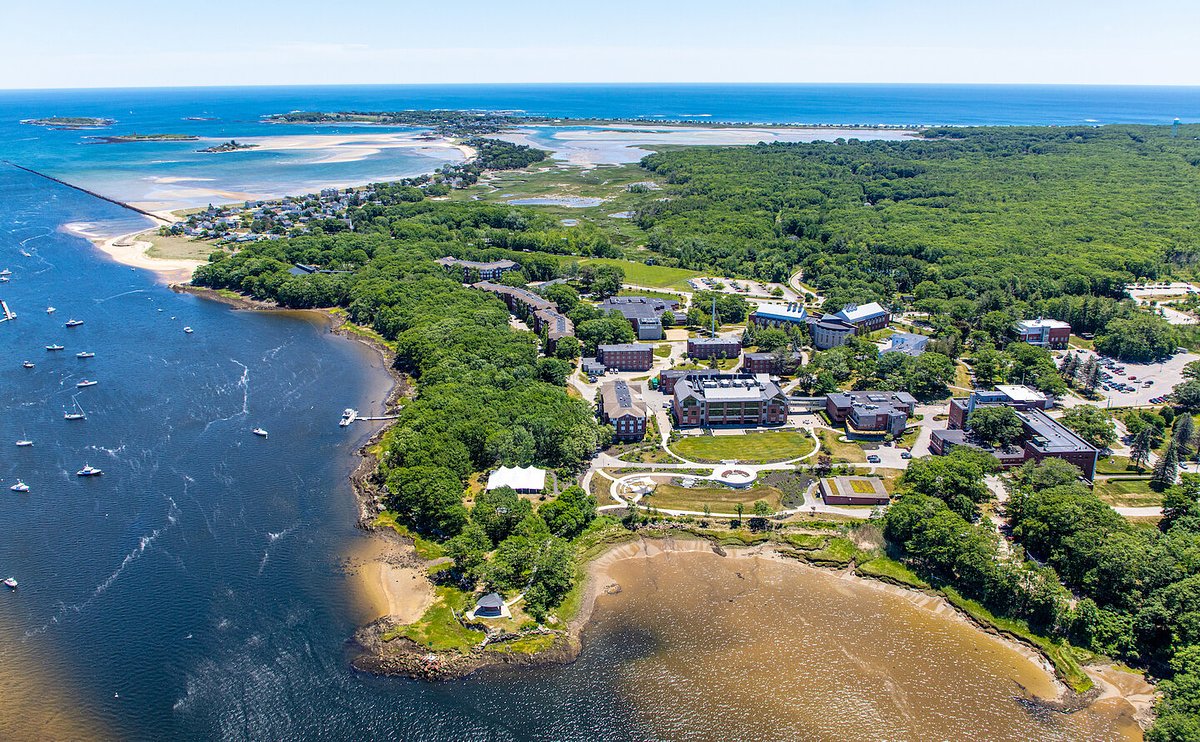
Shaw's $5M Gift Funds UNE's New Public & Planetary Health Institute
PORTLAND and BIDDEFORD, Maine – April 27, 2026 – The University of New England (UNE) today announced the establishment of the David Evans Shaw Institute of Public and Planetary Health, a major initiative funded by a $5 million gift from the renowned entrepreneur and philanthropist. The new institute aims to position UNE as a leader in addressing the deeply intertwined challenges of human and environmental well-being, creating a hub for research, innovation, and workforce development in Maine and beyond.
The announcement, timed with Earth Day, comes as communities grapple with the long-term effects of the COVID-19 pandemic and the accelerating impacts of climate change. The institute is designed to bridge disciplines and prepare a new generation of leaders capable of tackling these complex, interconnected issues.
A Legacy of Science-Based Innovation
The institute’s naming honors David Evans Shaw, a global figure whose career has been defined by translating scientific discovery into real-world solutions. Shaw is best known as the founder of IDEXX Laboratories, the Westbrook-based global leader in veterinary diagnostics he grew from a startup into a major corporation. His influence extends far beyond that single venture; as CEO of the investment group Black Point Group, he has co-founded or led numerous other science-based companies, including Vets First Choice (now Covetrus) and Ikaria Pharmaceuticals.
Shaw’s work reflects a philosophy of “impact investing,” where business innovation and public good are pursued in tandem. This ethos is visible in his extensive philanthropic and public service record, which includes founding the Sargasso Sea Alliance for ocean conservation, serving as a trustee for the National Park Foundation, and holding leadership roles at the American Association for the Advancement of Science (AAAS) and The Jackson Laboratory.
This $5 million gift deepens an existing relationship with the university. In 2021, Shaw established the Shaw Innovation Fellowship at UNE, a program designed to foster interdisciplinary problem-solving among students. The fellowship has already produced projects focused on climate change, maternal health systems, and public health disparities—efforts that serve as a direct precursor to the institute's broader mission. UNE awarded Shaw an honorary Doctor of Science in 2022 for his contributions to science and society.
“I’m grateful to be partnering with the University of New England on this pioneering effort to address challenges at the intersection of public and planetary health,” Shaw said. “The institute reflects two defining priorities of our time — and central themes of my career: improving quality of life and advancing wise stewardship of our natural world. By bringing together science, innovation, and multidisciplinary collaboration, we will catalyze high-impact solutions for people and the planet to shape a brighter future.”
Tackling Maine's Interconnected Crises
The Shaw Institute is built on the “One Health” principle, which recognizes that the health of people is inextricably linked to the health of animals and their shared environment. This approach is particularly relevant for Maine, a state facing a unique convergence of public health and environmental threats.
The Gulf of Maine is warming faster than 99% of the world's oceans, leading to dramatic ecosystem shifts and threatening the state’s iconic fishing industries. Rising sea levels already cause coastal erosion and groundwater contamination, while warming winters have led to a surge in tick-borne illnesses like Lyme disease, anaplasmosis, and the dangerous Powassan virus. Furthermore, longer pollen seasons are exacerbating allergies and asthma, for which Maine already has some of the nation's highest rates.
Public health challenges also include an aging population, high rates of chronic disease, and issues of healthcare access, particularly in rural areas. Many residents rely on private wells, over half of which contain elevated levels of naturally occurring arsenic, radon, or uranium. The Shaw Institute aims to bring a multidisciplinary lens to these problems, uniting expertise from UNE’s well-regarded programs in health sciences, marine and environmental science, political science, and sustainable business.
“The Shaw Institute of Public and Planetary Health reflects UNE’s leadership in bringing disciplines together to address the most pressing challenges facing our communities,” said Gwendolyn Mahon, UNE provost and acting director of the institute. “By uniting expertise across fields, we are preparing workforce-ready graduates who can turn knowledge into action and lead meaningful change across sectors in the service of healthier communities and a healthier planet.”
From Classroom to Community Workforce
A cornerstone of the institute's strategy is its direct connection to workforce development and community impact. This is exemplified by a new partnership established in 2026 that makes UNE the primary academic partner of the Maine Public Health Association (MPHA). This collaboration creates a statewide training pipeline, connecting students with the MPHA’s network of over 80 organizations, including hospitals, environmental groups, and community nonprofits.
Through this partnership, students from public health, business, marine science, and medicine will gain hands-on, team-based experience in advocacy, systems thinking, and solving real-world problems. The initiative is designed to directly strengthen Maine’s public health workforce, equipping graduates to immediately address local needs.
The institute builds on UNE’s commitment to experiential learning, preparing students to be “systems-level thinkers” who can collaborate across sectors. This model aligns with a growing global movement in higher education, where institutions like the University of California, Davis's One Health Institute and the Planetary Health Alliance at Harvard are pioneering similar interdisciplinary approaches.
UNE President James Herbert emphasized the transformative potential of the gift and the institute it creates.
“We are deeply grateful for David’s extraordinary generosity and vision,” Herbert stated. “His support ensures UNE can expand its leadership in research at the intersection of public and planetary health, while equipping graduates with the skills and perspective to enter the workforce ready to lead across disciplines and to strengthen communities here in Maine and beyond.”
By combining philanthropic vision, academic strength, and a direct link to community needs, the David Evans Shaw Institute is poised to not only advance critical research but also build a resilient and innovative workforce prepared for the complex health challenges of the 21st century.