
- 200+ volunteers mobilized during the 2025 Texas floods, contributing 3,000+ service hours.
- First-ever Disaster Response Vehicle (DRV) launched to reduce response times in critical first 72 hours post-disaster.
- Scalable pilot program planned for expansion to high-risk regions like Bay Area, Florida, and Houston.
Experts would likely conclude that Sewa International's Disaster Response Vehicle represents a strategic advancement in volunteer-based disaster relief, enhancing rapid deployment and coordination to bridge critical gaps in recovery efforts.
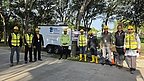
Sewa International Unveils Mobile Unit to Speed Up Disaster Relief
SAN ANTONIO, TX – May 19, 2026 – In a move designed to dramatically accelerate its emergency response capabilities, Sewa International has commissioned its first-ever Disaster Response Vehicle (DRV). The purpose-built trailer, unveiled during the organization's 20th National Conference at Aum Ashram on May 2, represents a significant strategic shift towards proactive, rapid-deployment aid in the critical hours following a disaster.
Adorned with the Sewa banner and its guiding motto, "Service to Humanity is Service to Divinity," the DRV is far more than a symbol. It is a mobile command center and a rolling arsenal of essential recovery tools, poised to reach any disaster zone in Texas within hours.
A New Blueprint for Rapid Response
The new Disaster Response Vehicle is engineered to address the immediate logistical challenges that often hamper volunteer efforts. Housed within the trailer is a comprehensive inventory of equipment critical for initial recovery operations, including personal protective equipment (PPE), shovels, mucking tools, safety vests, helmets, and thermal insulated jackets. Crucially, the unit is also equipped with solar-powered generators, providing a vital source of independent power in areas where infrastructure has been compromised.
This mobile asset is designed to serve as a nerve center for coordinating volunteers on the ground, a concept that Sewa leadership believes is fundamental to effective aid.
"The first 72 hours after a disaster are critical, making advance preparedness essential for an effective volunteer response," said Vinayak Astekar, Associate Director – Disaster Recovery for Sewa International, during the launch. "This fully equipped DRV will support volunteers serving as a mobile Sewa DR Control Center. While we hope it is never needed, staying prepared is vital."
The launch of the DRV marks a tactical evolution for the Hindu faith-based nonprofit, moving from a model of mobilizing volunteers after an event to having a pre-staged, highly mobile asset ready for immediate deployment. This shift is intended to reduce response times and increase the efficiency of its volunteer corps from the moment they arrive on site.
Forged in Floodwaters: The Lessons of 2025
The impetus for this strategic investment was born from direct and difficult experience. The organization's response to the devastating flash floods that swept through the Texas Hill Country on July 4, 2025, served as both a testament to its volunteers' dedication and a catalyst for change.
In the aftermath of the 2025 floods, Sewa mobilized a large-scale, multi-city effort. More than 200 volunteers from its San Antonio, Houston, Austin, and Dallas chapters converged on the affected region, contributing over 3,000 service hours. They worked in close coordination with the Texas Division of Emergency Management (TDEM) and Volunteer Organizations Active in Disaster (VOAD), engaging in grueling cleanup work that included mucking and gutting flooded homes, removing mold-damaged materials, and managing the logistics of aid distribution.
While the response was robust, the experience illuminated the need for a more streamlined, self-sufficient deployment system. The challenges of coordinating tools, supplies, and volunteer efforts across a wide area sparked an organization-wide discussion that culminated in the DRV initiative. The vehicle is the direct answer to the question of how to empower volunteers to be even more effective in future crises.
A Scalable Model for National Resilience
While San Antonio is the first Sewa chapter to field a DRV, the organization envisions this as the beginning of a nationwide network. The San Antonio unit is explicitly designed as a scalable pilot program, with plans to replicate the model in other high-risk regions, including the Bay Area, Florida, and Houston. This strategy aims to create a national web of localized, rapid-response assets, strengthening community resilience from the ground up.
The initiative has garnered strong support from local and state officials, who attended the unveiling ceremony. Texas State Senator Jose Menendez, a San Antonio resident, praised Sewa's two decades of service to underserved communities. Texas State Representative John Lujan also lauded the project's foresight.
"This is a fantastic initiative by Sewa," remarked Representative Lujan. "I encourage Sewa to continue working closely with local disaster response agencies."
This collaboration is key, as the DRV is not intended to operate in a vacuum. By working alongside government agencies and other non-profits, Sewa aims to integrate its volunteer force seamlessly into the broader emergency response framework, ensuring that efforts are complementary and not duplicative.
The Evolving Landscape of Volunteer Aid
Sewa International's DRV joins a sophisticated ecosystem of mobile disaster relief assets operated by various non-governmental organizations. Its unique focus on providing tools and a command structure for manual cleanup and recovery efforts carves out a distinct and valuable niche within this landscape.
Major players like the American Red Cross have long utilized their fleet of Emergency Response Vehicles (ERVs) to circulate through disaster zones, distributing food, water, and essential supplies. Similarly, The Salvation Army operates an impressive fleet in Texas alone, including 32 mobile kitchens, or "canteens," capable of serving thousands of meals per day, and advanced Rapid Response Units equipped with Starlink for critical communications in network-dead zones.
While these organizations excel at mass care, feeding, and sheltering, Sewa’s DRV is specifically tailored to empower the "second wave" of response: the volunteers who arrive ready to help residents muck out their homes and begin the arduous process of rebuilding. By providing the necessary tools, safety gear, and coordination on-site, the DRV enables these volunteers to work safely and efficiently, directly addressing a critical need that bridges the gap between immediate relief and long-term recovery.
The launch of this vehicle signifies more than just a new piece of equipment; it reflects a deeper understanding of the modern disaster response environment, where collaboration and specialized capabilities are paramount to effectively serving communities in their moment of greatest need.