
- 2023 Launch: Seller Ledger initially launched in March 2023 as an accounting solution for eBay sellers.
- Transaction Scale: The platform can handle transactions for multi-million-dollar Amazon sellers, matching payouts to bank deposits automatically.
- Pricing: Starts at $10 per month, with annual plans offering a full year of historical data.
Experts would likely conclude that Seller Ledger's direct integration tools offer a streamlined, all-in-one solution for Amazon sellers, addressing long-standing accounting challenges by eliminating the need for third-party connectors and simplifying tax reconciliation.
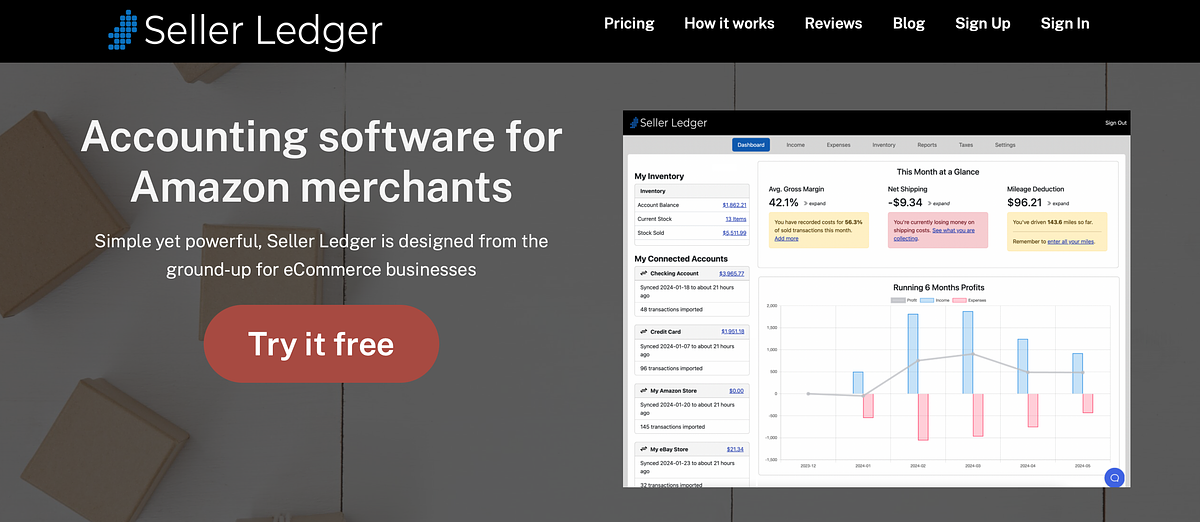
Seller Ledger Targets Amazon Accounting With New Direct Tools
INCLINE VILLAGE, Nev. – January 28, 2026 – For countless Amazon sellers, financial bookkeeping is a recurring nightmare of tangled spreadsheets, mismatched reports, and a confusing array of fees. The process of reconciling the platform's complex payouts with bank deposits has long been a source of frustration, spawning an entire industry of third-party software connectors designed to bridge the gap. Today, Seller Ledger, a company with roots in simplifying e-commerce finances, has launched a new suite of tools that aims to cut through the chaos by tackling Amazon's accounting challenges directly, promising a simpler, more accurate, and connector-free future for sellers.
Launched in March 2023, Seller Ledger initially carved out a niche as a reliable accounting solution for eBay sellers, particularly after the discontinuation of similar popular services. Now, the Nevada-based company is making a significant push into the Amazon marketplace, leveraging its modern technology stack to address pain points that have flummoxed sellers and traditional accounting platforms for years.
Tackling the Reconciliation Nightmare
The fundamental problem for Amazon sellers lies in the data's complexity and volume. A single payout from Amazon can represent thousands of individual transactions, each with its own set of associated costs, including sales tax, shipping fees, FBA fees, advertising costs, and returns. Traditional accounting software, built for a simpler invoice-and-payment world, often struggles to digest this granular detail, forcing sellers into a difficult choice.
"We can pull in every single transaction for a multi-million-dollar Amazon seller, roll them up to the correct Amazon payout, and automatically match it to the bank deposit," says Kevin Reeth, CEO and Founder of Seller Ledger. He explains that sellers have historically had to choose between summarized data that loses crucial detail, or an overwhelming amount of detailed data that bogs down their systems and is difficult to reconcile. Seller Ledger's approach is to embrace the detail.
According to Reeth, the platform's design allows users to click on any Amazon deposit and see a "mini-P&L for that payout," providing an immediate, clear breakdown of sales, expenses, and net profit for that specific period. This feature directly addresses the common struggle of deciphering Amazon's settlement reports, which can span different months and make traditional monthly bookkeeping a challenge.
Perhaps one of the most significant features is its ability to simplify tax time. Many sellers are caught off guard when their 1099-K form from Amazon shows a gross sales figure far higher than the amount deposited in their bank. This discrepancy arises because the 1099-K doesn't account for the numerous fees, refunds, and other expenses deducted before payout. Seller Ledger's software is designed to automatically categorize all imported sales and expense data, making it far easier to reconcile the 1099-K with actual net profit and prepare an accurate tax return.
A New Model in a Crowded Market
Seller Ledger's entry into the Amazon space challenges the established ecosystem of accounting solutions. For years, the standard practice for a growing Amazon business has been to use a general accounting platform like QuickBooks or Xero and then subscribe to a separate, third-party connector service, such as A2X, to translate Amazon's data into a digestible format. While effective, this multi-layered approach increases both cost and complexity, requiring businesses to manage multiple subscriptions and integrations.
By building a direct, custom integration with Amazon's API, Seller Ledger eliminates the need for this middle layer. The company, founded by some of the original team members behind the popular e-commerce tools Outright/GoDaddy Bookkeeping and TaxJar, is leveraging its deep industry experience to build a more streamlined solution. Their stated goal is to offer a single platform that handles the entire financial workflow, from transaction import to tax reporting, without forcing users to piece together a solution from multiple vendors.
This all-in-one model is a key differentiator. The platform not only pulls in sales data but also connects directly to bank and credit card accounts to track expenses, providing a complete financial picture. This integrated approach allows for powerful features like calculating the net profit on each individual Amazon order and tracking inventory and cost of goods sold (COGS) automatically, capabilities that are often difficult or manual in traditional setups.
Beyond Amazon: A Unified E-commerce Vision
While the new suite of tools is sharply focused on solving problems for Amazon sellers, Seller Ledger's ambition extends to the broader e-commerce landscape. The platform already offers direct integrations with other major marketplaces, including eBay, Shopify, and Walmart, positioning itself as a potential central hub for multi-channel sellers who need a unified view of their entire business.
This multi-channel capability is crucial for modern online entrepreneurs who often diversify their sales streams to mitigate risk and reach wider audiences. The ability to see consolidated financial reports and track profitability across different platforms in one place is a powerful value proposition. The software is built to scale, with pricing tiers designed to accommodate businesses from small startups with a few hundred transactions a month to established sellers processing over 20,000 transactions.
The company is making its platform accessible, offering a 30-day free trial without requiring a credit card. Pricing starts at an affordable $10 per month, with annual plans that provide customers with a full year of historical data, allowing a new user to immediately get their books in order for the previous tax year. While the service is currently limited to US-based businesses, the company has indicated that international expansion is on its roadmap.
By focusing on direct integration and building a platform specifically for the unique needs of online sellers, Seller Ledger is making a bold play to redefine e-commerce accounting. The market will be watching closely to see if this streamlined, all-in-one approach can deliver on its promise to finally bring clarity to the financial chaos many online entrepreneurs face.