
- $2.5 million philanthropic gift established the endowed chair
- Dr. Zhang's imaging systems reveal individual photoreceptor cells, neurons, and smallest blood vessels in the retina
- Endowment provides perpetual funding for long-term, high-risk research
Experts agree that Dr. Zhang's pioneering work in retinal imaging has the potential to revolutionize early diagnosis and prevention of devastating eye diseases, making him a deserving recipient of this prestigious endowment.
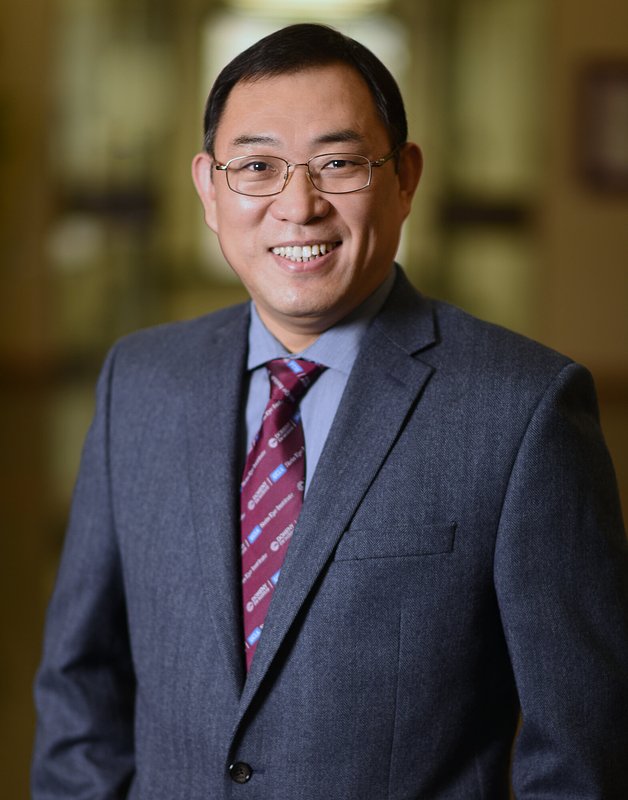
Seeing the Unseen: Dr. Zhang to Lead Vision Research at Doheny
PASADENA, CA – April 17, 2026 – In a move that fortifies its position at the vanguard of vision science, the Doheny Eye Institute has named Yuhua Zhang, PhD, as the inaugural chairholder of the Carolyn and Chuck Miller Endowed Chair for Vision Research. The prestigious appointment, backed by a significant philanthropic gift, recognizes Dr. Zhang's transformative work in retinal imaging and provides sustained support for his quest to see the invisible, cellular-level changes that herald the onset of blindness.
Dr. Zhang, a Professor of Ophthalmology at UCLA and a Principal Investigator at Doheny, is an internationally acclaimed leader in developing technologies that peer into the living eye with unprecedented clarity. This endowed chair not only honors his past achievements but also fuels his lab's ongoing mission to develop next-generation tools aimed at diagnosing devastating eye diseases earlier than ever thought possible.
“I am honored to receive the Carolyn and Chuck Miller Endowed Chair for Vision Research,” Dr. Zhang stated. “This position will further support the innovative technologies my lab is developing, which will help drive forward our understanding of the human eye and the diseases that lead to vision loss.”
A Revolution in Retinal Imaging
At the heart of Dr. Zhang's research is the challenge of overcoming the eye's own optical imperfections to visualize its most delicate structures. His multidisciplinary team engineers and builds sophisticated imaging systems that integrate multiple cutting-edge technologies, including adaptive optics (AO), scanning laser ophthalmoscopy (SLO), and optical coherence tomography (OCT).
Adaptive optics, a technology originally developed for astronomy to clarify images of distant stars, is repurposed in Dr. Zhang's lab to correct for the tiny aberrations in a patient's cornea and lens. This correction acts like a perfect pair of glasses for the imaging system itself, enabling it to capture images of the retina at a histologic level, revealing individual photoreceptor cells, neurons, and the smallest blood vessels in stunning detail. When combined with OCT and SLO, these systems produce three-dimensional, real-time views of the retina's intricate landscape.
The clinical implications are profound. These tools allow scientists to move beyond static snapshots of retinal structure and observe dynamic processes as they happen. Dr. Zhang's work on hemodynamics, for example, involves tracking the movement of individual red and white blood cells through retinal capillaries without the need for injectable dyes. This provides a direct window into the metabolic health and microvascular function of the eye, offering crucial clues into the progression of diseases like diabetic retinopathy, hypertension, and age-related macular degeneration (AMD).
“Dr. Zhang conducts pioneering work in developing imaging tools that scientists and ophthalmologists can utilize to see the eye with incredible resolution, diagnose disease earlier and support our understanding of the biological mechanisms that lead to vision loss,” said Deborah Ferrington, PhD, Chief Scientific Officer at Doheny. “His work supports the development of future therapies that could help prevent vision loss altogether. His impressive contributions to vision science make Dr. Zhang greatly deserving of the Carolyn and Chuck Miller Endowed Chair.”
A Visionary Legacy Fueled by Philanthropy
The establishment of the endowed chair was made possible by a $2.5 million gift from Carolyn Miller, a dedicated philanthropist and civic leader in the Pasadena community. The chair honors the legacy of her late husband, Charles D. Miller, the former Chairman and CEO of Avery Dennison, who lived with age-related macular degeneration. His personal experience with the progressive, sight-stealing disease underscored the urgent need for advancements in vision research.
Endowed chairs are the lifeblood of long-term academic research. Unlike a one-time grant, an endowment provides a perpetual source of funding, generating annual income that gives a top researcher the stability and flexibility to pursue ambitious, multi-year projects. This sustained support is critical for attracting and retaining world-class talent like Dr. Zhang and for undertaking the kind of high-risk, high-reward science that leads to true breakthroughs.
“Establishing this endowed chair continues the legacy of my husband, Charles Miller, who championed innovation and technology,” commented Carolyn Miller. “Supporting Doheny Eye Institute – and Dr. Zhang – in their continued efforts to make life-changing advancements... is something I am proud to contribute to.”
Pasadena's Innovation Nexus
The story of the Miller Chair is also deeply rooted in the history of Pasadena itself. In a poignant intersection of past and present, Doheny Eye Institute’s headquarters at 150 N. Orange Grove Blvd. is the very same campus that once served as the headquarters for Avery Dennison, the global Fortune 500 company Charles Miller led for decades. The building where he shaped a global enterprise is now a place where scientists are fighting the very disease that impacted his later years.
This connection transforms the endowment into a powerful symbol of Pasadena's evolution as an innovation hub, where a legacy of industrial leadership now fuels cutting-edge medical science. Carolyn Miller’s deep philanthropic engagement in the community, from supporting the Rose Bowl Legacy Foundation to championing the arts, further cements this story as one of local commitment with a global impact. The appointment of Dr. Zhang is the latest chapter in this narrative, connecting a family’s personal journey and a community’s industrial history to the future of medicine.
Dr. Zhang's own journey is a global one. Originally trained in precision instrument engineering in China, he honed his expertise at research institutions in New Zealand and Australia before coming to the United States, ultimately joining Doheny and UCLA in 2018. This international background gives him a unique perspective in building the complex, custom instrumentation required for his pioneering research.
The work conducted under the new chair aligns perfectly with the strategic priorities of the Doheny Eye Institute and its affiliate, the UCLA Stein Eye Institute. Both institutions are focused on tackling the most challenging eye diseases by advancing the frontiers of eye imaging, artificial intelligence, and biomarker discovery. Dr. Zhang’s focus on capturing cellular-level changes provides the raw, high-resolution data that is essential for training AI algorithms and discovering the earliest biological markers of disease, paving the way for a future where vision loss can be stopped before it even starts.