
- 3rd recall in recent years for Second Nature Brands
- 10-ounce pouches (UPC: 077034013405) affected, with 'Best if used by' date of 2/12/2027
- Undeclared allergens (cashews, pistachios, cherries) pose life-threatening risks for allergic consumers
Experts emphasize that this recall highlights systemic failures in allergen management, underscoring the critical need for stricter quality control and labeling accuracy to prevent life-threatening reactions.
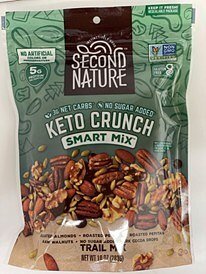
Second Nature Recall Exposes Gaps in Food Allergen Safety
MADISON HEIGHTS, MI – May 01, 2026 – Second Nature Brands has issued a nationwide voluntary recall for its popular Keto Crunch Smart Mix due to the presence of undeclared cashews, pistachios, and cherries, creating a significant risk for consumers with food allergies. This incident marks the third notable recall for the company in recent years, raising serious questions about its production and quality control processes.
The recall, initiated with the knowledge of the U.S. Food and Drug Administration (FDA), applies to 10-ounce pouches of the SECOND NATURE KETO CRUNCH SMART MIX™. The company stated that the issue stemmed from a "temporary breakdown in the company's production and packaging processes," which led to the wrong product being placed in packaging that did not list the correct allergens. For individuals with a severe allergy to tree nuts or cherries, consuming the mislabeled product could result in a serious or life-threatening reaction.
The Product and Immediate Risk
Consumers are urged to check their pantries for the affected product. The recall is specific to the 10-ounce pouch with the UPC 077034013405. The key identifier for the recalled batch is the "Best if used by" date of 2/12/2027, which is printed on the back of the package. The company has confirmed that packages with any other expiration date are not included in this recall.
The product was distributed across the United States through both brick-and-mortar retail stores and online sales channels, giving the recall a wide national scope. While Second Nature Brands has stated that no illnesses have been reported to date in connection with this specific issue, the potential for harm remains high.
Allergy experts emphasize that undeclared allergens are a leading cause of food-related anaphylaxis. "For someone with a severe tree nut allergy, even a small amount of cross-contact can trigger a reaction," noted a food safety advocate. "Accurate labeling isn't a suggestion; it's a critical lifeline for millions of Americans."
Consumers who have purchased the recalled product are advised not to consume it. Second Nature Brands is offering a full refund and has established a contact line for consumers at +1.800.651.7263, available on weekdays and weekends, or via email at [email protected].
A Pattern of Quality Control Lapses
While the company has framed the current problem as a "temporary breakdown," this recall does not appear to be an isolated incident. An examination of FDA records reveals a concerning history of quality control issues for Second Nature Brands.
In March 2023, the company recalled its Gluten Free Reese's Pieces Brownie Brittle because the product contained undeclared wheat. That incident, which was attributed to cross-contamination at a third-party manufacturing facility, resulted in at least one reported illness. The undeclared presence of wheat, a major allergen, put consumers with celiac disease or wheat allergies at risk.
Furthermore, the company also initiated a recall for its SELECT SANDERS® SEA SALT Caramels due to the potential presence of foreign material—specifically, flexible plastic bristles that could pose a choking or injury hazard. These repeated safety events, spanning undeclared allergens and foreign material contamination, suggest potential systemic weaknesses in the company's supply chain management and manufacturing oversight.
The High Stakes of Allergen Management
The Food Allergen Labeling and Consumer Protection Act (FALCPA) of 2004 mandates that food manufacturers clearly declare the presence of the eight (now nine, with the addition of sesame) major food allergens, which include tree nuts like cashews and pistachios. The law was enacted to prevent the exact scenario this recall addresses: the accidental ingestion of life-threatening allergens due to labeling errors.
A "temporary breakdown in production and packaging" can encompass a range of failures. These may include human error in loading packaging materials, improper cleaning of production lines between different product runs leading to cross-contamination, or a failure in the verification systems designed to match products with their correct labels. Modern food manufacturing facilities are expected to have robust Allergen Control Plans under the Food Safety Modernization Act (FSMA), which include stringent protocols for ingredient segregation, sanitation, and labeling verification to prevent such mistakes.
Industry standards call for dedicated equipment, color-coded tools, and specific production scheduling—for instance, running non-allergen products before allergen-containing ones—to minimize risk. A failure significant enough to result in a nationwide recall indicates a critical lapse in one or more of these preventative measures.
The Cost of Recalls and Eroding Trust
The immediate cost of a recall involves logistics, refunds, and lost product. However, the long-term damage to brand reputation and consumer trust is often far more significant. For a company that has faced multiple safety-related recalls, rebuilding public confidence is a monumental challenge.
According to a 2022 NielsenIQ survey, 68% of consumers reported they would stop purchasing from a brand after a food safety incident. In an era of heightened health consciousness and social media, news of a recall spreads rapidly, and consumers are quick to question a brand's commitment to their safety.
By initiating a voluntary recall and cooperating with the FDA, Second Nature Brands is following the standard protocol for crisis management. The company's press release expressed a commitment to safety and stated it is "taking immediate steps to correct the issue and prevent recurrence." However, for consumers with food allergies and their families, promises must be backed by a consistent, verifiable track record of safety, something that has now been called into question on multiple occasions. The path to regaining trust will require more than just words; it will demand a demonstrable overhaul of the processes that allowed these dangerous errors to occur.