
- 8 daily flights: SeaPort Airlines will launch a regional shuttle service with eight daily flights connecting Seattle’s Boeing Field (BFI) with Spokane’s Felts Field (SFF).
- 20-minute check-in: Passengers can check in just 20 minutes before departure, bypassing TSA screening.
- $299 one-way fares: The service will start at $299 one-way, targeting business travelers willing to pay a premium for convenience.
Experts would likely conclude that SeaPort Airlines' strategy of leveraging underutilized airports like Boeing Field and Felts Field offers a viable, high-convenience alternative to congested major hubs, particularly for business travelers prioritizing time savings over lower fares.
SeaPort Airlines Bets on Boeing Field to Bypass Sea-Tac Congestion
SEATTLE, WA – March 03, 2026 – For Pacific Northwest travelers weary of long security lines and airport gridlock, a new option is emerging from a historic Seattle airfield. Beginning March 9, SeaPort Airlines will launch a regional shuttle service with eight daily flights connecting Seattle’s Boeing Field (BFI) with Spokane’s Felts Field (SFF), a move the airline is betting will redefine short-haul travel by sidestepping the region’s congested primary hub, Seattle-Tacoma International Airport.
The re-launched carrier is positioning itself as a direct solution to what its CEO, Kent Craford, calls the frustrations of a “mega airport” that has outgrown the needs of regional commuters. The new service builds upon SeaPort’s existing schedule of up to 16 daily flights between Boeing Field and Portland.
“The Sea-Tac mega airport has outgrown short-hop travel in the Pacific Northwest. The solution is 100 years old, and it’s under our noses. It’s Boeing Field,” Craford said in the company's announcement. “As Alaska Airlines becomes a competitive global airline, SeaPort Airlines is ready to become the Pacific Northwest’s regional airline.”
The ‘Anti-Sea-Tac’ Proposition
SeaPort's central promise is a return to convenience. The airline’s model hinges on eliminating the most common pain points of modern air travel. Passengers are told they can check in just 20 minutes before departure, enjoy free parking steps from the terminal, and bypass the Transportation Security Administration (TSA) screening process altogether. This is possible because the airline operates its Pilatus PC-12 aircraft, which typically seat up to nine passengers, under a different classification than major commercial carriers.
This experience stands in stark contrast to the typical journey through Sea-Tac, where travelers are advised to arrive two to three hours early to navigate traffic, parking, and security lines that can stretch to 40 minutes or more during peak hours. SeaPort’s value proposition is not a lower ticket price, but the reclamation of time. The airline claims its service can get a traveler from downtown Seattle to downtown Spokane in under two hours.
“We’re bringing back fast, hassle-free travel,” Craford stated. “Our customers enjoy free parking and short, easy trips to downtown Seattle and Spokane. They also get to skip the unpredictable, endless TSA lines and frantic security screening… It beats Zoom by about 279 miles.”
Reviving Historic Fields for Modern Travel
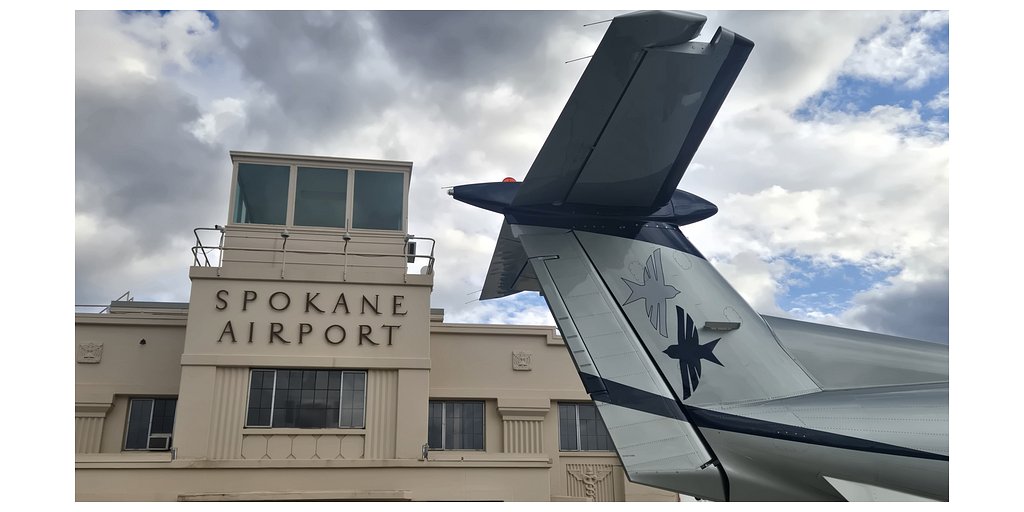
The airline’s strategy is intrinsically linked to its choice of airports. Rather than competing for slots at major hubs, SeaPort is revitalizing two of the region's most historic airfields for scheduled passenger service. Boeing Field, located just four miles south of downtown Seattle, is one of the nation's busiest general aviation airports and the historic cradle of Boeing’s commercial airliner production. Felts Field, five miles from downtown Spokane, served as the city’s primary commercial airport until after World War II, and its 1932 Art Deco terminal is a nod to the golden age of aviation.
Craford highlighted the appeal of these locations. “The big airlines have an unspoken pact to avoid Boeing Field... But we’re not a party to that deal, and neither are you. It’s time to stop reserving this amazing transportation asset for just the private jet-set and start making it available for everyone.”
This move aims to unlock the potential of underutilized infrastructure, challenging the notion that regional air travel must be routed through sprawling international hubs. For SeaPort, the charm and accessibility of these smaller airports are not just a novelty but a core part of the business model.
A Niche Strategy in a Competitive Sky
SeaPort’s Spokane expansion is a calculated gamble. The Seattle-Spokane air corridor is a competitive market, with carriers like Alaska Airlines and Southwest Airlines offering multiple daily flights from Sea-Tac to Spokane International Airport (GEG). While those airlines often feature one-way fares under $150 when booked in advance, SeaPort's service will start at $299 one-way, a price point the company compares to last-minute fares on legacy carriers.
The airline is betting that a segment of the market, particularly business travelers, will willingly pay a premium for significant time savings and reduced stress. This 'David vs. Goliath' strategy relies on creating a differentiated, high-convenience niche that larger airlines are not structured to serve.
The current SeaPort Airlines is itself a revival. Co-founder Kent Craford re-launched the brand in 2025 under the ownership of the Juneau-based Kalinin group, which also operates Alaska Seaplanes and Island Air Express. The original SeaPort, which Craford departed in 2009, declared bankruptcy in 2016 after an ill-fated expansion into government-subsidized markets. The new iteration is tightly focused on the specific needs of the Pacific Northwest’s private sector, aiming to avoid past mistakes.
Connecting the Northwest for Business
Testimonials from the airline's existing Portland-Seattle route suggest the model has found its audience. Marshal Burgess, Region President of iHeartMedia, praised the service as a “strategic advantage” for his business operations.
“Their reliable, comfortable service between Portland and Seattle allows me to move seamlessly between our markets, stay closely connected with our teams, and remain fully present for our clients,” Burgess said. “The ability to commute with such ease isn’t just a convenience—it’s a strategic advantage.”
SeaPort aims to replicate this success with its Spokane service, arguing that in an increasingly digital world, business is still “won in person.” By linking the region's economic centers more efficiently, the airline hopes to become an indispensable tool for regional commerce.
To encourage adoption, SeaPort is offering an introductory 32% discount on fares through April with a promo code honoring the 1932 Felts Field terminal. With this launch, the airline is not just adding a new route; it is posing a fundamental question about the future of regional travel in the Pacific Northwest.