
- 20 consecutive years: SDG&E has won the ReliabilityOne® Award for Outstanding Reliability Performance in the Western Region.
- 55% fewer outages: SDG&E experiences 55% fewer sustained outages than the typical U.S. investor-owned utility.
- 3.8 million drone images: Used to train AI models for automated inspections of equipment.
Experts agree that SDG&E’s sustained reliability is the result of long-term strategic planning, technological investment, and operational discipline, setting a benchmark for modern grid resilience.
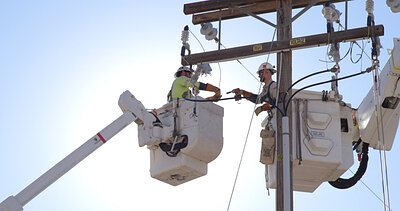
SDG&E’s 20-Year Win: A Blueprint for Strategic Grid Resilience
SAN DIEGO, CA – December 03, 2025 – San Diego Gas & Electric (SDG&E) was recently recognized for an unprecedented 20th consecutive year with the ReliabilityOne® Award for Outstanding Reliability Performance in the Western Region. While such an award is a significant corporate achievement, its true importance extends far beyond regional accolades. In an era defined by escalating climate threats, geopolitical instability, and digital vulnerability, the consistent, resilient performance of a region’s power grid is no longer a mere consumer convenience—it is a cornerstone of national security and economic stability. SDG&E’s two-decade run offers a compelling case study in the long-term strategic planning, technological investment, and operational discipline required to build and maintain this critical infrastructure.
A Legacy Built on Data and Discipline
To appreciate the magnitude of SDG&E's achievement, one must first understand the rigor behind the award. The ReliabilityOne® awards, bestowed by the global consultancy PA Consulting, are not participation trophies. They are grounded in a stringent, data-driven methodology that analyzes a utility's performance using standard industry metrics. Chief among these are the System Average Interruption Frequency Index (SAIFI), which measures how often the average customer experiences an outage, and the System Average Interruption Duration Index (SAIDI), which measures the total duration of those outages. Utilities that win this award consistently demonstrate fewer and shorter power interruptions than their peers.
According to PA Consulting, ReliabilityOne® participants experience, on average, 55% fewer sustained outages than the typical U.S. investor-owned utility. SDG&E’s 20-year dominance in the Western U.S. category signifies a sustained, quantifiable lead over its regional competitors. This is not the result of favorable weather or happenstance; it is the outcome of a deliberate, multi-decade strategy focused on infrastructure modernization and proactive maintenance. By consistently investing in replacing older underground cables, upgrading transmission systems, and deploying smart grid technologies, the utility has engineered a system designed for high performance. This long-term commitment stands in contrast to more reactive approaches, proving that sustained excellence in critical infrastructure is a matter of strategic choice and disciplined execution, not short-term fixes.
The Tech-Forward Arsenal of a Modern Grid
The true strategic depth of SDG&E's approach is revealed in its aggressive adoption of advanced technology, creating a defensive ecosystem for the grid that mirrors the sophistication of military and intelligence platforms. This is particularly evident in its world-class wildfire mitigation program, a critical necessity in drought-stricken Southern California. The utility operates a network of over 100 high-definition cameras, providing 360-degree, near-infrared views that enable rapid fire detection and assessment, day or night.
This surveillance network is augmented by a powerful suite of artificial intelligence and predictive analytics tools. The company leverages an AI-trained model to forecast the notoriously erratic Santa Ana winds and runs over 10 million virtual wildfire simulations daily to assess risk. Furthermore, a massive library of 3.8 million drone images of its equipment is used to train AI models for automated inspections, identifying potential hardware failures before they occur. This data flows into the Wildfire Next Generation System (WiNGS), a cloud-based situational awareness platform that integrates real-time weather, infrastructure data, and risk modeling to inform operational decisions. This fusion of sensors, data, and predictive AI creates a level of proactive threat intelligence that is fundamental to modern defense and is now being applied to protect civilian infrastructure.
Beyond wildfire mitigation, the grid itself is becoming intelligent and autonomous. The deployment of advanced sectionalizing devices allows the network to act like a self-healing organism. When a fault occurs—such as from a fallen tree branch—these automated switches can instantly isolate the damaged segment, rerouting power and confining the outage to the smallest possible area. This prevents localized incidents from cascading into widespread blackouts, a key element of grid resilience.
The Unseen Ledger: The High Cost of Resilience
A highly reliable, technologically advanced, and climate-resilient power grid is a strategic asset. However, this level of security and performance is not without significant cost, a reality reflected in the bills of SDG&E’s 3.4 million customers. The substantial investments in grid hardening, AI systems, and wildfire mitigation are funded through rate increases approved by the California Public Utilities Commission (CPUC). In its most recent General Rate Case for 2024-2027, the utility's approved budget translated into notable increases in typical residential bills for both electricity and gas.
This creates a fundamental tension for policymakers and the public: balancing the undeniable need for a secure and reliable grid against the equally pressing issue of energy affordability. As SDG&E President Scott Crider noted, "We're integrating new technologies and improving infrastructure while being mindful of how energy costs impact families and businesses." This balance is the central challenge of the modern utility sector. The investments are not discretionary; they are essential for adapting to climate change, preventing catastrophic wildfires, and preparing for a future of increased electrification. Yet, these costs place a direct burden on consumers in a region already known for its high cost of living, raising complex questions about equity and the value proposition of premium reliability.
Securing the Grid for the Next Fronts
Looking ahead, the challenges facing the energy grid are only set to intensify. The accelerating adoption of electric vehicles (EVs) will place unprecedented demand on local distribution networks, requiring massive infrastructure build-outs. SDG&E is already investing heavily in this transition with programs to install thousands of chargers, but managing this new load without compromising stability will require even smarter grid management.
Simultaneously, the threat of cyber-attack looms larger than ever. The electric grid is a prime target for state-sponsored actors and other malicious groups seeking to disrupt the nation's economy and security. Recognizing this, SDG&E has implemented a robust cybersecurity strategy for both its IT and Operational Technology (OT) systems, conforming to NIST standards and engaging in threat intelligence sharing with federal agencies and industry peers. Protecting the grid’s complex control systems from digital intrusion is as critical as hardening its physical poles and wires.
SDG&E's 20-year journey provides a powerful blueprint for what it takes to build and maintain a 21st-century strategic infrastructure asset. It is a story of sustained investment, aggressive technology adoption, and a forward-looking approach to emerging threats, from climate change to cyber warfare. As Derek HasBrouck of PA Consulting stated, leading utilities are embracing innovation to meet evolving expectations. For SDG&E, that has meant transforming a traditional power company into a technology-driven guardian of a region's operational backbone, a costly but vital endeavor in an increasingly uncertain world.