
- $12.7M Grant: Scripps Health received a $12.7 million grant from the California Institute for Regenerative Medicine (CIRM) to advance stem cell research for knee cartilage repair.
- 900,000 Annual Injuries: Approximately 900,000 Americans sustain knee cartilage injuries each year, often leading to chronic pain and limited mobility.
- 5-Year Research: The grant will fund five years of preclinical studies aimed at developing a biological implant to repair knee joints.
Experts view this research as a promising step toward transforming orthopedic medicine by offering a biologically compatible solution that could delay or eliminate the need for total joint replacement surgery.
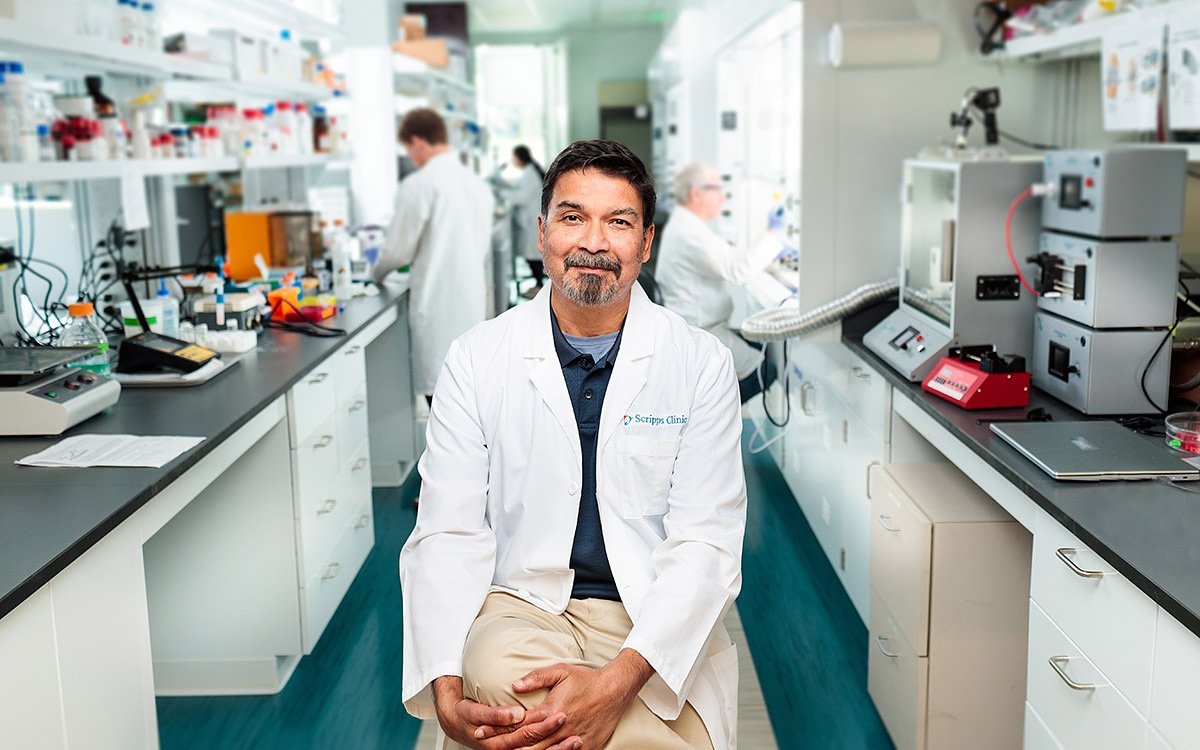
Scripps Health Awarded $12.7M to Grow Knee Cartilage from Stem Cells
SAN DIEGO, CA – April 13, 2026 – Scripps Health has received a major $12.7 million grant from the California Institute for Regenerative Medicine (CIRM) to advance groundbreaking research aimed at repairing debilitating knee injuries by growing new cartilage and bone from stem cells. The funding propels a novel approach that could transform orthopedic medicine, offering hope to hundreds of thousands of people who suffer from joint damage each year.
The research, led by investigators at the prestigious Shiley Center for Orthopaedic Research and Education (SCORE) at Scripps Clinic, will focus on a cutting-edge, “scaffold-free” tissue engineering technique. The five-year grant will support essential preclinical studies, with the ultimate goal of developing a biological implant that can be surgically placed to repair damaged knee joints, potentially delaying or even eliminating the need for total joint replacement surgery.
A New Answer to an Old Problem
For the approximately 900,000 Americans who sustain knee cartilage injuries annually, the path to recovery is often fraught with limitations. These injuries, which can result from sports, trauma, or daily wear-and-tear, frequently lead to chronic pain, reduced mobility, and can be a precursor to widespread osteoarthritis. The more than 200,000 surgical procedures performed each year to address these defects often fall short of a perfect cure.
Current treatments have significant drawbacks. Microfracture surgery, a common first-line procedure, encourages the growth of fibrocartilage, a scar-like tissue that is less durable and biomechanically inferior to the knee’s native hyaline cartilage. More advanced options, like Autologous Chondrocyte Implantation (ACI), require two separate surgeries and use the patient's own cartilage cells, which can be slow to grow and may not form ideal tissue.
For larger defects, surgeons may turn to osteochondral allografts—plugs of cartilage and bone from deceased donors. However, this solution is constrained by the limited availability of donor tissue, challenges with tissue preservation, and the risk of immune rejection.
“A biological implant that can successfully treat cartilage and bone defects of the knee would resolve the limited availability of donor graft tissue and has the potential to delay and eventually eliminate the need for joint replacement,” said Darryl D’Lima, M.D., Ph.D., director of orthopedic research at Scripps Health and the study’s lead investigator. The new research aims to create a readily available, biologically compatible solution that circumvents these long-standing challenges.
The Science of Building with Living Cells
The innovation at the heart of the Scripps research is its departure from conventional tissue engineering. Many existing methods embed cells into a synthetic or biological scaffold, which acts as a template for tissue growth. While useful, these scaffolds can sometimes interfere with healing, cause inflammation, or fail to integrate seamlessly with the patient's own tissue.
The Scripps team is pioneering a scaffold-free method. This technique, developed by Scripps senior staff scientist Shawn Grogan, Ph.D., involves coaxing mesenchymal stem cells—a specific type of stem cell known for its ability to form bone, cartilage, and fat—to cluster together into 3D structures called cellular spheroids. These living spheroids are then allowed to naturally fuse, assembling themselves into a solid piece of tissue that contains both cartilage and bone components, much like a developing embryo.
This method is designed to create tissue that more closely mimics the body's own developmental processes, resulting in an implant with superior potential for healing and integration. Early lab studies have already shown that these scaffold-free implants effectively repaired defects in osteoarthritic tissue samples. By eliminating the artificial scaffold, researchers hope to produce a more natural, durable, and biocompatible repair.
California’s Investment in a Regenerative Future
This significant grant is part of a larger, strategic investment by the state of California in the future of medicine. The funding comes from CIRM, a unique state agency established by voters in 2004 through Proposition 71 and re-funded with $5.5 billion in 2020 via Proposition 14. CIRM’s mission is to accelerate the development of stem cell therapies for patients with unmet medical needs, positioning California as a global leader in the field.
CIRM’s funding has been instrumental in driving high-risk, high-reward research from the laboratory bench to the patient’s bedside. The agency has funded over 100 clinical trials and helped build a robust biotechnology ecosystem in the state. The $12.7 million award to Scripps is a testament to the promise of its research and its alignment with CIRM’s goals.
This is not the first time CIRM has backed the orthopedic research at Scripps. The new grant builds on a foundation of previous awards, including a $3.1 million grant in 2009 to explore stem cells for osteoarthritis and a $7.6 million grant in 2015 for an earlier-generation cell therapy. This long-standing partnership underscores Scripps’s consistent track record of excellence and CIRM’s sustained commitment to finding a regenerative solution for joint disease.
The Path from Lab to Clinic
While the science is promising, a long and rigorous path lies ahead. The $12.7 million grant will fund the critical preclinical phase, where researchers will test the safety and efficacy of the scaffold-free implants in animal models. This data is essential for the next major milestone: submitting an Investigational New Drug (IND) application to the U.S. Food and Drug Administration (FDA), which the team plans to do within five years.
An approved IND would allow Scripps to initiate human clinical trials, a multi-phase process that is the final hurdle before a new therapy can become widely available. The grant funding also supports this forward planning, including the development of clinical trial protocols and work on the complex regulatory requirements. In line with CIRM’s mandate, the team will also develop a plan to ensure that if the therapy is successful, it will be accessible and affordable for patients.
The research is a highly collaborative effort, involving a team of scientists, surgeons, and regulatory experts. While the initial focus is on the knee, the underlying technology could one day be adapted to treat similar cartilage and bone injuries in other joints, such as the ankle, shoulder, and hip, opening the door to a new era of biological joint repair.
Topics & Related
Biotechnology
Medical Devices
Artificial Intelligence
Machine Learning
Corporate Finance
Related Company Pulse