
- Production Time Halved: Lab-grown gut tissues now mature in 14 days (previously 28 days).
- Size Increase: Organoids grow up to 8 cm in length (previously 1 cm).
- Functional Nerves: Organoids spontaneously develop their own enteric nervous system.
Experts view this breakthrough as a pivotal advancement in regenerative medicine, significantly improving the scalability, biological fidelity, and functional complexity of lab-grown gut tissues, with broad implications for disease modeling, drug testing, and future regenerative therapies.
Scientists Grow Human Gut with Nerves, Slashing Production Time in Half
CINCINNATI, OH – May 22, 2026 – In a major leap forward for regenerative medicine, researchers at Cincinnati Children's have developed a method to grow human gut tissues in the lab that are larger, more complex, and mature in about half the time of previous techniques. Most notably, these lab-grown organoids spontaneously develop their own functioning nervous system, a long-sought-after feature that dramatically increases their similarity to a real human gut.
The breakthrough, detailed today in the journal Nature Biomedical Engineering, centers on a novel “confined culture system.” This new platform not only accelerates the production of these miniature organs but also enhances their biological fidelity, opening new avenues for studying digestive diseases, testing drug safety, and one day, potentially repairing damaged organs.
For years, the promise of organoids—tiny, self-organized 3D tissues grown from stem cells—has been hampered by key limitations. Scientists have struggled to make them large enough, to produce them consistently at scale, and to replicate the intricate cellular ecosystems of a real organ, including the critical network of nerves. This new work directly addresses these central bottlenecks, marking a pivotal moment in the transition of organoid science from a niche research tool to a robust platform for translational medicine.
A New Blueprint for Building an Organoid
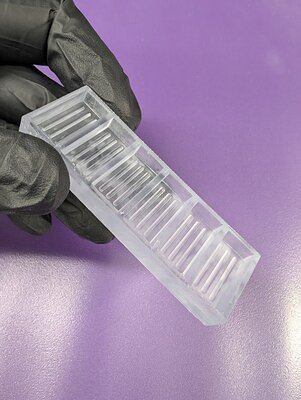
The innovation lies in an elegant fusion of biology and engineering. The team, led by Holly Poling, PhD, and senior author Maxime Mahe, PhD, designed special 3D-printed scaffolds—tray-like molds with narrow grooves. Inside these grooves, multiple organoid spheroids, the small starting clusters of stem cells, are physically confined. This confinement encourages the spheroids to fuse and elongate into a single, continuous tube-like structure that more closely mimics the architecture of the human intestine.
Using this method, the team successfully generated organoids for the small intestine, colon, and stomach. The results were dramatic. Tissues reached a stage of maturity in just 14 days, a process that previously took 28 days. Furthermore, the system enabled the growth of tissues up to 8 centimeters in length when transplanted into rodent models, a stark contrast to the 1-centimeter tissues generated with older protocols. All implanted tissues were successfully engrafted, demonstrating their viability.
"By reaching transplantation maturity twice as fast and developing their own functional nerves, these organoids demonstrate how engineering principles can drive biological innovation," said Poling in a statement. "Our confined culture system is more than a production method; it's a scalable, flexible platform for building complex human tissues."
This refined manufacturing process provides a more defined and controlled growth environment. According to Mahe, this allows the cells' own intrinsic self-organizing capabilities to take over, generating structures that are a closer match to the human gastrointestinal tract.
The 'Second Brain' in a Dish
Perhaps the most significant advance is the emergence of a fully integrated enteric nervous system within the organoids without any external prompting. The human gut is often called the “second brain” for its vast and complex network of neurons that control digestion, motility, and sensation. Replicating this has been a major challenge, with previous efforts requiring complex steps to co-culture nerve cells separately and introduce them into the organoid.
The Cincinnati Children’s system bypasses this entirely. The organoids spontaneously generate their own nerve cells, which then organize into a functional network. When transplanted, these tissues exhibited neuromuscular activity that resembled native human tissue. This is a game-changer for research into conditions where the gut-brain connection is key.
"The emergence of a self-organized nervous system within these organoids is particularly important for further studies of neurodevelopmental disorders," explained Jim Wells, PhD, a study co-author and chief scientific officer at the Center for Stem Cell & Organoid Medicine (CuSTOM) at Cincinnati Children's.
This built-in nervous system makes the organoids a much more powerful tool for modeling diseases like Hirschsprung’s disease, a congenital condition where nerve cells are missing from parts of the colon, or for studying the neurological components of common disorders like irritable bowel syndrome (IBS).
From Lab Bench to Pharmaceutical Pipeline
The ability to create larger, more consistent, and biologically complete human tissues faster has profound implications for the pharmaceutical industry. Drug development is a long and expensive process, with many promising compounds failing in late-stage trials due to unforeseen toxicity or lack of efficacy in humans. A significant reason for this is the inadequacy of preclinical models, which often rely on 2D cell cultures or animals that do not accurately predict human responses.
This new organoid platform offers a superior alternative. By providing a more realistic human model of the gut, it can be used to test how new drugs are absorbed, metabolized, and whether they cause gastrointestinal side effects. This could lead to safer, more effective medications and reduce the industry’s reliance on animal testing—a shift supported by recent legislative changes like the FDA Modernization Act 2.0.
With the global organoid market projected to grow exponentially, this technology arrives at a critical time. It provides the scalability and reproducibility needed for high-throughput drug screening, allowing pharmaceutical companies to test thousands of compounds quickly and efficiently on tissues that closely mimic their target population.
Paving the Way for Regenerative Medicine
While improved disease models and drug testing platforms are the most immediate applications, the long-term vision for this technology is even more ambitious: regenerative medicine. For patients with conditions like short bowel syndrome or severe inflammatory bowel disease (IBD), where large portions of the intestine are damaged or surgically removed, the prospect of using lab-grown tissue for repairs is a source of immense hope.
The work remains preclinical, and the authors caution that growing full-sized replacement organs is still far in the future. However, this advance represents a critical step toward that goal.
"We believe such tissues, once transplanted, would further grow and multiply as part of the patient's own organ to restore functions," said Michael Helmrath, MD, a co-author and co-director of CuSTOM. He noted that while more development is needed before human trials, the approach holds the potential to one day reduce the need for full-organ transplants for some gastrointestinal disorders.
As the technology matures, it will also force deeper engagement with the ethical considerations surrounding the creation of increasingly complex human tissues. Issues of consent, commercialization, and the moral status of these biological constructs will become more pressing. For now, however, the breakthrough from Cincinnati Children’s represents a powerful convergence of stem cell biology and bioengineering, bringing the future of personalized and regenerative medicine one step closer to reality.