
- Saudi Arabia's red meat self-sufficiency increased from 30% in 2020 to 60% today
- The domestic red-meat market is valued at over $1.36 billion in 2025
- The partnership aims to develop sustainable, locally grown feed ingredients in Saudi Arabia
Experts view this partnership as a strategic move to enhance Saudi Arabia's food security through both foreign investment and domestic innovation, reflecting a forward-thinking approach to global food supply challenges.
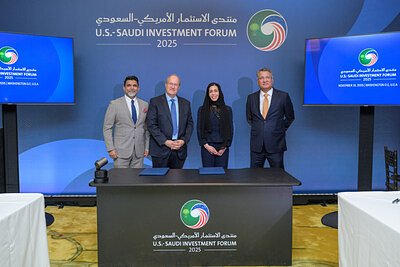
Saudi Arabia's Global Food Strategy: A Steak in the US Market
RIYADH, Saudi Arabia – November 26, 2025 – An agreement signed quietly at the recent US–Saudi Investment Forum in Washington, D.C., signals a profound shift in global food strategy. On the surface, the Memorandum of Understanding between Saudi Arabia's Tanmiah Food Company and the US-based venture capital firm Big Idea Ventures (BIV) is about investing in the American red-meat sector. But looking beyond the launch, this partnership is a masterclass in geopolitical foresight, a multi-pronged strategy to secure a nation's future by simultaneously acquiring foreign assets and cultivating domestic innovation.
The deal is far more than a simple cross-border acquisition play. It represents the nexus of Saudi Arabia’s ambitious Vision 2030, the complexities of the global food supply chain, and the cutting-edge of sustainable agriculture. For a nation acutely aware of its environmental constraints, securing the dinner table is becoming a matter of international investment and technological ingenuity.
The Vision 2030 Gambit: Securing the Kingdom's Table
At its core, this partnership is a direct manifestation of Saudi Arabia's Vision 2030, a sweeping national blueprint for economic diversification and reduced reliance on oil. A critical, though often overlooked, pillar of this vision is food security. For decades, the Kingdom has been heavily dependent on imports to feed its growing population. This new initiative aims to change that narrative, particularly in the red-meat sector.
The results of this focus are already tangible. Through concerted government support, subsidies, and private sector investment, Saudi Arabia has remarkably increased its self-sufficiency in red meat from approximately 30% in 2020 to nearly 60% today. The domestic market, valued at over $1.36 billion this year, is booming. However, leadership in the Kingdom understands that domestic production alone, in an arid country, has its limits. This is where the Tanmiah-BIV partnership becomes a strategic masterstroke.
By targeting equity stakes in established U.S. red-meat producers—including upstream assets like feedlots and breeding herds—Saudi Arabia is not just buying meat; it's buying stability. It’s a move to vertically integrate its supply chain across continents, insulating it from the price volatility and logistical disruptions that have plagued global markets. The choice of the US–Saudi Investment Forum as the venue for the announcement underscores the strategic weight of the deal, placing food security on par with other high-profile collaborations in energy, AI, and manufacturing.
Zulfiqar Hamadani, CEO of Tanmiah Food Company, framed the collaboration as a way to "build a stronger red-meat value chain" and "unlock long-term investment." This isn't just about importing American beef; it's about embedding Saudi capital and strategic interest directly into the heart of the world's largest fed-cattle industry.
A Cross-Border Shopping Spree: The Agri-Business M&A Play
The partnership pairs a powerful regional player with a savvy global guide. Tanmiah Food Company is a giant in the Middle Eastern poultry market, and its move into the U.S. red-meat sector represents a significant strategic expansion. However, navigating the intricate American agricultural landscape requires specialized expertise. This is the role of Big Idea Ventures.
BIV is not a traditional venture capital firm. With a sharp focus on food tech, alternative proteins, and sustainable agriculture, BIV brings more than just capital to the table; it brings a network and a deep understanding of the future of food. Its portfolio is filled with innovators in cellular agriculture, fermentation technology, and sustainable ingredients. The firm’s experience, particularly through its "Generation Food Rural Partners Fund" aimed at revitalizing rural U.S. economies, provides a unique advantage in identifying and vetting potential acquisition targets in the American heartland.
The stated goal is a "phased transaction approach," suggesting a careful, methodical acquisition strategy. This could involve taking minority stakes to learn the market before pursuing larger controlling interests in everything from cattle ranches to processing plants. As Andrew D. Ive, General Managing Partner of Big Idea Ventures, noted, the agreement allows them to "bring innovation, investment, and global best practice" to the Kingdom's food security agenda. For U.S. red-meat producers, this influx of foreign capital could provide opportunities for expansion, technological upgrades, and access to a stable, growing international market in the Middle East.
Cultivating Change: The Quest for Sustainable Feed
Perhaps the most forward-looking and impactful component of this partnership lies not in the U.S., but back in Saudi Arabia. The agreement dedicates significant focus to developing an "agricultural ecosystem dedicated to cultivating alternative sustainable, locally grown feed ingredients." This is the innovative core of the deal, addressing the Kingdom's primary agricultural vulnerability: its reliance on imported animal feed and its chronic water scarcity.
Traditional feedstocks like corn and soy are water-intensive and ill-suited for the Saudi climate. Importing them exposes the domestic poultry and dairy industries to the same supply chain risks the red-meat initiative seeks to mitigate. The solution is to innovate.
Here, BIV’s expertise in agritech becomes paramount. The future of feed in arid regions lies in technologies that BIV actively invests in: protein-rich insects like the black soldier fly, which can be farmed on organic waste; drought-resistant microalgae cultivated in closed-loop systems; and the upcycling of food processing byproducts into valuable animal nutrition. These methods use significantly less water and land than traditional crops and create a circular economy, turning waste into a resource.
As Tanmiah's Managing Director Zein Attar stated, the goal is to "drive scalable sustainable models" that create "long-term strategic value for the Kingdom's food system." By pioneering these new feed sources, Tanmiah can reduce production costs for its core poultry business, enhance its sustainability credentials, and create a model for resilient agriculture that could be replicated across the region. This dual strategy—securing today's supply chain abroad while inventing tomorrow's at home—is what truly sets this initiative apart. It’s a pragmatic acknowledgment that true food security cannot be fully imported; it must also be cultivated.
This collaboration is a telling indicator of how nations are rethinking sovereignty in the 21st century. It's no longer just about military strength or energy independence; it's about the resilience of the systems that sustain a population. Through this strategic foray into the American heartland and its parallel investment in homegrown innovation, Saudi Arabia is placing a bold, calculated bet on a more secure and sustainable future.