
- 8th design patent granted to Samson Sky for the Switchblade's tail fold and retraction mechanism.
- $500 million in potential future revenue from nearly 2,700 reservations.
- 0–60 mph in ~5 seconds and a top speed of 125 mph on the road, with a 500-mile range and 160 mph cruise speed in the air.
Experts view Samson Sky's patented design as a significant step toward making flying cars practical for everyday use, particularly due to its solutions for ground safety, insurability, and storage.
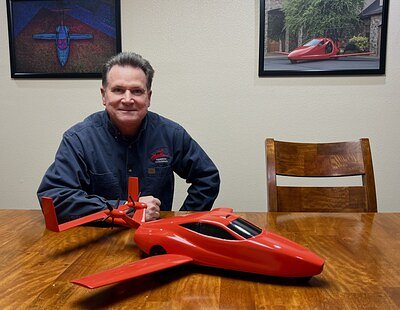
Samson Sky's New Patent Aims to Make the Flying Car an Everyday Reality
PRINEVILLE, OR – November 26, 2025 – For decades, the flying car has been a symbol of a perpetually just-out-of-reach future. Now, a crucial piece of intellectual property may have brought that future significantly closer to the average consumer's garage. Samson Sky, the developer of the Switchblade flying car, has been granted its eighth design patent, a move that addresses not the glamour of flight, but the practical, earthbound challenges that have long grounded the concept.
The patent, issued by the U.S. Patent and Trademark Office on November 19, 2025, specifically covers the Switchblade’s unique tail fold and retraction mechanism. This isn't just a minor engineering tweak; it's a foundational solution to the questions of ground safety, insurability, and storage. The design allows the vehicle's wings, tail, and propellers to retract completely into the car's body at the touch of a button, transforming it from a high-performance aircraft into a protected, road-ready vehicle in under three minutes.
From Sci-Fi Dream to Garage-Ready Reality
The true innovation of Samson Sky's newly patented system lies in its focus on the mundane realities of vehicle ownership. While competitors have developed concepts with folding wings, Samson Sky claims the Switchblade is unique in its ability to fully enclose and protect all of its flight surfaces while in drive mode. This seemingly simple feature has profound implications.
First, it solves the parking problem. By retracting its entire flight apparatus, the Switchblade can be parked in any standard single-car garage, eliminating the need for costly airport hangar rentals that would make ownership prohibitive for most. Second, it tackles a major safety and insurance concern: what happens to delicate, expensive wings and propellers in a crowded parking lot or during daily driving? By shielding these components, the design drastically reduces the risk of ground-based damage, a factor that company officials believe will make the vehicle significantly easier and cheaper to insure.
"We are the only flying car that can comply with this very important insurance requirement of protecting the flying surfaces while driving," stated Sam Bousfield, CEO of Samson Sky and designer of the Switchblade. "We are also the only flying car with high-performance in both driving and flying modes."
This dual high-performance capability is central to the Switchblade's appeal. On the road, the hybrid-electric vehicle is no slouch, boasting sports car acceleration from 0–60 mph in about five seconds and a top speed of 125 mph. In the air, it transforms into a capable aircraft with an estimated cruise speed of 160 mph and a range of up to 500 miles on a single tank of premium automotive gasoline, all while cruising at altitudes up to 13,000 feet.
Navigating the Competitive and Regulatory Skies
The personal air mobility market is no longer a fantasy. It's a fiercely competitive space with several players vying to be the first to achieve commercial success. The PAL-V Liberty, a Dutch three-wheeled gyroplane, and the KleinVision AirCar, which also features a transformative design, are both targeting a high-end market with price tags stretching from $400,000 to over $1 million. Meanwhile, eVTOL (electric vertical takeoff and landing) developers like Joby Aviation and Archer Aviation are focused on an urban air taxi model, bypassing the personal ownership and road-driving aspects entirely.
Samson Sky's strategy carves out a distinct niche. By pricing the Switchblade at an estimated $200,000 and focusing on a vehicle that excels in both its functions, the company is targeting a broader base of private pilots and automotive enthusiasts. The patented full-enclosure system is its key market differentiator, positioning the Switchblade not as a novelty, but as a pragmatic tool for personal transportation.
However, bringing such a vehicle to market requires navigating a complex dual regulatory environment. For flight, the Switchblade is designed to be registered under the FAA's Experimental Category. This requires the owner to build at least 51% of the vehicle themselves—a daunting task for most. To overcome this, Samson Sky has developed a Builder Assist Program, where owners can travel to a company facility and complete their portion of the build in about a week using automated, computer-guided systems. On the ground, the vehicle will be registered as a custom car or motorcycle, depending on state laws.
The High-Stakes Game of Patents and Premiums
In the nascent flying car industry, intellectual property is more than just a certificate on the wall; it's a critical strategic asset. This eighth patent strengthens Samson Sky's competitive moat, protecting a design feature that directly addresses a major industry-wide pain point. As the market matures, a robust patent portfolio could prove decisive in attracting investment and securing market leadership.
Perhaps the most significant hurdle the patent helps to clear is insurance. The insurance industry has struggled to model risk for a hybrid vehicle that operates under both automotive and aviation rules. Experts have projected that owners will initially need two separate, expensive policies, with aviation coverage alone potentially costing tens of thousands of dollars annually due to the lack of historical data.
Samson Sky's design directly confronts this challenge. By protecting its most vulnerable and expensive components during ground operations—where most minor accidents occur—the Switchblade presents a lower risk profile to underwriters. The company is already in negotiations with insurance providers, leveraging its patented safety features to pioneer a more integrated and affordable insurance solution for future owners. This proactive approach to risk management is a crucial step in transforming the flying car from a high-risk curiosity into a viable, insurable asset.
The Road to Production: From Reservations to Reality
With a successful first flight completed in November 2023 and a growing list of nearly 2,700 reservations from over 50 countries, Samson Sky has demonstrated significant market interest, representing over $500 million in potential future revenue. These reservations, secured with a modest $500 non-refundable deposit for a priority position, signal a strong desire for a practical flying car solution.
The company is now focused on the final, intensive push toward production. Having raised over $10 million through various funding rounds, including crowdfunding and accredited investor offerings, Samson Sky is now building three new test vehicles. These vehicles will undergo rigorous testing over the next 18 months to finalize production engineering and validate a new manufacturing process that promises to cut carbon fiber part costs in half and dramatically increase production speed.
With initial deliveries anticipated for 2026 and financing partnerships already in place to assist buyers, Samson Sky is methodically laying the groundwork for a full-scale commercial launch. The company's journey highlights a critical truth of modern innovation: the most transformative technology isn't always the one that flies the highest or fastest, but the one that solves the practical problems preventing it from landing in driveways around the world. The coming months of testing will determine if the Switchblade's patented design can truly deliver on its promise to finally bridge the gap between the highway and the sky.