
- 27% of treated eyes demonstrated a clinically meaningful gain of more than five letters on an eye chart in Phase I/IIa trial.
- 80% of untreated eyes lost more than five letters of vision, compared to 47% of treated eyes.
- $12.4 million grant awarded by the California Institute for Regenerative Medicine to support Phase IIb trial.
Experts view RPT's stem cell implant as a groundbreaking approach with the potential to restore lost vision in geographic atrophy, offering a paradigm shift from current treatments that only slow disease progression.
RPT's Stem Cell Implant: A Growth Signal in the Fight for Sight
MENLO PARK, CA – December 09, 2025 – In the high-stakes world of biotechnology, a true growth signal is more than just a funding announcement; it's a tangible step toward disrupting a market by addressing a profound unmet need. Regenerative Patch Technologies (RPT) has just sent such a signal by treating the first two patients in its Phase IIb clinical trial for a novel cell-based implant. The study, dubbed PATCH AMD, assesses a therapy designed to combat geographic atrophy (GA), the advanced form of dry age-related macular degeneration (AMD) and a leading cause of irreversible blindness in adults over 65.
This milestone is not just a procedural step in a long clinical journey. It represents a potential paradigm shift. While the industry has recently celebrated new drugs that can slow the disease's relentless march, RPT's CPCB-RPE1 implant is being developed with a far more ambitious goal: to improve, and possibly restore, vision that has already been lost. For millions of patients, and the investors watching the ophthalmology space, this trial is a critical test of a technology that could redefine the standard of care.
A New Therapeutic Horizon
Geographic atrophy is a devastating condition, methodically destroying the central vision necessary for reading, driving, and recognizing faces. For decades, patients had no therapeutic options. The landscape finally shifted in 2023 with the landmark FDA approvals of two drugs, Pegcetacoplan (Syfovre®) and Avacincaptad pegol (Izervay™). Both function as complement inhibitors, targeting an overactive immune pathway implicated in retinal cell death. Administered via regular eye injections, they have been shown to slow the growth of GA lesions by up to 36% over two years.
While these drugs represent a significant scientific achievement, their impact is one of mitigation, not restoration. They slow the decline, but they do not repair the damage or bring back lost sight. This limitation leaves a vast and urgent unmet need. It is within this context that RPT's work becomes so significant. As Suber Huang, MD, MBA, CEO of the Retina Center of Ohio, noted in the company's announcement, "To date, the only treatments available to patients with geographic atrophy involve frequent injections in the eye which simply slow growth of the lesion. The development of a therapy that safely improves vision would be a major breakthrough for the field."
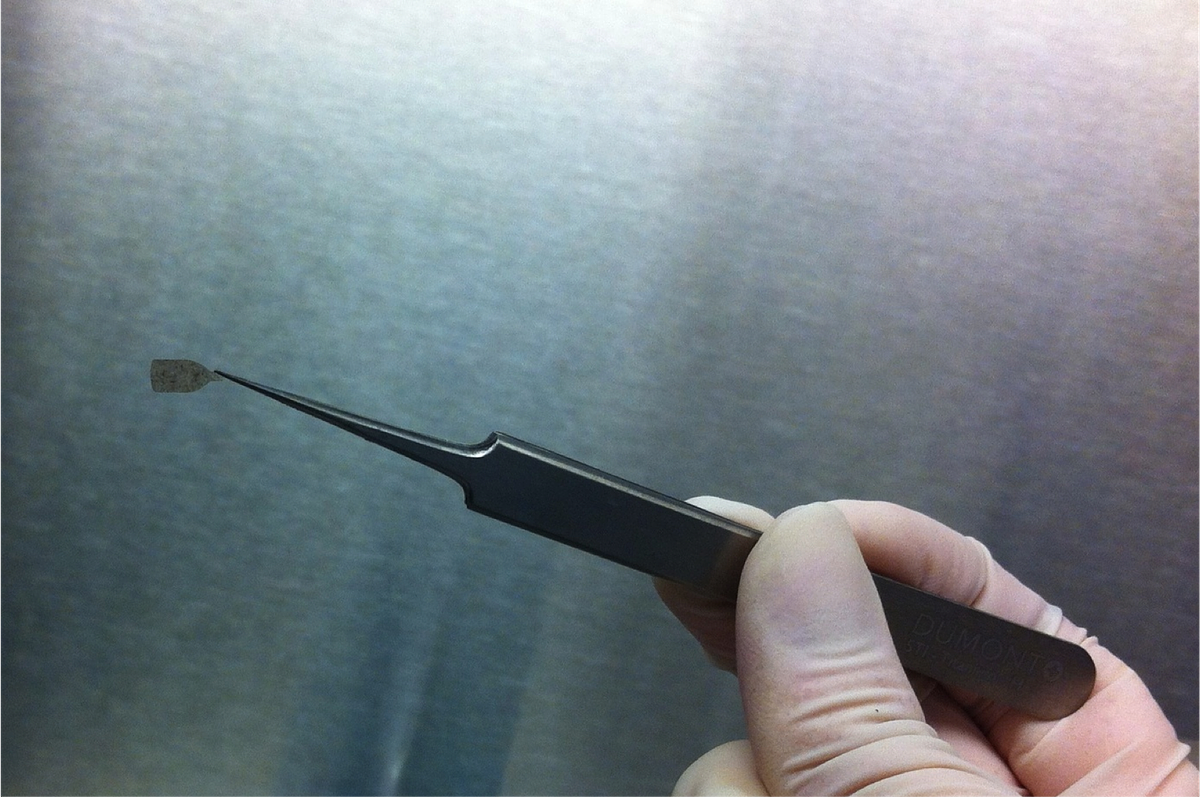
RPT's approach is fundamentally different. Instead of managing the disease's progression with pharmaceuticals, it aims to replace the very cells that have been lost. The CPCB-RPE1 implant is a bio-engineered patch, a composite of stem cell-derived retinal pigmented epithelial (RPE) cells cultured on an ultrathin, synthetic parylene membrane. This implant is surgically placed under the retina to replace the degenerated RPE cell layer and the underlying Bruch's membrane, structures whose failure is the root cause of vision loss in dry AMD.
Decoding the Clinical Data Signal
The confidence to pursue this ambitious goal is built on a foundation of encouraging, albeit early, clinical data. RPT's preceding Phase I/IIa trial provided the crucial signals of strength that justify the larger, more rigorous Phase IIb study. In that initial trial, which followed 15 legally blind patients for a mean of nearly 37 months, the results pointed toward both safety and potential efficacy.
Most notably, 27% of eyes treated with the implant demonstrated a clinically meaningful gain of more than five letters on a standard eye chart. By contrast, only 7% of the untreated fellow eyes saw a similar improvement. Perhaps more telling was the data on vision loss: a staggering 80% of untreated eyes lost more than five letters of vision, compared to just 47% of the treated eyes. This dual signal—a potential for vision gain coupled with a reduction in vision loss—is precisely what separates this regenerative approach from the current standard of care.
Further bolstering the case, histological analysis from a study participant who passed away from unrelated causes more than two years post-implantation confirmed the long-term survival and integration of the implanted RPE cells. This provided tangible proof that the allogeneic (non-patient-matched) cells could endure with only a short course of immunosuppression, a critical hurdle for any cell-based therapy. "Based on our Phase I/IIa clinical trial results, the Phase IIb trial provides an opportunity to collect clinical data in patients with less severe disease to confirm the implant's ability to improve vision," stated Jane Lebkowski, PhD, President of RPT, highlighting the strategic decision to now include patients with more remaining vision to save.
Fortifying the Path to Market
Advancing to a Phase IIb trial is a pivotal moment for any clinical-stage company. It signifies a move from preliminary safety and efficacy exploration to a more robust, controlled validation of the therapeutic concept. The PATCH AMD trial (NCT06557460) is a randomized, assessor-masked, multicenter study that will enroll 24 subjects, comparing the implant against a sham procedure. This rigorous design is essential for generating the high-quality data required by regulators and convincing the medical community.
A key operational growth signal embedded in this new trial is the use of a cryopreserved formulation of the implant. "This long-term storage format facilitates shipment to clinical treatment sites where it is thawed immediately before implantation," explained Linc Johnson, PhD, Chief Scientific Officer of RPT. This logistical innovation may seem minor, but it is a critical step in demonstrating commercial viability. It proves the company is not just focused on the science but also on building a scalable, distributable product, a detail that does not go unnoticed by potential partners and investors.
The trial's expansion to multiple sites across California, Illinois, and Texas also indicates growing operational maturity and the ability to manage complex, geographically dispersed clinical operations. Success in this phase would significantly de-risk the program and position RPT for a larger, pivotal Phase III trial, the final step before a potential market approval application.
The Collaborative Engine of Innovation
The journey of the CPCB-RPE1 implant also highlights a powerful trend in modern drug development: the ecosystem of public, philanthropic, and academic collaboration required to bring high-risk, high-reward science to fruition. RPT's progress has been substantially fueled by such a network. The California Institute for Regenerative Medicine (CIRM), the state's stem cell agency, awarded a $12.4 million grant to support this Phase IIb trial, a significant infusion of non-dilutive capital.
This funding is supplemented by support from the Marcus Foundation and the University of Southern California (USC), where much of the foundational technology was born from the work of renowned co-founders like Dr. Mark Humayun. This collaborative model is essential for therapies like RPT's, which are too nascent and capital-intensive for traditional venture funding alone in their earliest stages. The backing of these respected institutions serves as a powerful external validation of the scientific premise and the potential public health impact. It allows the company to focus on executing its clinical strategy without the immediate pressures of the private market, building value and momentum for future financing or partnership rounds. As RPT pushes forward, its progress is a testament not only to its own science but also to the power of a collective will to solve one of medicine's most challenging problems.