
- 100th Anniversary: The U.S. Postal Service released commemorative stamps marking the centennial of Route 66.
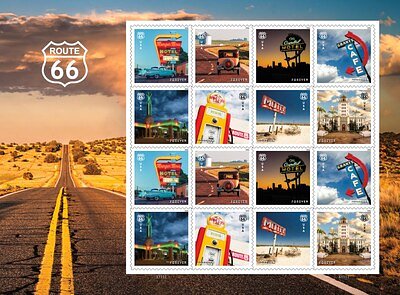
- 8 Stamps: The collection features eight Forever stamps designed by Greg Breeding, showcasing photographs by David J. Schwartz.
- $132 Million Annual Impact: Route 66 generates an estimated $132 million in annual direct economic spending from tourism and related activities, supporting over 2,400 jobs.
Experts view the commemorative stamps as both a celebration of Route 66's historic legacy and a strategic tool to boost tourism and economic revitalization along the iconic highway.
Route 66 Centennial: USPS Stamps Drive a Legacy Down the Mother Road
PHOENIX, AZ – May 05, 2026 – The U.S. Postal Service today immortalized a quintessential piece of Americana, releasing a new set of commemorative stamps to mark the 100th anniversary of historic Route 66. Unveiled at the National Postal Forum in Phoenix, the collection of eight Forever stamps celebrates the iconic "Mother Road," a highway that has long symbolized freedom, adventure, and the pursuit of the American Dream.
The release is more than a philatelic milestone; it's a vibrant acknowledgment of the road's enduring legacy and a catalyst for its future, tying into a nationwide effort to celebrate the centennial and drive a new generation of travelers to the historic byway.
Stamping a National Legacy
For a century, Route 66 has been woven into the fabric of the nation's story. Designated on November 11, 1926, the 2,448-mile highway was not a marvel of modern engineering but a practical patchwork of existing roads, meandering from Chicago to Los Angeles. It stitched together the main streets of hundreds of small towns, becoming a lifeline for communities that might have otherwise been bypassed by progress.
During the Dust Bowl and the Great Depression, it was the path of hope for families fleeing hardship for a better life in the West. During World War II, it carried troops and job seekers to vital defense plants. After the war, fueled by a booming economy and the allure of the open road immortalized in Nat King Cole's rendition of "(Get Your Kicks on) Route 66," the highway became a symbol of post-war optimism and family adventure.
"The Postal Service and Route 66 both played historical roles in our nation's expansion, as conduits for goods and communication," said Jeff Adams, the Postal Service's vice president of Corporate Communications, at the dedication ceremony. He emphasized a shared purpose of "binding the nation together," noting the stamps feature sights that were common for travelers and truckers in the road's heyday.
This sentiment was echoed by Rod Reid, chairman of the United States Route 66 Centennial Commission. "The Route 66 stamp issuance represents an open invitation to come experience Route 66 for yourself," Reid stated, highlighting the stamps' role as a call to action for modern explorers.
The Art of the Mother Road
The eight stamps, designed by USPS art director Greg Breeding, are miniature windows into the soul of the highway, featuring the photographic work of David J. Schwartz. For over two decades, Schwartz has made the road his muse, undertaking 42 trips to document its evolving character. His images were chosen for their authentic, photojournalistic quality, capturing the road not as a relic, but as a living entity.
"Route 66 isn't history behind glass or a velvet rope. It's living history that people can still step into and become part of," Schwartz shared at the ceremony. "Seeing these photographs travel across the country on U.S. postage stamps is incredibly meaningful to me, because it brings the spirit of the 'Mother Road' into millions of homes."
The collection showcases iconic and evocative scenes from the eight states the route traverses. The selvage, or border of the 16-stamp pane, features a striking photograph of the highway stretching into the Arizona horizon, perfectly capturing the sense of infinite possibility the road inspires.
Anticipating strong interest, the USPS has released an extensive line of philatelic products beyond the stamp sheets. Collectors can acquire press sheets, first-day covers, and framed art. A standout "Collector's Set" includes a 36-page "postal passport" detailing each state's highlights, an illustrated map, and a keychain, signaling a strategy to engage not just stamp collectors but a broader audience of Americana enthusiasts and travelers.
Driving a New Era of Tourism
While the stamps honor the past, they are firmly aimed at the future. The centennial celebration is a cornerstone of a multi-state effort to revitalize tourism and local economies along the historic corridor. The United States Route 66 Centennial Commission, an advisory body established by Congress, has been working with state commissions and non-profits like the Route 66 Road Ahead Partnership to orchestrate a year-long celebration.
The economic stakes are significant. A Rutgers University study found that Route 66 already generates an estimated $132 million in annual direct economic spending from tourism and related activities, supporting over 2,400 jobs. The centennial is expected to amplify this impact considerably.
State-level commissions, from Oklahoma to California, are launching their own initiatives, including car rallies, festivals, and public art projects, all designed to draw visitors. The new stamps serve as a powerful, pocket-sized promotional tool for these efforts. They are a national endorsement of the road's value and an invitation to experience its quirky roadside attractions, classic diners, and restored motor courts. The campaign encourages travelers to support the small businesses that, as photographer David Schwartz noted, "keep its story alive."
A Road That Refused to Fade
The survival of Route 66 is a story of remarkable resilience. As the Federal-Aid Highway Act of 1956 gave rise to the faster, more efficient Interstate Highway System, the old road was gradually bypassed. By 1985, Route 66 was officially decommissioned, seemingly relegated to history.
But the "Main Street of America" refused to disappear. A resurgence of interest, romanticized by the "Route 66" television series in the 1960s, kept the flame alive. Quirky landmarks like the Blue Whale of Catoosa, Oklahoma, and the art installation Cadillac Ranch in Texas became destinations in their own right. More recently, Pixar's 2006 film Cars introduced the magic of the road and its forgotten towns to a new generation.
Today, thanks to dedicated preservation efforts by state associations and federal programs, about 85 percent of the original route remains drivable. Over 250 sites along the highway are listed on the National Register of Historic Places. The new commemorative stamps are not just a tribute to a road; they are a celebration of its tenacious spirit and a testament to the enduring power of the American road trip.