
- $100 million: Capital invested in the Phoenix facility since 2021
- $50 million: Minimum annual revenue guaranteed by a five-year toll manufacturing agreement
- 11%: Projected annual growth rate of the sterile injectables CDMO market, reaching $87 billion by 2033
Experts view ROIS's acquisition of the Phoenix plant as a strategic move to strengthen US pharmaceutical supply chains, particularly for complex injectable drugs, while positioning the company as a key global player in the rapidly growing CDMO market.
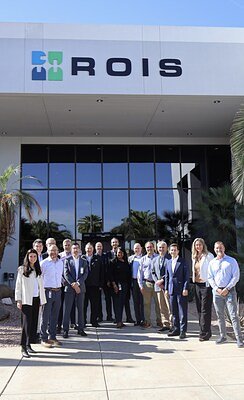
ROIS's American Leap: Spanish CDMO Buys Phoenix Plant, Boosting US Supply
PHOENIX, AZ – May 04, 2026 – Spanish-rooted pharmaceutical manufacturer ROIS has finalized a landmark acquisition of a commercial injectable drug facility in Phoenix, Arizona, from Bristol Myers Squibb, a strategic move that establishes a critical US manufacturing footprint for the company and strengthens the domestic supply chain for complex medicines.
The deal, announced on April 1st, marks the evolution of ROIS into a truly global Contract Development and Manufacturing Organisation (CDMO). By adding a state-of-the-art American facility to its strong European base, the company significantly enhances its capacity to produce sterile injectable drugs, including cutting-edge treatments for cancer, obesity, and rare diseases.
A Strategic Move into a Booming Market
The acquired 370,000-square-foot facility is a turnkey asset, having received approximately $100 million in capital investments since 2021. It is already equipped for commercial-scale production of injectable drugs in vials, pre-filled syringes, and cartridges. As part of the transaction, ROIS has secured a five-year toll manufacturing agreement to continue producing certain Bristol Myers Squibb products, a deal that guarantees a minimum of $50 million in annual revenue and ensures operational continuity.
This acquisition comes at a time of explosive growth in the sterile injectables CDMO market, which is projected to grow at a compound annual rate of over 11% to reach more than $87 billion by 2033. This demand is fueled by a pipeline rich with biologics, the unprecedented success of GLP-1 therapies for diabetes and obesity creating capacity shortages, and a broader trend of pharmaceutical giants outsourcing complex manufacturing.
Critically, the Phoenix plant provides ROIS with specialized capabilities that are in high demand. It features a high-potency cytotoxic area with commercial-scale lyophilization (freeze-drying) capacity, essential for producing many modern oncology drugs like Antibody-Drug Conjugates (ADCs). The facility's existing approvals from the FDA, European Medicines Agency (EMA), and Japanese regulators allow it to immediately integrate into global supply networks.
"This is a pivotal moment for us," said Kimberlee Steele, the company's newly appointed Chief Commercial Officer. "Our US expansion positions ROIS to better support customers worldwide."
Bolstering America's Pharmaceutical Supply Chain
The move is widely seen by industry analysts as a direct response to the vulnerabilities in the global pharmaceutical supply chain exposed during the COVID-19 pandemic. Widespread drug shortages highlighted the risks of over-reliance on overseas manufacturing for essential medicines, prompting a bipartisan push in the United States to reshore critical production.
Injectable drugs are particularly susceptible to shortages due to their complex, sterile manufacturing processes. Establishing domestic fill-finish capacity—the final step where drugs are filled into vials or syringes—is a crucial step in building a more resilient national health infrastructure. By acquiring an operational, FDA-approved facility, ROIS can bypass the 3-to-5-year timeline typically required to build a new plant from the ground up, providing an immediate boost to US-based capacity.
ROIS, the CDMO arm of the publicly traded Spanish firm ROVI Pharmaceuticals, plans to further invest in the site. By 2027, it will install a new high-speed isolator line for pre-filled syringes, adding an estimated 65 to 70 million units of annual capacity and pushing its total global network capacity beyond 800 million sterile units per year. This investment aligns with the market shift toward patient-centric formats that allow for easier administration at home.
Phoenix Emerges as a Biotech Powerhouse
While the acquisition has global implications, its impact will be immediately felt in Phoenix, which is rapidly cementing its reputation as a burgeoning hub for life sciences. The city has cultivated a business-friendly environment and a robust ecosystem designed to attract high-tech investment, moving to compete with traditional but cost-prohibitive coastal biotech centers.
At the heart of this growth is the 30-acre Phoenix Bioscience Core (PBC), an innovation district that hosts Arizona's three public research universities, the world-renowned Translational Genomics Research Institute (TGen), and major healthcare systems. The region has seen its bioscience workforce grow by nearly 25% since 2019, with local universities producing a fast-growing talent pool.
Local leadership has been a vocal supporter of the city's expanding role in pharmaceutical manufacturing. Phoenix Mayor Kate Gallego, who met with ROIS CEO Javier López-Belmonte, highlighted the significance of the investment in her recent State of the City address. "ROIS makes specialized injectables that can treat rare diseases, obesity and cancer," Gallego stated. "This is a promising area of growth in medical care and I'm excited that between our great university partners and ROIS, Phoenix is ahead of the curve."
ROIS's investment joins over $6.7 billion in bioscience and healthcare capital that has flowed into Phoenix since 2019, creating over 14,000 jobs in a sector where the average wage tops $102,000.
Advancing Critical Therapies for Patients
The true significance of the Phoenix facility lies in its potential to accelerate the delivery of next-generation therapies to patients. The site's capabilities in handling high-potency and cytotoxic compounds are essential for the production of ADCs, which are often described as “smart bombs” that deliver powerful chemotherapy agents directly to cancer cells while sparing healthy tissue. The market for manufacturing these complex drugs is growing rapidly, with oncology treatments making up roughly 90% of the ADC development pipeline.
Furthermore, the facility’s commercial-scale lyophilization technology is vital for stabilizing sensitive biologic drugs and complex formulations, including many treatments for rare diseases. For orphan drugs, which serve small patient populations, this technology simplifies the supply chain and extends shelf life, ensuring these high-value medicines are available when needed.
By establishing a North American manufacturing base, ROIS can work more closely with the numerous US-based biotech and pharmaceutical companies that are developing these innovative treatments. This geographical proximity can shorten development timelines, simplify logistics, and ultimately speed patient access to life-saving medicines. The acquisition solidifies ROIS's position not merely as a manufacturer, but as an essential partner in the fight against the world's most challenging diseases.