
- 2,000 tests/hour: The cobas® c 703 can process up to 2,000 clinical chemistry tests per hour, doubling previous throughput.
- 25% vacancy rates: Some U.S. clinical labs face staff shortages as high as 25%.
- 78% reduction in plastic waste: The cobas® pro platform cuts plastic waste per test by up to 78% compared to previous systems.
Experts view Roche's new automated labs as a critical solution to staffing shortages and rising test volumes, enhancing efficiency and sustainability in diagnostics.
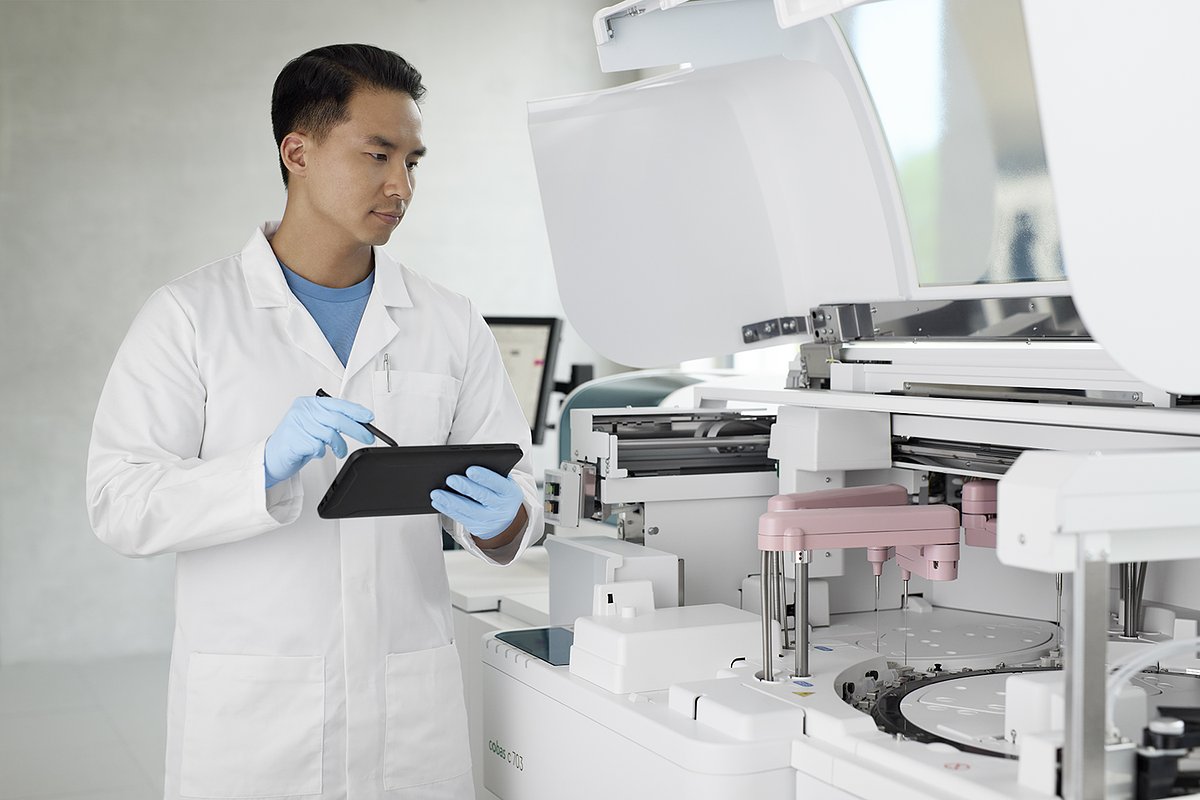
Roche's New Automated Labs Target Staffing Crisis and Boost Efficiency
INDIANAPOLIS, IN – March 30, 2026 – Roche Diagnostics announced today it has received U.S. Food and Drug Administration (FDA) 510(k) clearance for two next-generation analytical units, the cobas® c 703 and cobas® ISE neo. The clearance marks a significant advancement in laboratory automation, offering a powerful response to the mounting pressures of staff shortages, space constraints, and soaring test volumes that currently challenge healthcare systems nationwide.
The new units are designed to integrate seamlessly into Roche’s existing cobas® pro platform, a modular system launched in the U.S. in 2020. By dramatically increasing testing speed and minimizing the need for manual intervention, these systems promise to streamline diagnostic workflows, accelerate patient care, and solidify Roche's dominant position in the global diagnostics market.
A Lifeline for Overburdened Laboratories
Clinical laboratories, the unseen engines of modern medicine, are in crisis. Facing a critical shortage of skilled professionals—with some U.S. vacancy rates reportedly as high as 25%—labs are struggling to keep pace with an ever-increasing demand for testing. Roche's new automated systems are engineered to directly confront this challenge.
The cobas® c 703 analytical unit is a powerhouse, capable of processing up to 2,000 clinical chemistry tests per hour, effectively doubling the throughput of previous configurations on the cobas® pro platform. Its companion, the cobas® ISE neo, handles an impressive 1,800 tests per hour and introduces enhanced automation for its own maintenance routines.
This level of automation fundamentally changes the laboratory workflow. By automating tasks traditionally performed by hand, the systems reduce the hands-on time required from technicians. Both units, for instance, only require monthly operator maintenance, a stark contrast to the daily interventions often needed with older equipment. This significantly increases uptime and productivity, allowing labs to process more samples with the same or even fewer staff members.
"Laboratories are the indispensable engine of modern healthcare, and Roche wants to partner in addressing staffing-shortage challenges and an ever-increasing demand for testing," said Brad Moore, President and CEO of Roche Diagnostics North America, in a statement. "Roche is investing in solutions that help labs process more samples than ever – without sacrificing performance."
The impact extends beyond simply managing workload. By freeing highly trained laboratorians from repetitive, manual tasks, this technology allows them to shift their focus to more complex and impactful work, such as interpreting ambiguous results, ensuring quality control, and consulting with clinicians on patient care. This evolution of the lab professional's role is seen by many experts as essential for the future of diagnostics.
Fortifying a Market-Leading Position
The launch of the cobas® c 703 and ISE neo is also a calculated strategic move by Roche to fortify its leadership in the highly competitive in-vitro diagnostics (IVD) market. With an estimated 20% global market share in 2024 and diagnostic revenues exceeding $16.8 billion in 2023, Roche is already a titan in the field. However, the IVD market, valued at over $100 billion, is dynamic, with major players like Abbott Laboratories, Siemens Healthineers, and Beckman Coulter constantly innovating.
With its new units, Roche is setting a new benchmark for high-volume testing. The throughput of the cobas® c 703, at 2,000 tests per hour, is at the top end of the market, directly competing with and in some cases surpassing rival systems like Beckman Coulter’s AU5800 series. Abbott’s Alinity c and Siemens’ Atellica Solution are also key competitors that these new Roche systems are positioned against.
The strength of Roche's offering lies not just in a single machine but in its integrated ecosystem. The new analyzers are modular components of the cobas® pro platform, which allows laboratories to scale their operations by adding or reconfiguring units as needed. This flexibility is critical for labs managing fluctuating demands and planning for future growth. Furthermore, the use of standardized reagents across Roche's cobas® pure and cobas® pro platforms simplifies inventory, streamlines training, and ensures consistent results—a significant advantage for large hospital networks and laboratory chains.
Independent evaluations have validated Roche's performance claims. A multicenter study conducted in Europe in late 2023 confirmed that the new units delivered reliable and comparable results to older systems while operating under routine lab conditions. Another study highlighted the robust precision of the cobas® c 703, noting its use of a long-lasting LED light source that drastically reduces maintenance compared to the halogen lamps used in previous models.
Greener, Smarter, and More Cost-Effective Diagnostics
Beyond the headline-grabbing speeds, the design of the new cobas® systems delivers significant, often overlooked, benefits in sustainability and cost-efficiency. In an era of increasing environmental awareness and tightening healthcare budgets, these advantages are becoming crucial differentiators.
The entire cobas® pro integrated solutions platform has been engineered for resource optimization. Compared to Roche's previous generation of analyzers, the platform reduces the required sample volume per test by an average of 43%. This is a critical benefit, especially for vulnerable patient populations like pediatric and geriatric patients, where drawing blood can be challenging.
Furthermore, the system makes significant strides in reducing the environmental footprint of laboratory testing. Through redesigned, smaller reagent packs that hold a higher number of tests, the platform can reduce the plastic waste generated per test result by up to 78%. The new cobas® ISE neo, for example, is specifically designed to deliver more tests per reagent bottle, minimizing plastic consumption and reducing the logistical efforts associated with shipping and storing supplies.
These efficiencies translate directly to economic benefits. While the initial capital outlay for advanced automation is substantial, the long-term return on investment is compelling. Reduced manual labor, fewer errors leading to costly reruns, and more efficient use of expensive reagents and consumables all contribute to a lower total cost of ownership. Case studies on similar laboratory automation have demonstrated overall cost reductions driven primarily by optimized staffing and resource management.
This combination of high throughput, reduced waste, and lower operational costs creates a powerful value proposition for laboratories, enabling them to do more with less while improving their environmental and financial health. The integration of these advanced, efficient units into the broader laboratory infrastructure represents a pivotal step toward a more sustainable and economically viable future for clinical diagnostics. The seamless integration of these new modules is a cornerstone of Roche's strategy. Designed for a connected environment, the units can link to total laboratory automation systems, creating a unified workflow from sample arrival to result delivery. This holistic approach ensures that the immense speed of the analyzers is not bottlenecked by other manual processes, ultimately enabling the faster turnaround times that directly impact clinical decision-making and patient outcomes.