
- 6,000+ Canadian public and not-for-profit entities are part of the Canoe Procurement Group network, gaining access to robotic mowers through the new agreement.
- Months-long procurement timelines reduced to weeks thanks to cooperative purchasing agreements, accelerating deployment of robotic mowers.
- Autonomous mowers can operate on steep slopes and hard-to-access areas, reducing human safety risks in public works maintenance.
Experts agree that robotic mowers represent a pragmatic, scalable solution for Canadian public works departments facing labor shortages, budget constraints, and safety challenges, marking a significant shift toward automation in municipal landscaping.
Robots to the Rescue: Mowers Deployed for Canada's Public Works
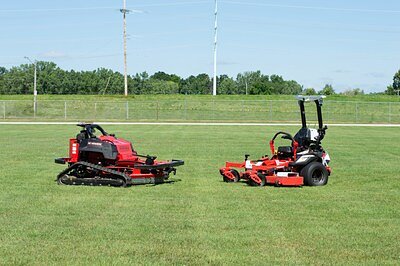
GREEN BAY, Wis. – February 05, 2026 – U.S.-based robotic mower manufacturer RC Mowers has secured a landmark cooperative purchasing agreement with Canoe Procurement Group of Canada, a move set to accelerate the adoption of autonomous technology in maintaining public green spaces across the country. The contract provides a streamlined procurement path for thousands of Canadian municipalities, public agencies, and non-profit organizations, offering a high-tech solution to mounting operational pressures.
This agreement comes at a critical juncture for Canadian public works departments, which are grappling with a confluence of challenges including persistent labor shortages, escalating operational costs, and heightened safety risks for maintenance crews. By simplifying access to RC Mowers' remote-operated and autonomous mowing solutions, the partnership aims to equip these organizations with tools to navigate a difficult landscape.
A Strategic Solution for Strained Public Works
Across Canada, municipal leaders are facing the difficult task of doing more with less. Public works departments, responsible for maintaining everything from city parks to roadside verges, are operating with "stretched budgets" and "limited staff," according to industry analyses. The struggle to recruit and retain workers for physically demanding outdoor jobs has become a chronic issue, leaving many departments understaffed and overworked. This labor gap is compounded by rising inflation and supply chain disruptions that drive up the cost of equipment and materials.
It is within this challenging environment that automated solutions are gaining significant traction. RC Mowers, founded in 2018 near Green Bay, Wisconsin, designs and manufactures robotic mowers intended to tackle precisely these issues. Their machines are built to operate on difficult terrain, such as steep slopes, and in hard-to-access areas, removing human operators from potentially hazardous situations. By automating the repetitive and time-consuming task of large-scale mowing, these robots allow public works departments to re-assign scarce human labor to more complex and value-added tasks.
"This partnership is a big step forward for RC Mowers as we expand across Canada and North America," said RC Mowers CEO Michael Brandt in a statement. "Canadian municipalities are under real pressure to do more with fewer people and tighter budgets, while also keeping crews safe. Through Canoe, we're bringing proven robotic mowing solutions to communities nationwide to help solve those challenges in a smarter way."
The contract effectively positions robotic technology not as a luxury, but as a pragmatic tool for ensuring the continuity and safety of essential public services.
Unlocking the Market Through Cooperative Purchasing
The agreement's significance lies not just in the technology it provides, but in the mechanism used to deliver it. The Canoe Procurement Group is one of Canada's largest cooperative buying organizations, representing a network of over 6,000 public and not-for-profit entities. Owned and operated by its membership through a not-for-profit municipal association, Canoe leverages the collective buying power of its members to secure favorable terms and simplify procurement.
For public agencies, the traditional procurement process—issuing a Request for Proposals (RFP), evaluating bids, and finalizing a contract—can be a months-long, resource-intensive ordeal. Cooperative purchasing agreements streamline this dramatically. Because Canoe has already conducted a competitive and trade-compliant solicitation process to vet vendors like RC Mowers, its members can purchase equipment directly through the pre-negotiated contract. This reduces procurement timelines from months to mere weeks, a critical advantage for departments needing to deploy solutions quickly.
This cross-border partnership is facilitated by Canoe's relationship with Sourcewell, a U.S.-based cooperative purchasing giant with over 50,000 member entities. Many competitively awarded Sourcewell contracts are extended or jointly administered in Canada via Canoe, creating a powerful and compliant framework for American companies to enter the Canadian public sector market. This structure provides Canadian agencies with access to a wider pool of vetted suppliers while ensuring adherence to national and provincial trade laws, including the Canadian Free Trade Agreement (CFTA).
The Robotic Race for Canada's Green Spaces
RC Mowers' strategic entry into the Canadian public sector does not occur in a vacuum. It highlights a broader, accelerating trend of automation in landscaping and grounds maintenance. The company will find itself in a competitive and evolving market.
Global power equipment leader Husqvarna is already a significant player, offering its professional-grade Automower® and CEORA™ robotic systems to municipalities worldwide, promoting benefits like quiet, emission-free operation and remote fleet management. Closer to home, Alberta-based Autonomous Motion specializes in deploying outdoor robotics for "real Canadian conditions," acting as a dealer for various autonomous brands and targeting a similar client base of municipalities and contractors. Major agricultural and turf equipment manufacturers like John Deere are also investing heavily in autonomous technology, suggesting their entry into this specific market segment is a matter of when, not if.
The emergence of these competitors underscores the growing consensus that robotics are the future of municipal landscaping. The technology promises a paradigm shift away from labor-intensive models towards systems that are more efficient, safer, and potentially more sustainable. As more cities and towns experience the benefits firsthand, the adoption of automated solutions is expected to grow exponentially.
Redefining Efficiency and Safety in Landscaping
The core value proposition of robotic mowers extends beyond simple cost-cutting. For public works managers, the primary benefits are often centered on safety and optimized labor allocation. Remote-operated mowers allow a single crew member to safely cut grass on dangerously steep embankments or near busy roadways from a secure distance, drastically reducing the risk of accidents and injuries.
Furthermore, autonomous systems can operate for extended periods with minimal supervision, freeing up human workers to perform tasks that require critical thinking, technical skill, or public interaction—work that a robot cannot do. This shift allows departments to transform their workforce, focusing on higher-level horticulture, infrastructure repair, and public service rather than just keeping the grass short. This addresses the labor shortage not by replacing workers, but by elevating their roles and making the most of their limited availability.
The successful implementation of this technology through the Canoe contract could serve as a powerful case study for public sector innovation across North America. It represents a tangible step towards building smarter, more resilient communities where technology is leveraged to overcome chronic operational challenges and improve the quality of public services for all citizens. As the first wave of RC Mowers' machines are deployed through this new agreement, municipalities across Canada will be watching closely to see how the future of public landscaping unfolds.