
- Global Stroke Impact: Nearly 12 million new stroke cases in 2021, with ischemic strokes from large vessel occlusion (LVO) being a leading cause of death and disability.
- Mechanical Thrombectomy (MT) Access: Only 2.79% median global access rate, with low-income countries facing 88% lower access than high-income nations.
- PANVIS STAR Success: 97.18% clinical success rate in coronary interventions, with 97.2% reduction in radiation exposure for operators.
Experts view the PANVIS STAR robotic system as a promising advancement in stroke treatment, offering enhanced precision, remote access capabilities, and potential to democratize care, though significant challenges in cost, infrastructure, and regulation remain.
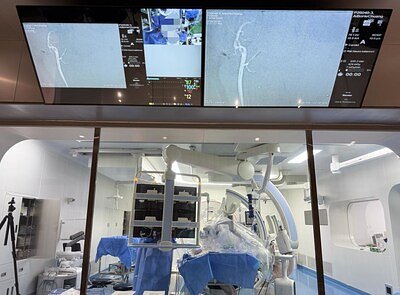
Robotic System Offers New Hope in Global Fight Against Stroke
BEIJING – April 13, 2026 – By Sharon Kelly
Stroke remains one of the world's most formidable health crises, striking nearly 12 million people anew in 2021 and standing as a leading cause of death and long-term disability. For those suffering an ischemic stroke from a large vessel occlusion (LVO), a procedure called mechanical thrombectomy (MT) offers a lifeline, mechanically removing the clot and restoring blood flow to the brain. Yet, this gold-standard treatment remains tragically out of reach for most.
A 2023 global survey revealed a median access rate to MT of just 2.79%, a figure described as "dismally low." The disparity is stark, with low-income countries facing access rates 88% lower than their high-income counterparts. The reasons are complex: a shortage of highly trained specialists, the intense fatigue and radiation exposure for operators, and the steep learning curve for the procedure itself.
Enter the PANVIS STAR, a vascular interventional robotic system from Shenzhen-based abrobo. The company has unveiled a platform it claims can redefine neurointervention, designed to tackle these exact barriers through a combination of intuitive control, sub-millimeter precision, and the game-changing potential of remote surgery.
A Surgeon's Dexterity, A Robot's Stability
At the heart of the PANVIS STAR system is a philosophy of augmenting, not replacing, the surgeon's skill. A key innovation is the PANVIS COF (Catheter-On-Finger), a fingertip control system that mimics the delicate thumb-and-index finger manipulation surgeons have spent their careers perfecting. This intuitive interface is designed to dramatically shorten the learning curve, potentially empowering a wider cohort of physicians to perform these complex procedures.
Beyond the controls, the system provides a crucial element often missing from robotic surgery: the sense of touch. As a surgeon remotely navigates a micro-guidewire through the brain's fragile vascular labyrinth, the system's haptic feedback technology detects resistance and relays it back to the operator's fingertips. This allows the surgeon to "feel" the anatomy and the device's interaction with it.
This capability is paired with a real-time physiological tremor filter that eliminates the natural, microscopic jitters present in every human hand. The result is a level of stability and precision measured in sub-millimeters, critical for minimizing the risk of vessel perforation or other complications. The platform also boasts a signature breakthrough with its ability to co-manipulate four separate devices—such as catheters, guidewires, and stent retrievers—either independently or in concert, offering a degree of control that mirrors the complexity of manual operations.
Erasing Geography in the Golden Hour
The most transformative promise of the PANVIS STAR may be its ability to dissolve distance. The system is engineered for remote operation over 5G networks, a capability dramatically showcased at the 2024 Oriental Congress of Neurovascular Diseases (OCIN). There, Professor Liu Jianmin's team used the system to perform live remote neurointerventions—including aneurysm coiling and stenting—on an animal model, controlling the robot in a lab miles away from a console at the conference venue.
This is not just a theoretical exercise. The technology has already been used to perform remote percutaneous coronary interventions (PCI) over a distance of 5,200 kilometers between Shanghai and Xinjiang. For stroke patients, where every minute counts in the "golden hour" to prevent irreversible brain damage, this technology could be revolutionary. It opens the door to a future where a world-renowned specialist in Beijing could perform an emergency thrombectomy on a patient in a rural hospital thousands of kilometers away, bringing elite care to underserved populations.
The High-Tech, High-Stakes Gauntlet
While the vision of democratized robotic surgery is compelling, the path to widespread adoption is fraught with significant challenges. The first is cost. Robotic surgical platforms represent a major capital investment, often exceeding $1 million, with additional per-procedure expenses that can strain healthcare budgets.
Furthermore, the promise of remote surgery is entirely dependent on the underlying digital infrastructure. While PANVIS STAR has proven its function over 5G, the global rollout of reliable, low-latency 5G networks is uneven. Any lag or disruption in the connection during a delicate neurovascular procedure could have catastrophic consequences, making cybersecurity a paramount concern. Protecting these systems from malicious attacks is a critical and complex hurdle.
Finally, a new regulatory and ethical frontier must be navigated. Questions of cross-border medical licensing, legal liability in the event of a system failure, and ensuring informed patient consent across language and cultural barriers are all complex issues that policymakers, ethicists, and medical bodies are just beginning to address.
From Lab to Clinic: Validation and a Pan-Vascular Vision
Founded in 2020 by the team of Professor Shuxiang Guo, an IEEE Fellow, abrobo has moved swiftly to validate its technology. Backed by $45.6 million in funding from prominent investors like CDH Investments and Lenovo Capital, the company has pursued rigorous clinical evaluation. The PANVIS STAR has successfully completed the full thrombectomy workflow in animal models, demonstrating its precision and efficacy.
In the cardiac space, a multicenter randomized controlled trial for coronary interventions (the CAPTAIN-C trial) showed a 97.18% clinical success rate, nearly identical to manual procedures, while providing a staggering 97.2% reduction in radiation exposure for the primary operator—a major occupational benefit for interventionalists.
Regulatory momentum is also building. While the PANVIS STAR is currently in the regulatory submission process, a related neurovascular platform, the PANVIS-A, received NMPA approval in China in August 2024, signaling a viable pathway for the company's technology.
Looking ahead, abrobo's vision extends far beyond the brain. The PANVIS STAR is designed as a "pan-vascular" platform, compatible with cerebral, cardiac, peripheral, and oncological interventions. This positions the system not just as a tool for stroke, but as a versatile robotic platform that could bring enhanced precision, stability, and remote access to a wide spectrum of minimally invasive procedures, potentially heralding a new, more accessible era of interventional medicine.