
- 3.8 billion robocalls in February 2026, a 14% decline from the same month last year
- 136.8 million robocalls per day in February, a 9% increase from January 2026
- 58% of robocalls were scams or telemarketing in February 2026
Experts agree that while the overall decline in robocall volume is encouraging, the surge in daily intensity and persistent scam campaigns highlight an ongoing threat that requires continued vigilance and technological innovation.
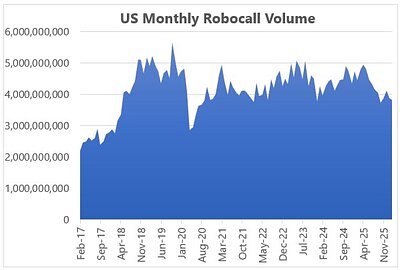
Robocall Volume Dips, But Daily Intensity and Scams Surge Higher
IRVINE, CA – March 05, 2026 – While the total number of robocalls bombarding U.S. consumers dipped to 3.8 billion in February, a closer look at the data reveals a deceptive trend: the daily intensity of these automated calls is actually on the rise, and aggressive scam campaigns continue to plague the nation's phone lines.
According to the latest Robocall Index report from protection app YouMail, February’s volume marked a 14% decline from the same month last year and a slight 1.3% dip from January 2026. This continues a welcome trend, with call volumes remaining below the 4 billion mark for six consecutive months—a level of relative quiet not sustained since mid-2022. However, this headline number masks a more complex and troubling reality.
A Deceptive Decline? The Nuance Behind the Numbers
The primary reason for February's lower overall total is simple arithmetic: the month is about 10% shorter than January. When adjusted for the number of days, the data shows that robocallers were more active, not less. The daily average soared by over 9%, from 125.2 million calls per day in January to 136.8 million in February. That translates to an unnerving 1,583 robocalls placed every second of the day.
"It's encouraging to see both January and February of 2026 maintain meaningfully lower robocall volumes than December," said YouMail CEO Alex Quilici in a statement. "This marks six consecutive months averaging under 4 billion robocalls, which last happened in May of 2022, nearly 4 years ago. While the decline is encouraging, consumers should continue to protect themselves with robocall-blocking apps."
The data, which YouMail extrapolates from billions of calls handled for its users, also reveals a stagnation in the most malicious category. While calls for notifications and payment reminders saw modest declines, the combined category of telemarketing and outright scams held firm. These unwanted calls accounted for a staggering 2.16 billion calls, or 58% of all robocall traffic in February. This resilience underscores that criminal and unscrupulous operations remain the primary drivers of the robocall scourge.
The methodology behind these figures has gained significant industry trust. YouMail's platform uses a combination of patented audio fingerprinting technology, AI-powered call pattern analysis, and direct user feedback to identify and categorize calls. Its data is now regularly cited by the Federal Communications Commission (FCC) as a key indicator of national robocall trends.
Anatomy of a Modern Scam: The 'Crestwood Loan Advisors' Onslaught
Nowhere is the persistence of bad actors more evident than in February's most prolific scam campaign. An operation claiming to be "Crestwood Loan Advisors" was responsible for an estimated 70 million calls in February alone, blanketing the country with unsolicited and potentially fraudulent loan offers.
The message, delivered in a uniform robotic voice, is a classic example of a predatory financial scam:
"This is brought to you by Crestwood Loan Advisors... This message is from the loan department. We have a pending offer of $70,000 in the form of an unsecured loan. Your monthly payment is estimated to be $400. To speak with a team member, please press 2..."
This campaign exemplifies the advanced tactics used by modern robocallers. To evade individual blocking and carrier detection, the operation utilized at least 50,000 different phone numbers, a technique known as spoofing. By constantly changing the originating number, the campaign can continue to reach phones even after a user blocks a previous call.
At a minimum, these unsolicited calls violate the Telephone Consumer Protection Act (TCPA). More concerning, however, is the high probability that this is an advance-fee loan scam, designed to prey on individuals facing financial distress. Such scams typically promise a large loan but require the victim to pay an upfront "processing fee" or "insurance," after which the scammer and the promised funds disappear.
The Technological and Regulatory Arms Race
The persistence of campaigns like 'Crestwood' highlights the ongoing arms race between robocallers, regulators, and technology companies. On the regulatory front, the TRACED Act, signed into law in 2019, gave authorities like the FCC more power to combat these calls, including stiffer fines and a mandate for carriers to implement better call authentication.
This mandate led to the widespread adoption of the STIR/SHAKEN framework. In simple terms, STIR/SHAKEN acts like a digital verification system for the phone network, allowing a receiving carrier to confirm that a call is actually coming from the number it displays. While this has helped reduce some forms of caller ID spoofing, sophisticated scammers continue to find ways to circumvent these measures.
Technology companies are fighting back on another front. Services like YouMail contribute to a larger ecosystem of defense, using their vast sensor networks to identify new scam campaigns in near real-time. This data is not just used for their own app; it is also fed to entities like the Industry Traceback Group, which works with law enforcement to identify and shut down the sources of illegal robocalls.
Your First Line of Defense
While the war against robocalls is being waged on a massive scale by carriers and government agencies, individual vigilance remains a critical component of defense. Experts advise a multi-layered approach to personal security:
- Don't Answer: If you don't recognize a number, let it go to voicemail. Legitimate callers will leave a message.
- Never Engage: Interacting with a robocall—even by pressing a number to be "removed from a list"—simply confirms your number is active, potentially leading to more calls.
- Utilize Protection: Enable robocall filtering services offered by your mobile carrier, such as T-Mobile's Scam Shield or AT&T's ActiveArmor. Supplement these with a dedicated third-party call-blocking app for more advanced filtering.
- Report Scams: Report unwanted calls and any suspected scam attempts to the Federal Trade Commission (FTC) at DoNotCall.gov. This data helps authorities identify and track illegal operations.
February's numbers serve as a potent reminder that the robocall problem is not one with a single solution. While overall numbers may offer a glimmer of hope, the increasing daily intensity and the unwavering dominance of scam calls show that the threat remains deeply embedded in our digital lives. In this ongoing battle, the most immediate power remains in the hands of informed and cautious consumers.