
- $9.95 million: Annual savings projected for a typical 739-bed academic medical center by combining ESR and CRP tests.
- $2.70: Medicare reimbursement cost for an ESR test, making it highly cost-effective.
- 8 inflammatory conditions: The study simulated patient cohorts across these conditions to build its economic case.
Experts would likely conclude that combining ESR and CRP tests can significantly improve diagnostic accuracy and generate substantial cost savings, challenging the prevailing 'Choosing Wisely' recommendations that favored CRP alone.
Rethinking Redundancy: A $2.70 Test Could Save Hospitals Millions
SMITHFIELD, RI – March 23, 2026 – A new economic analysis is challenging a long-held belief in hospital cost-saving initiatives, suggesting that eliminating a supposedly “redundant” lab test may be costing the U.S. healthcare system millions. The peer-reviewed study, published in ClinicoEconomics and Outcomes Research, argues that pairing the classic erythrocyte sedimentation rate (ESR) test with the more modern C-reactive protein (CRP) test can dramatically reduce misdiagnoses and generate substantial net savings.
For a typical 739-bed academic medical center, the study projects annual savings of nearly $10 million. These savings, the authors contend, are not from cutting the test itself—which costs payers less than a cup of coffee—but from avoiding the expensive cascade of follow-up procedures and treatments that stem from diagnostic errors when relying on CRP alone.
Redundancy or Reinforcement?
For years, a growing consensus in medicine has pushed to sideline the ESR test in favor of CRP for detecting and monitoring inflammation. The argument was that ESR was slow, non-specific, and largely redundant. This new research, sponsored by ESR analyzer manufacturer ALCOR Scientific, directly confronts that assumption.
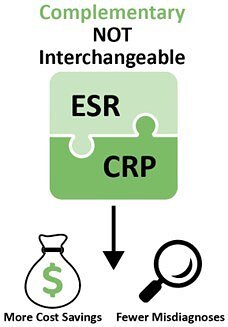
The study’s authors emphasize that the two tests are not interchangeable but complementary, owing to fundamental differences in how they respond to inflammation in the body. "The kinetics of CRP and ESR are fundamentally different," the authors note in their paper. CRP is an acute-phase reactant, meaning its levels spike within hours of an infection or injury and fall just as quickly once the inflammation subsides. This makes it an excellent marker for acute events.
ESR, by contrast, rises more slowly over 24 to 48 hours and remains elevated for a longer period. This slower kinetic profile makes it uniquely valuable for identifying and monitoring chronic or subacute inflammatory conditions that CRP might miss, such as lupus, polymyalgia rheumatica, giant cell arteritis, and certain cancers. Using both tests, the study argues, provides a more complete and nuanced picture of a patient's inflammatory status, improving diagnostic accuracy.
The projected $9.95 million in savings stems primarily from reducing the costs associated with misdiagnoses. According to the economic model, the combined testing strategy helps clinicians avoid unnecessary workups that can result from the false positives sometimes associated with using only the highly sensitive CRP test.
Challenging a Decade of 'Choosing Wisely'
The study’s findings arrive at a pivotal moment, pushing back against the influential “Choosing Wisely” initiative. Launched in 2012 by the American Board of Internal Medicine (ABIM) Foundation, the campaign encouraged medical societies to identify overused and unnecessary tests and procedures. ESR was frequently on the chopping block.
At the time, these recommendations were often based on an older reality. ESR testing was a manual, labor-intensive process that burdened clinical laboratories. However, technology has since rendered that argument obsolete. "Modern ESR analyzers are fast, automated, and inexpensive," the authors write. "The older argument that ESR is burdensome to laboratory resources no longer holds."
Today, automated ESR testing is reimbursed by Medicare at just $2.70 per test, with the actual lab cost often being even lower. The incremental cost of adding an ESR to a CRP test (reimbursed at $5.18) is minimal. According to the study's model, this small investment yields a return that is orders of magnitude greater by preventing costly diagnostic errors. The core question, the paper suggests, has shifted from whether the test is a burden to whether its diagnostic value justifies its minimal cost—a question the authors answer with a clear “yes.”
A Closer Look at the Evidence and Its Backers
To build its economic case, the study employed a decision-tree model, simulating patient cohorts across eight inflammatory conditions, including rheumatoid arthritis, infection, and cancer. The analysis used cost data from the Centers for Medicare & Medicaid Services and diagnostic accuracy data drawn from a wide range of published clinical literature.
However, it is crucial for readers to consider the study's funding. The research was sponsored by ALCOR Scientific, a company that specializes in manufacturing the very automated ESR analyzers the paper champions. Furthermore, a review of the authors' disclosures reveals that all have financial ties to the sponsor. Several authors are employees of consulting firms, PPD Evidera and Beeatus Solutions, which received funding from ALCOR Scientific for their work on the study, while another is a direct employee of the company.
While such industry-sponsored research and its associated conflicts of interest are common and openly disclosed, they invite critical scrutiny. The study did, however, undergo a formal peer-review process for publication in ClinicoEconomics and Outcomes Research, a reputable journal indexed in major scientific databases like PubMed. This process suggests the methodology and conclusions were deemed sound by independent experts in the field.
Real-World Hurdles to Changing Practice
Even with compelling economic data, shifting established medical practice is a formidable challenge. Hospitals and clinicians face several barriers to re-adopting a combined ESR/CRP testing strategy. Decades of guidelines and the influence of initiatives like 'Choosing Wisely' have created a powerful inertia that favors CRP-centric protocols.
Furthermore, hospital budgets are often siloed. A laboratory director might struggle to justify even a minor increase in testing volume, as the significant downstream savings would appear in the budgets of other departments, such as inpatient medicine or the emergency room. Overcoming this requires a system-wide perspective on value that many institutions are still developing.
Implementing such a change would also demand investment in physician education to ensure clinicians understand how to interpret complementary—and sometimes discordant—results from the two tests. Without proper training, adding more data could lead to confusion rather than clarity.
The debate this study ignites goes to the heart of value-based care. It forces a re-evaluation of how healthcare systems measure cost, pitting the small, visible price of a lab test against the large, often hidden costs of diagnostic uncertainty. As technology continues to make once-burdensome tests fast and cheap, the medical community will increasingly face the challenge of deciding when old advice has outlived its usefulness.