
- 90,000-square-foot industrial building in Renton being converted into a multi-tenant warehouse hub
- Over 33,000 new business applications in King County in the past year
- 73% of WareSpace tenants report business growth since joining
Experts would likely conclude that the Renton co-warehousing hub is a strategic solution to Seattle's industrial space crisis, offering flexible, affordable options that empower small businesses and drive economic growth.
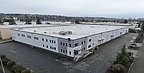
Renton Co-Warehousing Hub to Tackle Seattle's Industrial Space Crisis
RENTON, WA – April 29, 2026 – A vacant 90,000-square-foot industrial building in Renton is set to become a vital resource for the region's burgeoning small business community. WareSpace, a national operator specializing in flexible industrial space, has announced its acquisition of the property at 700 Powell Ave. S.W., marking its strategic entry into the Pacific Northwest. The company plans to convert the building into a modern, multi-tenant warehouse hub, with an anticipated opening in the first quarter of 2027.
The move directly confronts a critical challenge facing entrepreneurs across the Seattle metropolitan area: a severe shortage of small, affordable industrial space. While Washington leads the nation in new business formation, the supply of suitable facilities has failed to keep pace, creating a significant barrier to growth for the very businesses driving the local economy.
An Industrial Lifeline for Seattle's Entrepreneurs
The Seattle area's industrial real estate market is notoriously tight, with soaring demand and critically low vacancy rates. For small businesses, the problem is particularly acute. A near-total lack of new construction for spaces under 2,000 square feet has left e-commerce sellers, light manufacturers, contractors, and tech startups with few viable options. They are often forced into expensive, oversized leases or left to operate out of inadequate spaces like garages and self-storage units.
This supply-demand imbalance is starkly illustrated by regional data. King County continues to be the epicenter of Washington's entrepreneurial boom, logging over 33,000 new business applications in the past year alone. These small enterprises are not just a statistic; they are a powerful engine for job creation, contributing over 27,000 net new jobs to the state's economy in 2024, representing more than 70% of total job growth.
WareSpace's new Renton facility is designed to serve this exact demographic. By subdividing the large warehouse into smaller, private suites, the company will introduce much-needed inventory tailored to businesses that don't fit the traditional leasing mold. The project aims to provide a professional, scalable environment that was previously out of reach for many local entrepreneurs.
"Renton is exactly the kind of market we look for — well-located buildings that can be repositioned to better serve local entrepreneurs," said Joseph Ely, co-founder and COO of WareSpace, in a press release. "The demand is there. We're here to meet it."
Reinventing the Warehouse: The Rise of Co-Warehousing
For decades, the industrial leasing process has been rigid and unforgiving, characterized by long-term commitments, substantial upfront costs, personal guarantees, and empty shells requiring significant tenant investment. WareSpace is part of an emerging trend of 'co-warehousing' that flips this outdated model on its head.
The company's approach is to deliver turnkey industrial space as a service. Tenants at the upcoming Renton hub will benefit from flexible lease terms, some as short as six months, and all-inclusive pricing that bundles rent, utilities, property taxes, and high-speed internet into a single monthly payment. This transparency and flexibility are game-changers for small businesses managing tight cash flows.
Beyond the private suites, the model emphasizes shared infrastructure. Tenants will have access to communal loading docks, shipping and receiving stations, professional-grade equipment, kitchens, break areas, and conference rooms. This not only reduces individual operational costs but also fosters a collaborative environment. Each facility is also staffed with an on-site general manager to handle logistics and maintenance, allowing business owners to focus on growth rather than property management.
"We're rethinking how small industrial space is delivered by making it modern, flexible, and ready for growth," stated Levi Cohen, co-founder and CEO of WareSpace. "Every market we enter creates real opportunity for the businesses that rely on us."
This model has proven successful across the company's 12 other markets, which now span over 2 million square feet. Company data shows a 60% renewal rate and indicates that over 73% of its tenants report business growth since joining, with more than a quarter hiring additional employees. This track record suggests the Renton facility is poised to have a measurable impact.
Renton's Strategic Ascent as a Logistics Powerhouse
The choice of Renton for WareSpace's Pacific Northwest debut is no accident. The city's strategic location and robust infrastructure solidify its position as a critical logistics corridor for the entire region. Situated with direct connectivity to Seattle, Bellevue, and Sea-Tac International Airport, Renton offers businesses a logistical sweet spot.
The city is a nexus of major transportation arteries, including Interstate 405 and State Route 167, enabling efficient distribution and last-mile delivery across the Puget Sound area. Its proximity to Sea-Tac International Airport—a major cargo hub that handled over 1.3 million metric tons of cargo last year—is a crucial advantage for businesses reliant on air freight.
Furthermore, Renton's logistical capabilities are set to expand significantly. Ongoing infrastructure investments like the RapidRide I-Line, launching in 2025, will enhance bus service connecting Renton with Kent and Auburn. By 2028, the Stride S1 bus rapid transit line will link the city to Bellevue, Burien, and key light rail stations, further integrating Renton into the regional transit network.
This combination of existing infrastructure and future development makes Renton an increasingly attractive base for businesses that need to move goods and people efficiently. The arrival of WareSpace is both a validation of the city's strategic importance and a catalyst for its continued economic development.
As the project moves toward its Q1 2027 opening, it represents more than just the redevelopment of a vacant building. It signifies a crucial investment in the foundational needs of the local economy, promising to empower a new wave of entrepreneurs who have, until now, been locked out of the market. As co-founder Joseph Ely noted, "When you solve for space, you unlock business growth. This is infrastructure for the next generation of entrepreneurs."