
- $100 minimum investment: SPS allows fractional ownership of real estate with as little as $100.
- $380 trillion market: The platform aims to digitize less than 1% of the global real estate market.
- $16 trillion projection: The global tokenized assets market is expected to grow to $16 trillion by 2030.
Experts would likely conclude that SPS's platform represents a significant step toward democratizing real estate investment, though its long-term success will depend on regulatory compliance, security measures, and market adoption.
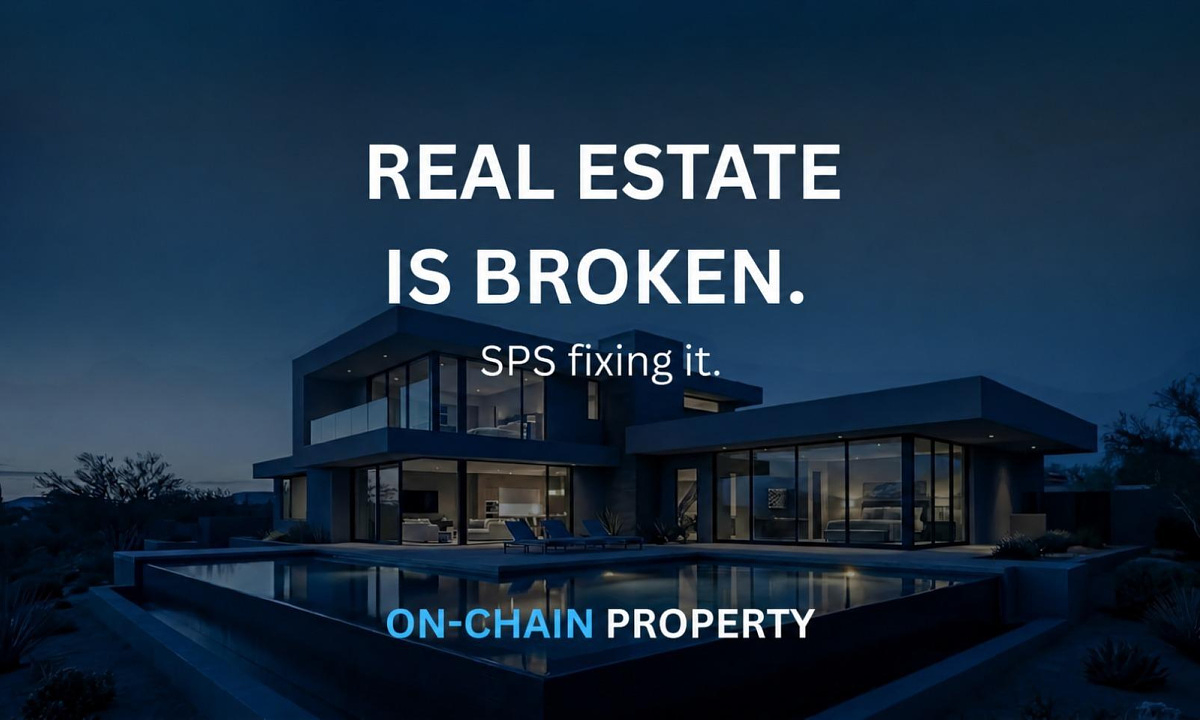
Real Estate for $100: SPS Launches Tokenized Property Investment Platform
NEW YORK, NY – May 04, 2026 – By Anthony Hughes
A new financial technology firm, Smart Props Solution (SPS), has officially launched a platform that aims to dismantle one of the oldest barriers in wealth creation: the high cost of real estate investment. By leveraging blockchain technology, SPS is offering fractional, tokenized ownership in income-generating properties, allowing individuals to start building a real estate portfolio with as little as $100.
The platform promises to transform the traditionally illiquid, geographically-bound, and capital-intensive world of property investment into a liquid, global, and accessible market. For decades, direct ownership in profitable real estate has been the domain of the wealthy and large institutions. Smart Props Solution is challenging that paradigm by converting legal ownership of properties into digital tokens that can be bought, sold, and traded online, with holders receiving a proportional share of rental income.
The Democratization of a Trillion-Dollar Market
The core vision of Smart Props Solution is to open the gates to the estimated $380 trillion global real estate market, of which less than 1% has been digitized. The platform addresses long-standing obstacles that have kept everyday citizens on the sidelines, such as the need for substantial down payments, the complexities of cross-border investing, and the opaque nature of property management.
"Access to a stable, revenue-generating asset like real estate shouldn't only be accessible by a select few," the company stated in its launch announcement. The process is designed for simplicity, catering to both crypto-savvy investors and those more familiar with traditional finance. After a mandatory Know-Your-Customer (KYC) and Anti-Money Laundering (AML) check, users can browse a curated list of pre-vetted properties. Each listing is accompanied by what the company describes as AI-powered due diligence reports, independent appraisals, and detailed financial projections.
Investors can purchase property tokens using either fiat currency or major cryptocurrencies like ETH, BNB, and the stablecoin USDC. Once owned, these tokens represent a direct, legally recognized fractional share of the property. The rental income generated is collected by SPS's legal entities and then automatically distributed to token holders monthly in the form of stablecoins via smart contracts. This automated process is designed to provide a transparent and reliable passive income stream, removing the typical landlord headaches of tenant management, maintenance, and vacancies.
Perhaps one of the most significant features is the platform's integrated secondary marketplace. Unlike traditional real estate, which can take months to sell, SPS token holders can theoretically trade their shares instantly, introducing a level of liquidity previously unheard of in direct property ownership.
Navigating the New Frontier of Regulation and Security
As the tokenized asset space grows, so does regulatory scrutiny. SPS claims to be tackling this head-on with a "legal first" approach. The company asserts that its offerings are structured to comply with securities laws, utilizing exemptions like Regulation D for accredited investors in the U.S. and Regulation S for non-U.S. investors. This is a critical distinction, as the U.S. Securities and Exchange Commission (SEC) generally views fractional ownership tokens as investment contracts, which are a type of security.
To provide a solid legal foundation, the title for each property is held within a dedicated Special Purpose Vehicle (SPV), a common practice in asset securitization. Token holders own shares in this SPV, giving them legally enforceable economic rights to the underlying property and its income. According to industry experts, this structure is crucial for protecting investors and ensuring the legitimacy of the asset.
On the technology side, SPS has built its platform on the Base Network, an Ethereum Layer-2 solution known for its lower transaction fees and faster speeds compared to the Ethereum mainnet. The company also emphasizes its security protocols, which include quarterly third-party audits of its smart contracts, a public bug bounty program to incentivize ethical hacking, and the segregation of user funds from operational accounts. To bolster confidence among more cautious investors, SPS also holds a crime insurance policy covering digital assets under its custody.
A Crowded Field and the Path to Differentiation
Smart Props Solution enters a burgeoning but increasingly competitive market. Pioneers like RealT and Lofty have already established a foothold by offering fractional ownership in U.S. properties, proving the model's appeal. The global market for tokenized assets is projected by some analysts to grow exponentially, potentially reaching over $16 trillion by 2030. In this environment, differentiation is key.
SPS appears to be positioning itself by combining several key features into a single platform. Its explicit focus on a robust legal framework and comprehensive security measures is designed to attract investors who may have been hesitant to enter the crypto space. The combination of both fiat and crypto on-ramps widens its potential user base significantly, while the promise of AI-driven analytics and a deflationary model for its native SPS token adds further layers to its strategy.
By offering a low entry point, automated passive income, and a liquid secondary market, the platform directly addresses the primary pain points of traditional real estate investing. This holistic approach, which aims to be as accessible to a novice in Southeast Asia as it is to an accredited investor in New York, could be its primary advantage in carving out a significant share of this new market.
While the company provides extensive detail on its platform's structure and legal compliance, public information regarding its leadership team and venture capital backing remains limited. For many investors, understanding the experience and track record of the team behind a project is as important as the technology itself. As the platform grows, greater transparency in this area will likely become a key factor in building long-term trust. Nonetheless, the launch of Smart Props Solution marks another significant step in the ongoing digital transformation of real-world assets, pushing the boundaries of what is possible for the average global investor.