
- 24% market share: RayNeo leads the global AR glasses market with a 24% share in Q3 2025.
- 1,200 nits brightness: The Air 4 Pro features a peak brightness of 1,200 nits and a 200,000:1 contrast ratio.
- 80% sound reduction: The glasses reduce audible sound leakage by up to 80% for private listening.
Experts view the RayNeo Air 4 Pro as a significant advancement in AR glasses, setting a new standard for portable media consumption with its HDR10 display and premium audio, while solidifying RayNeo's leadership in the competitive AR market.
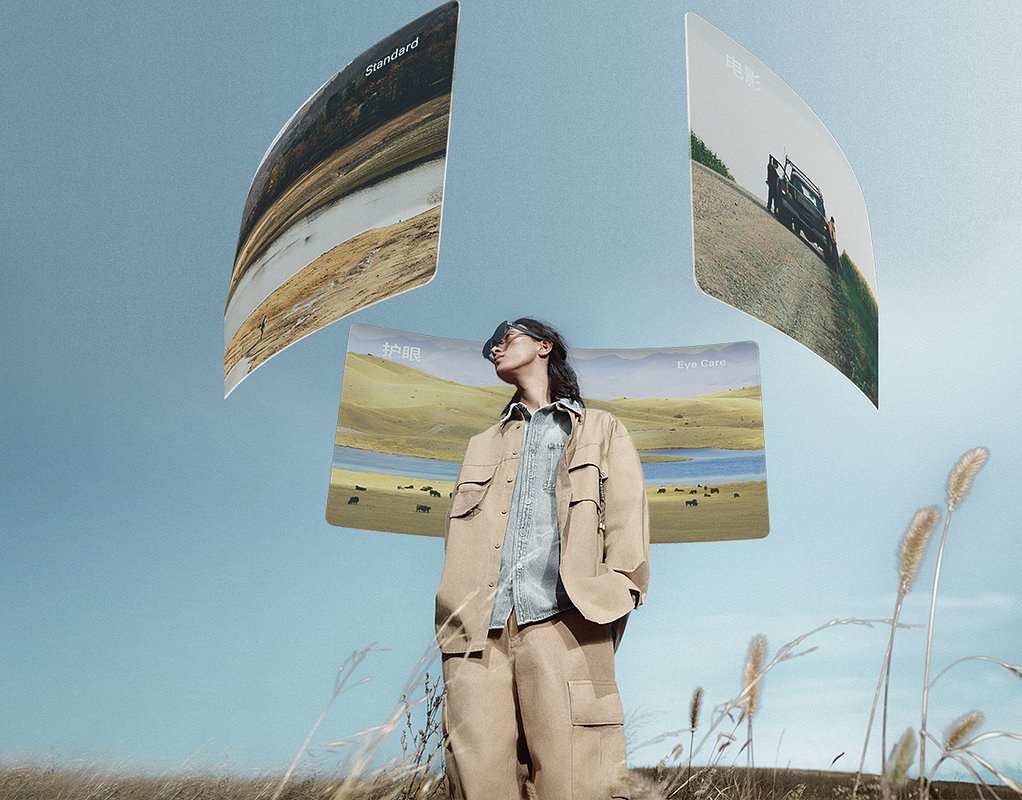
RayNeo Air 4 Pro: A Cinematic Leap for Augmented Reality Glasses
LAS VEGAS, NV – January 06, 2026 – The landscape of personal entertainment took a significant stride forward today as RayNeo unveiled the RayNeo Air 4 Pro at CES 2026, heralding them as the world's first augmented reality glasses to feature HDR10 support. The announcement positions the lightweight wearables not merely as a tech accessory, but as a "new species of head-mounted TV," promising a private, cinema-grade experience that can be carried in a pocket. By combining a breakthrough display with premium audio co-designed by Bang & Olufsen, RayNeo is making a bold statement about the future of media consumption on the go.
The debut comes as the consumer AR market heats up, with multiple players vying for dominance. RayNeo, already a market leader, aims to solidify its position by pushing the boundaries of what users can see and hear through a pair of glasses, transforming daily commutes and long-haul flights into immersive cinematic sessions.
A New Standard for Visual Fidelity
At the heart of the RayNeo Air 4 Pro's appeal is its groundbreaking display technology. The claim of being the "world's first HDR10-enabled AR glasses" is more than just a marketing tagline; it represents a tangible upgrade in visual quality that has been largely absent from this product category. The integration of High Dynamic Range (HDR) allows for a vastly expanded range of color and contrast, enabling brighter, more detailed highlights and deeper, truer blacks.
This is made possible by a state-of-the-art SeeYa 0.6-inch Micro-OLED display panel. With a peak brightness of up to 1,200 nits and a contrast ratio of 200,000:1, the visuals are designed to pop with lifelike vibrancy. The 10-bit color depth allows the glasses to render over a billion colors, covering 98% of the DCI-P3 color gamut used in digital cinema. For the user, this translates to a 201-inch virtual screen (viewed from 6 meters) that doesn't suffer from the washed-out blacks or muted colors that can plague less advanced displays. Early hands-on impressions from the CES show floor have been overwhelmingly positive. "The difference in the display quality was immediately noticeable," noted one attendee. "Compared to other glasses, the image was significantly brighter and cleaner in highlights."
Powering these visuals is a custom-built Vision 4000 processor. This chip is crucial, as it not only drives the native HDR display but also intelligently enhances existing content. It can upscale standard dynamic range (SDR) videos to near-HDR quality in real-time and even convert traditional 2D content into stereoscopic 3D. This feature cleverly sidesteps the issue of limited native HDR content, ensuring that a vast library of movies, shows, and games can benefit from the glasses' advanced capabilities right out of the box. With a variable refresh rate of up to 120Hz and TÜV Rheinland certifications for low blue light and flicker-free viewing, the device is engineered for both stunning performance and extended comfort.
Immersive Audio Meets Wearable Comfort
A cinematic experience is incomplete without compelling audio, and RayNeo has addressed this by partnering with the renowned Danish audio experts at Bang & Olufsen. The audio system in the Air 4 Pro was co-designed with the B&O Sound Lab, resulting in a sophisticated setup that aims for both immersion and privacy. The glasses incorporate four precision-tuned speakers, but the real innovation lies in the custom "sound tubes"—a unique sound waveguide system that directs audio precisely towards the user's ears.
This focused audio delivery system is designed to create a rich, spatial soundscape while dramatically minimizing sound leakage. The company claims this approach reduces audible sound to bystanders by up to 80%, a critical feature for anyone wanting to enjoy a movie on a plane or a train without disturbing their neighbors. The glasses offer multiple audio settings, including a "Surround Mode" for heightened immersion and a "Whisper Mode" for use in exceptionally quiet environments.
This advanced audio-visual technology is packed into a frame that weighs a mere 76 grams (2.7 ounces). Portability and long-term wearability are key design pillars. The frame is balanced for a natural fit, and adjustable nose pads help accommodate different face shapes. For users who require vision correction, the glasses are also designed to support the installation of prescription lenses. This focus on ergonomics ensures that the "pocket magician," as the company calls it, is a practical companion for travel and daily use, not just a novelty gadget.
Navigating a Competitive AR Landscape
The launch of the Air 4 Pro arrives at a pivotal moment for the AR industry. According to data from Counterpoint Research, RayNeo already commanded a 24% share of the global AR glasses market in the third quarter of 2025, establishing it as the worldwide leader. This new product is a clear strategic move to consolidate that leadership against a growing field of competitors.
Companies like XREAL, Meta, and Rokid are all making aggressive plays in the consumer space. While Meta's Ray-Ban collaboration focuses on AI and camera integration in a stylish form factor, and others like the new ASUS ROG XREAL R1 glasses target high-refresh-rate gaming, RayNeo's Air 4 Pro carves out a distinct niche by prioritizing unparalleled media fidelity.
Furthermore, RayNeo's CES booth demonstrates a dual-pronged strategy. Alongside the entertainment-focused Air 4 Pro, the company is showcasing its flagship RayNeo X3 Pro. This model, a recipient of TIME's "Best Inventions of 2025," integrates Gemini AI for real-time multilingual translation and context-aware assistance, running on an open Android ecosystem. By also exhibiting a prototype "Project eSIM" version of the X3 Pro, RayNeo is signaling its deep investment in the future of spatial computing, where AR glasses become truly independent, connected devices. This strategy allows the company to cater to today's media consumer with the Air 4 Pro while simultaneously building the more advanced, AI-driven productivity platform of tomorrow with the X3 series.
The Pocket Cinema in Practice
Ultimately, the value of the RayNeo Air 4 Pro will be defined by its real-world utility. With simple plug-and-play functionality via a universal USB-C port, the glasses are designed to be an effortless extension of the devices people already own. They can connect to a wide array of smartphones, tablets, laptops, and modern gaming consoles like the Nintendo Switch 2, instantly transforming a small screen into a massive personal display.
This versatility unlocks numerous use cases. A frequent traveler can watch blockbuster movies in full HDR glory without needing a large tablet or laptop. A gamer can dive into their favorite titles on a huge virtual screen, gaining a more immersive perspective. A remote worker can use the glasses as a private, secondary monitor to enhance productivity in a coffee shop or co-working space.
Priced at $299 and slated for a January 25th launch, the RayNeo Air 4 Pro is positioned as a premium yet accessible upgrade for mobile entertainment. By successfully packing a high-fidelity HDR display and sophisticated private audio into a lightweight, comfortable package, RayNeo has not only set a new benchmark for AR glasses but has also delivered a compelling vision for the future of personal media.