
- 1.9 million tons: Verified carbon removals delivered by Grassroots Carbon, making it the largest carbon removal company in the U.S.
- $40 million: Direct payments to ranchers since 2022, supporting rural economies
- 2 million acres: Land span across 22 states under regenerative ranching practices
Experts view this model as a promising, science-backed approach to climate mitigation, aligning economic incentives for ranchers with measurable carbon sequestration and ecological benefits.
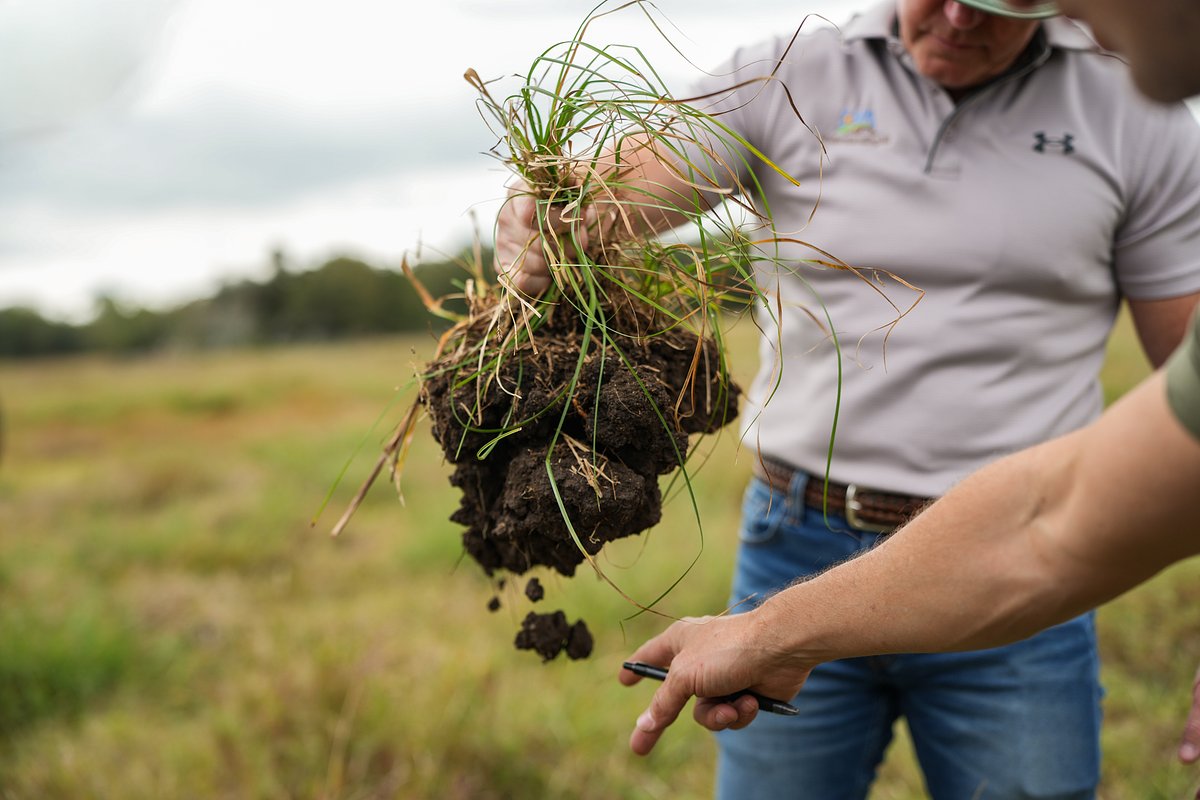
Ranching a Revolution: Soil Carbon Transforms American Grasslands
SAN ANTONIO, TX – January 09, 2026 – A quiet revolution is taking root in America's vast grasslands. Grassroots Carbon, a Texas-based company, announced today it has become the first U.S. firm to deliver 1.9 million tons of verified carbon removals by partnering with ranchers, a milestone that positions it as the largest carbon removal company in the nation. The achievement signals a potential turning point for nature-based climate solutions, transforming grazing lands into a powerful tool for carbon sequestration and providing a new revenue stream for rural communities.
The company has already seen over 1.5 million tons of its carbon credits retired by major corporations like Microsoft and Nestlé, who are integrating these nature-based removals into their ambitious climate strategies. This milestone is not just a number; it represents a tangible fusion of traditional land stewardship with modern climate finance, backed by a reported $40 million in direct payments to ranchers since 2022.
"This industry-defining milestone marks a turning point for nature-based carbon solutions, proving that soil health, rancher prosperity, and measurable climate impact can grow from the same ground,” said Brad Tipper, CEO of Grassroots Carbon, in a statement. His company's rapid growth since its 2021 founding - now spanning 2 million acres across 22 states - suggests a growing appetite for carbon credits grounded in the soil itself.
The Science Beneath the Surface
At the heart of this new climate frontier is the practice of regenerative ranching, which employs managed grazing techniques to improve soil health. Unlike conventional methods, these practices aim to mimic the natural movement of herd animals, promoting deeper root growth in grasses, which in turn pulls more carbon dioxide from the atmosphere and stores it deep in the soil.
However, the world of soil carbon credits has been fraught with scientific debate over the accuracy of measurement and the permanence of storage. Grassroots Carbon aims to address these concerns head-on with a methodology it claims sets a new standard for rigor. The company utilizes deep soil core sampling, extracting samples from one meter below the surface.
“Working together across more than a million acres, we’ve measured 1-meter-deep soil cores that set a new standard for rigor and permanence in the industry,” explained Lars Dyrud, CEO of EarthOptics, a key technology partner. He notes that conventional methods often sample only to 30 centimeters, missing more than half of the soil's organic carbon. This deeper measurement, combined with DNA-based microbial testing and advanced soil mapping, creates what the company calls the largest privately collected soil carbon dataset in the U.S.
To further ensure credibility, the process is subject to third-party verification and complies with the "Regenerative Standard." A portion of the credits generated is held in an insurance buffer pool, a mechanism designed to safeguard against reversals and guarantee the long-term permanence of the stored carbon.
A New Lifeline for Rural America
Beyond the climate benefits, the program is injecting significant capital into rural economies. By paying ranchers for a service their land provides - carbon storage - the model creates a new, diversified income stream. Grassroots Carbon reports that ranchers receive 70% of the revenue from the carbon credit sales, with the company providing an additional $10 million in advance payments to eliminate upfront costs for participation.
This financial incentive is proving transformative. For generations, ranchers have faced volatile commodity prices and increasing operational costs. Carbon payments offer a measure of stability and a direct reward for sustainable practices that many were already pursuing.
“Their partnership gives producers access to the science, tools, and financial incentives to restore grasslands in a way that’s both profitable and regenerative,” said Taylor Collins, co-founder of Force of Nature and land steward at Roam Ranch. “It’s been transformative for our land and our community.”
The ecological co-benefits are equally compelling. Regenerative practices are shown to drastically improve water infiltration - with some participating ranches reporting rates up to 30 times higher than on degraded land. This enhances drought resilience, a critical advantage in an era of increasing climate uncertainty.
“Grassroots Carbon is empowering ranching families to build resilience for the future,” noted Chad Ellis, CEO of the Texas Agricultural Land Trust. “It’s a model that’s strengthening rural communities while contributing to a healthier planet.”
The Corporate Drive for High-Integrity Credits
The success of this model hinges on strong demand from the voluntary carbon market, where corporations purchase credits to offset their own hard-to-abate emissions and meet net-zero targets. In a market often criticized for low-quality projects and questionable claims, buyers are increasingly seeking out "high-integrity" credits that can withstand scrutiny.
Grassroots Carbon's roster of partners - including Microsoft, Nestlé, Shopify, Olipop, and Chevron - indicates that its focus on scientific verification is resonating. For these companies, investing in soil carbon is not just about hitting a number; it's about contributing to a scalable, U.S.-based solution that also supports biodiversity, water security, and rural livelihoods.
While competitors like Nori have also built marketplaces for agricultural carbon, primarily focusing on croplands, Grassroots Carbon has carved out a distinct and massive niche in America's 655 million acres of grasslands. This specialization in regenerative ranching appears to be a key differentiator, attracting corporate partners looking for verifiable, nature-based removals with a compelling story of ecological and community restoration.
Tapping a Billion-Ton Opportunity
The 1.9 million-ton milestone, while significant, may only be scratching the surface. Experts estimate that America's grasslands represent one of the largest untapped carbon sinks on the planet, with the potential to store up to 1 billion tons of CO₂e annually. If realized, this would make land stewardship one of the most powerful and equitable climate solutions available.
The model demonstrates a powerful alignment of interests: ranchers are paid for improving their land, corporations get credible carbon removals, and ecosystems are restored. This synergy is what proponents believe will drive the rapid scaling necessary to meet global climate goals.
“What happens on the land doesn’t only impact ranchers; it has a profound impact across the globe on biodiversity, soil health, carbon capture, and even the quality of our food,” said Dr. Allen Williams, a sixth-generation farmer and founder of Understanding Ag, LLC. “It impacts everybody, and we all benefit from it.”
As Grassroots Carbon continues to expand its network of ranchers, it is building the infrastructure to prove that the path to a more stable climate may lie directly beneath our feet, cultivated by the very stewards who have cared for the land for generations.