
- 980 new homes: Q Tower will deliver nearly 1,000 residential units by early 2030.
- $640 million: The project's estimated construction cost.
- $295 million: Direct economic benefits for the city, including development charges and municipal fees.
Experts view Q Tower as a critical step in addressing Toronto's housing crisis, aligning with provincial and federal housing targets while providing long-term economic and infrastructural benefits to the city.
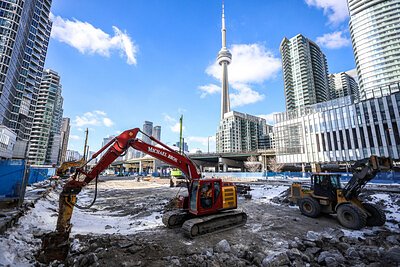
Q Tower Breaks Ground on Toronto's Waterfront, Promises Housing Boost
TORONTO, ON – January 21, 2026 – Shovels are in the ground at 200 Queens Quay West, officially marking the start of construction for Q Tower, a 60-storey residential skyscraper poised to reshape Toronto's iconic waterfront skyline. The project, a joint venture by veteran developers Lifetime Developments and DiamondCorp, promises to deliver nearly 980 new homes by early 2030, a critical injection of housing supply into a city grappling with a severe and persistent shortage.
The groundbreaking represents a significant milestone for a development with an estimated construction cost of over $640 million. Beyond its residential offerings, the project is set to provide a substantial economic stimulus, creating hundreds of jobs and channeling over $295 million in direct city-building contributions to municipal coffers.
A Timely Response to a Deepening Housing Crisis
The arrival of Q Tower is timed to coincide with a projected surge in housing demand for the coming decade. Both the provincial government and federal agencies have sounded the alarm over a substantial housing shortfall. The Canada Mortgage and Housing Corporation (CMHC) has estimated that Canada needs to build an additional 3.5 million homes by 2030 to restore affordability, while Ontario has set an ambitious, though challenging, target of 1.5 million new homes by 2031.
Against this backdrop, the addition of almost 1,000 new condominium units in a prime downtown location is being welcomed by government officials.
"Ontario needs more housing, and homebuilders like Lifetime Developments and DiamondCorp are delivering," said Rob Flack, Minister of Municipal Affairs and Housing, in a statement. He credited recent provincial legislation, such as the Protect Ontario by Building Faster and Smarter Act, for creating the conditions to advance "much-needed projects like this that will open up opportunities for Ontario families."
While the broader condo market has seen recent softness due to high interest rates and increased inventory from completed projects, developers are betting on long-term fundamentals. "With Toronto continuing its rapid growth and expansion, Q Tower is arriving at precisely the right time," stated Brian Brown, Principal at Lifetime Developments. "Breaking ground this year ensures we're ahead of the curve in delivering much-needed housing to meet demand through 2030."
Ty Diamond, President of DiamondCorp, emphasized the project's reliability in a fluctuating market. "In today's market, where few projects will reach completion by the end of this decade, Q Tower distinguishes itself as a rare and dependable project," he noted.
More Than Homes: A Major Economic and Fiscal Engine
The financial implications of Q Tower extend far beyond its construction budget. An analysis by the Altus Group projects the development will generate approximately $295 million in direct economic benefits for the city. This figure includes development charges, education levies, parkland contributions, and other municipal fees that help fund the infrastructure required to support a growing population, such as transit, water systems, and community centres.
"Our analysis confirms that Q Tower will deliver approximately $295 million in direct economic benefits for Toronto," said Koover Vohra, Senior Director at Altus Group. "Beyond these financial contributions, projects of this scale strengthen infrastructure, expand community amenities, and create jobs that directly benefit Torontonians."
The project is also set to become a significant source of recurring revenue for the city. Altus Group projects that the City of Toronto will collect over $10 million in property taxes during the development period alone. Upon completion, Q Tower is expected to generate $6.7 million in property taxes annually, amounting to roughly $67 million in its first decade of operation—funds that support essential city services.
Revitalizing the Waterfront with Art and Amenities
Q Tower is a key piece in the ongoing transformation of Toronto's Harbourfront, an area that has seen its population swell over the past two decades. The project aims to contribute not just density but a new level of sophistication and lifestyle to the neighbourhood.
Designed by the acclaimed Wallman Architects with interiors by U31, the tower will offer residents sweeping views of the city and Lake Ontario. Its location provides immediate access to Union Station, the Scotiabank Arena, and the underground PATH system, making it a highly connected address.
Inside, the developers are curating a complete living experience. Amenities will include a dedicated kids' zone, a social lounge, extensive fitness spaces, and outdoor dining terraces. A unique feature will be the integration of art from contemporary German Pop artist Michael Moebius, known as the "Bubblegum Artist." His hyper-realistic portraits of cultural icons like Queen Elizabeth II and Kate Moss will be featured in the common areas, infusing the building with a distinct artistic identity.
"Together with Lifetime, we're not just building new homes, we're creating public spaces, infrastructure, and opportunities that will enrich Toronto's downtown core for decades to come," said Ty Diamond.
Developer Pedigree in a Shifting Market
With suites starting from $599,900, Q Tower is entering a complex real estate market. While long-term demand remains strong, recent CMHC reports point to a temporary oversupply in the condo sector, leading some developers to pivot to smaller projects.
However, Lifetime Developments and DiamondCorp bring decades of combined experience and a portfolio of successfully delivered large-scale, complex urban projects. Lifetime Developments, with over 40 years in the industry, is behind landmark projects like the Four Seasons Private Residences in Yorkville and the Panda Condominiums at Yonge-Dundas. The company is also known for its community engagement through its Lifeline charitable foundation.
DiamondCorp, founded in 2007, has managed the development of over 19 million square feet of density in the GTA. The firm played a key role in The Well, a massive mixed-use community downtown, and has a reputation for navigating complex approvals and delivering award-winning projects. This track record provides a foundation of confidence for buyers and city planners alike as the impressive new tower begins its ascent on the city's shore.