
- 50% reduction in time physicians spend on clinical documentation
- $1.1 billion global market value for AI medical scribe software in 2024
- High accuracy in capturing Arabic dialects and medical terminology
Experts view PureHealth's 'Nada' AI as a promising advancement in healthcare technology, balancing efficiency with the preservation of human connection in doctor-patient interactions, though they emphasize the need for rigorous privacy and ethical safeguards.
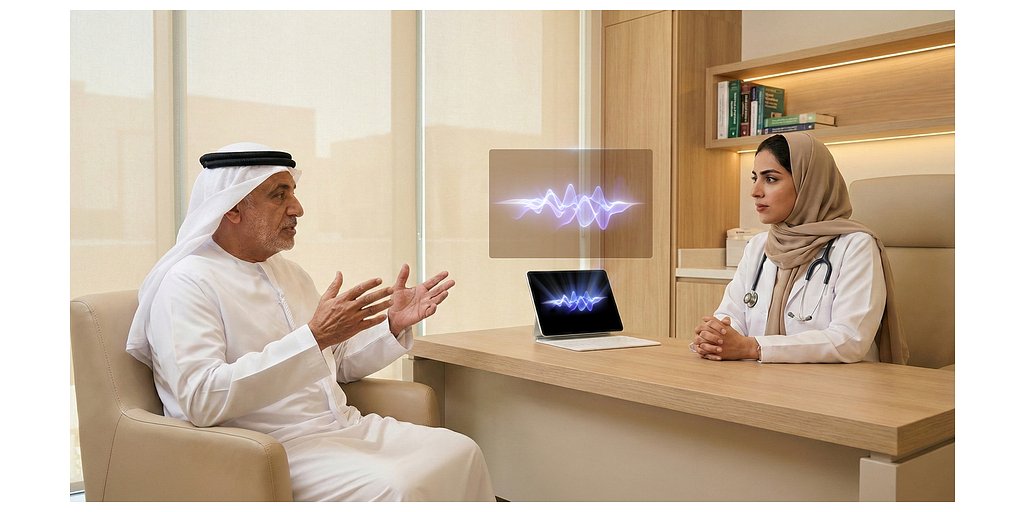
PureHealth's 'Nada' AI: Less Typing, More Listening in UAE Clinics
ABU DHABI, UAE – December 29, 2025 – In consultation rooms across the United Arab Emirates, a quiet revolution is underway. PureHealth, the Middle East's largest healthcare group, has initiated the pilot phase of “Nada,” an artificial intelligence-powered digital assistant designed to listen to and document medical conversations in real time. The goal is to unchain physicians from their keyboards, allowing them to focus entirely on the person in front of them, transforming the patient experience and tackling the growing administrative burden that contributes to clinician burnout.
The service, now being tested in select PureHealth facilities, functions as an ambient AI scribe. It operates in the background of a consultation, capturing the nuances of the conversation and automatically structuring the information into coherent, organized clinical notes. This move represents a significant step in the region's adoption of advanced AI, aiming to enhance care without sacrificing the human connection at its core.
Redefining the Doctor-Patient Encounter
At the heart of the 'Nada' initiative is a paradoxical goal: using sophisticated technology to make healthcare more human. By automating the laborious process of manual notetaking, the tool is designed to eliminate the screen that so often acts as a barrier between doctor and patient. Proponents argue this will enable physicians to maintain eye contact, listen more attentively, and engage in more meaningful dialogue.
“Listening is the foundation of great healthcare,” said Shaista Asif, Group Chief Executive Officer of PureHealth, in the announcement. “With 'Nada', we are strengthening the human connection at the heart of care by giving clinicians the freedom to truly engage with their patients. This is not about technology replacing human interaction, but about enabling it.”
For patients, the anticipated benefits are immediate. The shift promises consultations that feel less like transactional data-entry sessions and more like personal conversations. This can lead to clearer communication, a greater sense of being heard, and increased confidence that their concerns and symptoms are being accurately captured. The name itself, “Nada,” resonates in Arabic with concepts of gentle presence and calm clarity, reflecting the project's patient-centric philosophy.
The technology was developed following a rigorous, multi-phase evaluation across the extensive SEHA hospital network in the UAE. Testing grounds ranged from high-volume primary care clinics to complex tertiary hospital environments, ensuring the system was vetted against a wide spectrum of clinical scenarios before the pilot launch.
The Competitive Landscape of AI Scribes
PureHealth's 'Nada' enters a rapidly growing global market for AI medical scribes, a field populated by established players like Nuance's Dragon Ambient eXperience (DAX) and DeepScribe. These technologies are gaining traction worldwide as health systems grapple with physician burnout and seek to improve operational efficiency. The global market for AI medical scribe software was valued at over $1.1 billion in 2024 and is projected to expand significantly in the coming years.
However, 'Nada' is distinguished by its specific design for the Middle Eastern healthcare landscape. A key challenge for global AI platforms is accurately interpreting diverse languages and dialects. The press release highlights 'Nada's' high accuracy in capturing not only complex medical terminology but also local Arabic dialects—a crucial feature for ensuring the precision of medical records in the region. This localized approach positions it against other regional solutions, such as OrbDoc, which also emphasizes native Arabic support and compliance with local accreditation standards.
PureHealth projects that 'Nada' could reduce the time physicians spend on clinical documentation by more than 50%, potentially reclaiming over two hours per clinician each day. While these figures are based on internal pilot testing and await independent validation, they align with similar claims from competitors. Nuance DAX, for instance, reports saving clinicians up to seven minutes per encounter, while other services claim to save several hours daily.
Navigating Privacy and Regulation in the AI Era
The deployment of a tool that records sensitive medical conversations naturally raises significant questions about patient privacy and data security. The UAE has established a robust legal framework to govern the use of technology in healthcare, and PureHealth asserts that 'Nada' was developed in strict compliance with these regulations.
Key among these is the UAE's Federal Decree-Law No. 45 of 2021, the Personal Data Protection Law (PDPL), which classifies health data as "sensitive" and mandates stringent protection measures. Furthermore, laws like Federal Law No. 2 of 2019 and policies from the Abu Dhabi Department of Health (DoH) specifically regulate the use of ICT and AI in the health sector, demanding clear governance, security audits, and patient consent.
Beyond regulatory compliance, the ethical implications are a major focus for healthcare experts globally. Informed patient consent—ensuring individuals understand their conversation is being recorded and processed by an AI—is paramount. Another critical concern is accountability. While AI can draft notes with high accuracy, the ultimate responsibility for the medical record's correctness remains with the clinician, who must review and approve all AI-generated documentation. This human-in-the-loop oversight is essential to mitigate risks associated with potential transcription errors or algorithmic biases.
A Pillar of the UAE's Broader AI Ambition
The launch of 'Nada' is not an isolated experiment but a strategic component of PureHealth's ambitious vision for a technologically advanced healthcare ecosystem. It aligns perfectly with the UAE's national strategy to become a global leader in artificial intelligence. The healthcare group has been vocal about its goal to "take healthcare to the cloud" and has embarked on major initiatives to embed AI across its services.
Earlier this year, PureHealth announced a significant partnership with Dell Technologies to harness generative AI for a range of applications, from enhancing early disease detection and personalizing treatment plans to improving medical imaging analysis. This collaboration underscores a deep commitment to leveraging AI for tangible health outcomes and pioneering research.
By integrating ambient AI like 'Nada' into daily clinical practice, PureHealth is moving beyond simple digitization toward what it calls "cognitive healthcare"—a system where technology operates quietly in the background to support and augment human capabilities. This initiative, part of a larger digital transformation that includes remote care platforms and a dedicated cloud services subsidiary, signals the group's intent to not only modernize its own operations but also to position the region at the forefront of global health tech innovation.