
- 90% of the Dominican Republic's coral has been destroyed since the 1980s
- 60% of remaining coral cover lost from 2020 to late 2024
- 32 climate-controlled tanks (expandable to 64) for coral breeding and research
Experts agree that the Center for Marine Innovation represents a critical, high-tech escalation in coral reef conservation, combining corporate investment, scientific innovation, and public engagement to combat the accelerating decline of Caribbean reefs through scalable, resilient solutions.
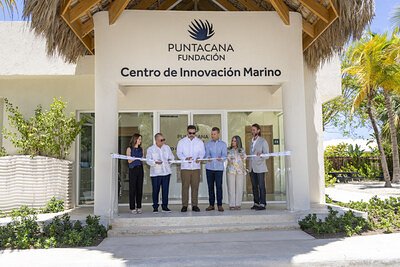
Puntacana's High-Tech Hope to Save the Caribbean's Dying Coral Reefs
PUNTA CANA, Dominican Republic – April 27, 2026 – Against a backdrop of turquoise waters and sun-drenched beaches, a new front has opened in the desperate battle to save the Caribbean's coral reefs. Fundación Puntacana, the philanthropic arm of the major resort developer Grupo Puntacana, has inaugurated its most ambitious project to date: the Center for Marine Innovation. This state-of-the-art facility, unveiled on Earth Day, represents a significant escalation in a conservation fight that began over three decades ago, shifting from preservation to a high-tech race against time.
Located at Playa Blanca, one of the most visible coastlines in the country, the center is more than just a new building. It is the heart of a strategic alliance uniting business, science, and international philanthropy, including partners like the Fundación Dominicana de Estudios Marinos (FUNDEMAR), The Nature Conservancy (TNC), and Oceankind. Their collective goal is not just to slow the destruction of coral reefs, but to outpace it with innovative, scalable solutions.
A Crisis Beneath the Waves
The urgency driving this initiative cannot be overstated. The Dominican Republic's coral ecosystems, once vibrant underwater cities teeming with life, are in a state of catastrophic decline. Scientific reports paint a grim picture, identifying the nation's reefs as among the most threatened in the entire Caribbean. Since the 1980s, an estimated 90% of the country's coral has been destroyed, leaving behind skeletal remains and a fraction of the biodiversity that once thrived there.
Recent years have seen this degradation accelerate. From 2020 to late 2024, the region lost nearly 60% of its remaining coral cover. This devastation is fueled by a combination of relentless stressors. Rising ocean temperatures, a direct consequence of climate change, triggered a severe mass bleaching event in 2023, the worst ever recorded. Compounding this is the aggressive spread of diseases like Stony Coral Tissue Loss Disease (SCTLD), which has decimated key reef-building coral species.
Human activity exacerbates the crisis. Overfishing has depleted populations of herbivorous fish, such as parrotfish, that are essential for keeping algae in check. Without these grazers, macroalgae smothers and kills the remaining corals. Runoff from coastal development and pollution further degrades water quality, creating an environment where reefs can no longer recover. The consequences are stark: accelerated beach erosion, collapsing fish stocks, and a direct threat to the tourism and fishing industries that are the lifeblood of coastal communities.
An Arsenal of Innovation
Confronting this complex crisis requires moving beyond traditional conservation methods. For years, reef restoration has relied on a technique known as coral gardening, which involves fragmenting healthy corals and growing them in underwater nurseries. While valuable, this approach faces a fundamental contradiction: it depends on sourcing fragments from wild populations that are already in severe decline and often produces genetically identical clones, limiting the resilience of restored reefs.
The Center for Marine Innovation was designed to break this cycle. It houses a specialized laboratory with 32 climate-controlled tanks—with capacity to double to 64—that serve as an incubator for the next generation of restoration science. Here, researchers are deploying a suite of advanced tools to breed and grow corals that are not only more numerous but also more resilient.
Key among these techniques are assisted evolution and sexual propagation. Instead of just cloning, scientists are selectively breeding corals that have naturally shown resistance to heat stress and disease. By collecting coral eggs and sperm during mass spawning events and facilitating fertilization in the lab, they can generate millions of genetically diverse coral larvae. This genetic diversity is the raw material for adaptation, giving future reefs a fighting chance in warmer, more acidic oceans.
This biological work is augmented by technology. The center is utilizing machine learning algorithms to rapidly analyze underwater imagery and environmental data, allowing for real-time coral health monitoring and early disease detection. In parallel, molecular biology provides the tools to diagnose pathogens quickly and understand their mechanisms, paving the way for preventative treatments. This fusion of a controlled lab environment with active field programs in the adjacent marine sanctuary allows for a rapid transition from research to real-world application.
"Fundación Puntacana has been restoring corals, training young scientists, working with fishing communities, and running environmental education programs for over thirty years. That work did not begin with this building," said Jake Kheel, Vice President of Fundación Puntacana. "What the Center for Marine Innovation gives us is a more powerful platform with better tools, more partners, and greater reach."
A New Model for Corporate Conservation
The center's existence is a testament to a unique and powerful coalition. As a major player in the Dominican Republic's tourism industry, Grupo Puntacana's investment in land and infrastructure signals a profound understanding that the long-term viability of its business is inextricably linked to the health of the marine environment that attracts millions of visitors.
This initiative serves as the anchor for the newly formed Dominican Republic Marine Innovation Hub, a national platform uniting Fundación Puntacana, FUNDEMAR, and The Nature Conservancy. Supported by the philanthropic vision of Oceankind and private donors, the Hub aims to create a sustainable financial and legal architecture that can support large-scale restoration far beyond any single funding cycle. It operates across two world-class facilities—the new center in Punta Cana and FUNDEMAR's lab in Bayahibe—creating a powerful network of expertise and resources.
This public-private partnership model is being hailed as a potential blueprint for conservation efforts across the globe. It demonstrates how corporate interests, when aligned with scientific expertise and non-profit leadership, can drive environmental action at a meaningful scale.
"The scale and speed of reef loss across the Caribbean demand a new approach to restoration, one that moves beyond small, isolated projects toward solutions that are resilient, innovative, and scalable," said Dr. Rob Brumbaugh, Executive Director of The Nature Conservancy's Caribbean Division. "Our partnership with Fundación Puntacana and the creation of the Center for Marine Innovation demonstrates what is possible when science, conservation, and private sector leadership align around a shared commitment to the ocean. Together, we are proving that large-scale, climate-smart coral restoration can deliver real impact today and serve as a model for reefs across the Caribbean and beyond."
Beyond its scientific mission, the center is committed to public engagement. This summer, it will open a permanent interactive exhibit to resort visitors and the local community. The goal is to bring the public face-to-face with the stakes of coral reef loss and the groundbreaking solutions being developed just steps from the beach. By fostering a broader constituency that understands why reefs matter, the foundation believes it can build the public will necessary to secure their future.