
- First Plasma Achieved: Pulsar Fusion successfully ignited plasma in its Sunbird nuclear fusion rocket exhaust system, a world first for this type of rocket.
- Potential Speeds: The fusion rocket could theoretically reach speeds over 500,000 miles per hour.
- Projected Timeline: In-orbit demonstration of core technology by 2027, with a production-ready system in the early 2030s.
Experts view this breakthrough as a foundational step toward faster interplanetary travel, though significant engineering and regulatory challenges remain before practical deployment.
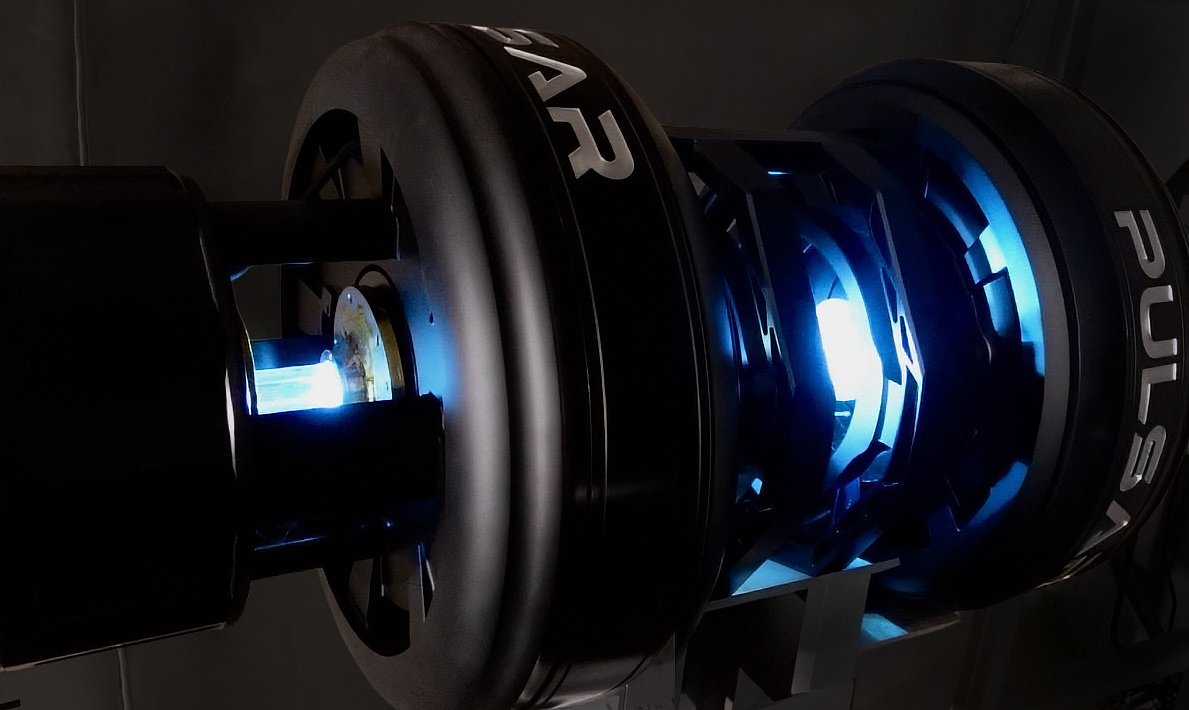
Pulsar Fusion Ignites Plasma in Breakthrough Nuclear Rocket Test
BLETCHLEY, United Kingdom – March 25, 2026 – In a milestone that could herald a new era of deep space exploration, UK-based Pulsar Fusion today announced it has successfully achieved “first plasma” in its Sunbird nuclear fusion rocket exhaust system. The demonstration, a world’s first for a rocket of this type, was showcased live during a technical session at Jeff Bezos’s exclusive MARS Conference in California, offering a tantalizing glimpse into a future of dramatically faster interplanetary travel.
The achievement represents a critical, foundational step in harnessing the power of a star for propulsion. By successfully generating and confining a superheated plasma—an ionized gas hotter than the sun’s core—within the rocket's exhaust architecture, the company has cleared a major initial hurdle in one of the most ambitious engineering projects in the space industry.
A Star in a Magnetic Bottle
At its core, Pulsar's test involved using a combination of powerful electric and magnetic fields to guide and accelerate charged particles through an exhaust channel. For this initial series of experiments, scientists in Bletchley used krypton gas, chosen for its efficiency in becoming a plasma at the required mass flow rates. The test was live-streamed to the MARS conference, where Pulsar Fusion CEO Richard Dinan presented the breakthrough to an audience of Nobel laureates, astronauts, and leaders in robotics and AI.
This is not the same as the fusion being pursued for terrestrial energy. While power plants aim for a net energy gain to supply electricity grids, fusion propulsion has a different primary objective: generating immense thrust and exhaust velocity. The goal is to channel the energetic particles from a fusion reaction directly out of a nozzle, creating a propulsion system that combines the high thrust of chemical rockets with the extreme efficiency of electric propulsion.
Controlling the plasma is the single greatest challenge. The superheated matter behaves like a chaotic “weather system,” notoriously difficult to predict and contain. Pulsar Fusion, in a strategic partnership with Princeton Satellite Systems, is applying advanced artificial intelligence and machine learning algorithms to analyze data from experimental reactors, hoping to master the turbulent behavior of plasma as it exits the engine. The Sunbird’s design, known as a Dual Direct Fusion Drive (DDFD), relies on superconducting magnets to form a magnetic bottle that contains the reaction and directs the exhaust, which could theoretically reach speeds over 500,000 miles per hour.
The Race for Next-Generation Propulsion
Pulsar Fusion’s achievement places it at the forefront of a competitive field striving to break the limitations of current space travel. Today's spacecraft are caught in a trade-off: powerful chemical rockets that burn through fuel quickly, or highly efficient electric thrusters that produce minimal thrust, requiring years of gradual acceleration for deep space missions.
Fusion propulsion promises to solve this dilemma, but it is not the only advanced concept in development. NASA and DARPA are actively working on a Nuclear Thermal Propulsion (NTP) rocket called Draco, which uses a fission reactor to heat hydrogen propellant. While less efficient than fusion, NTP is considered a more near-term technology, with a prototype flight planned for as early as 2027. Other systems, like Nuclear Electric Propulsion (NEP), use a reactor to power efficient ion thrusters, but also suffer from low thrust.
The potential payoff for fusion, however, is transformative. While a trip to Mars with current technology takes seven to nine months, a fusion rocket could potentially cut that journey in half. A mission to Pluto could be reduced from over a decade to about four years. This dramatic reduction in travel time is about more than just speed; it is a direct enabler of economic growth and scientific discovery in space.
From Lab to Launchpad: A Mountain of Challenges
Despite the successful “first plasma” test, the road to a flight-ready fusion rocket remains long and fraught with monumental engineering and scientific challenges. The Sunbird engine is designed to operate at temperatures of several hundred million degrees Celsius, requiring materials and containment systems that can withstand conditions more extreme than the core of the sun.
Furthermore, while Pulsar plans to use aneutronic fuel cycles like Deuterium and Helium-3 to minimize harmful neutron radiation, secondary reactions can still produce neutrons that bombard and degrade reactor components over time. To address this, the company has established a research program with the UK Atomic Energy Authority to study these radiation effects and develop resilient materials.
The regulatory landscape also presents a hurdle. Any launch of a nuclear system, whether fission or fusion, is subject to stringent international guidelines from bodies like the United Nations Committee on the Peaceful Uses of Outer Space (UN COPUOS), as well as national safety protocols. Gaining approval will require exhaustive safety assessments to mitigate risks during launch and operation.
“The Sunbird program showcased this milestone live in California at the MARS Conference, hosted by Jeff Bezos, which was an exceptional moment and a genuine privilege,” said Richard Dinan, CEO of Pulsar Fusion. “There is no greater platform to share this first test than here, surrounded by an esteemed group of world leading machine learning and robotics academics/entrepreneurs, Nobel laureates, astronauts.”
With backing from the UK Space Agency and the European Space Agency, Pulsar is moving forward with an ambitious timeline. The next phase involves gathering detailed performance data on thrust and exhaust velocity. The company plans to upgrade its magnetic systems to high-temperature superconducting magnets to achieve higher plasma densities, with the goal of an in-orbit demonstration of the core technology by 2027 and a production-ready system in the early 2030s. This technology could be the key to unlocking the projected $1.8 trillion space economy, enabling the rapid transport of materials and infrastructure needed to build a permanent human presence throughout the solar system.