
- Housing Shortage: Estimated at 1.5 million to 5.5 million units nationwide
- Housing Supply: Only 3.5 months of inventory in early 2025 (healthy equilibrium is 6 months)
- Private Lending Growth: Bridge loan volumes for residential investment show consistent year-over-year growth through 2025
Experts agree that private lenders and small-scale investors are playing a critical role in addressing the housing shortage by financing rehabilitation and new construction, particularly where traditional banks have withdrawn.
Private Lenders Step In to Address America's Housing Shortage
HOUSTON, TX – March 26, 2026 – As the United States grapples with a severe housing deficit, a new force is emerging from the shadows of traditional finance. Private lenders and small-scale real estate investors are increasingly stepping into a void left by large banks, financing the rehabilitation of aging properties and the construction of new homes, one project at a time. This ground-level activity is proving to be a critical, if often overlooked, component in the nationwide effort to close a housing gap estimated to be millions of units deep.
The Scale of the Housing Shortage
The American dream of homeownership is increasingly challenged by a simple, stark reality: there are not enough homes. Recent analyses paint a grim picture, with housing experts placing the national housing shortage anywhere from 1.5 million to a staggering 5.5 million units. A late 2023 study from the Brookings Institution estimated a deficit of 4.9 million homes, while Zillow's research pointed to a 4.5 million home shortfall in 2022.
This crisis is the culmination of years of under-building following the Great Recession, compounded by recent supply-chain disruptions, soaring material costs, and persistent labor shortages. The result is a market where the supply of available homes for sale remains far below what is considered balanced. While a six-month supply is seen as a healthy equilibrium, that figure hovered at just 3.5 months in early 2025, leaving prospective buyers in fierce competition for limited inventory. This fundamental imbalance is the root cause of the nation's housing affordability crisis, pushing prices and rents to historic highs.
While national policy discussions often focus on interest rates and large-scale development projects, a recent report from Houston-based lending firm Faundare Capital highlights the significant, cumulative impact of local investors. “Smaller investors are playing a measurable role in restoring existing housing inventory and contributing to incremental supply growth,” stated Dr. Lucas Liu, Founder of Faundare Capital.
A New Financial Landscape
The rise of the small-scale investor has been fueled by a significant shift in the real estate financing landscape. Over the past decade, traditional banks have steadily pulled back from certain segments of the market, particularly smaller, non-owner-occupied loans for properties that require significant renovation. Citing regulatory pressures and shifting internal risk models, many large institutions have focused on larger, more standardized commercial and residential loans, creating a critical funding gap for investors looking to tackle distressed or underutilized assets.
Into this gap have stepped private lenders. Industry data reveals a marked expansion in private lending for residential investment, with bridge loan volumes—including financing for "fix-and-flip" and small-scale new construction—showing consistent year-over-year growth through 2025. These specialized lenders offer the speed and flexibility that are often absent in conventional underwriting processes.
“Access to specialized financing solutions has allowed these projects to move forward in situations where conventional underwriting may not align with the scope or timeline of the investment,” Dr. Liu noted. This shift represents a fundamental realignment of capital, moving from centralized institutions to a more distributed network of private firms that are often more nimble and attuned to local market dynamics.
The Investor's Modern Toolkit
Private lenders have developed a suite of specialized financial products tailored to the unique needs of real estate investors. These tools are designed to facilitate rapid acquisition, renovation, and return to market, directly addressing the housing supply issue.
One of the most common instruments is the short-term rehabilitation loan, often called a "fix-and-flip" loan. This financing covers both the purchase and the renovation costs of a distressed property, with loan terms structured around the project's timeline, typically 12 to 24 months. This allows investors to acquire derelict properties, modernize them, and return them to the market as safe, habitable homes.
For new supply, small-scale construction loans are becoming vital. These are used by local builders and investors to develop infill housing on vacant lots, build accessory dwelling units (ADUs) in backyards, or construct small multifamily properties like duplexes and fourplexes. These projects provide a crucial form of "gentle density," increasing housing availability without drastically altering a neighborhood's character.
A third, increasingly popular structure is the Debt Service Coverage Ratio (DSCR) loan. Unlike conventional mortgages that heavily scrutinize a borrower's personal income, a DSCR loan qualifies the property itself. As long as the projected rental income is sufficient to cover the mortgage payments and other expenses, the loan can be approved. This has unlocked significant capital for investors focused on building and maintaining rental portfolios, which helps stabilize the rental market and provide more housing options.
Neighborhood by Neighborhood Revival
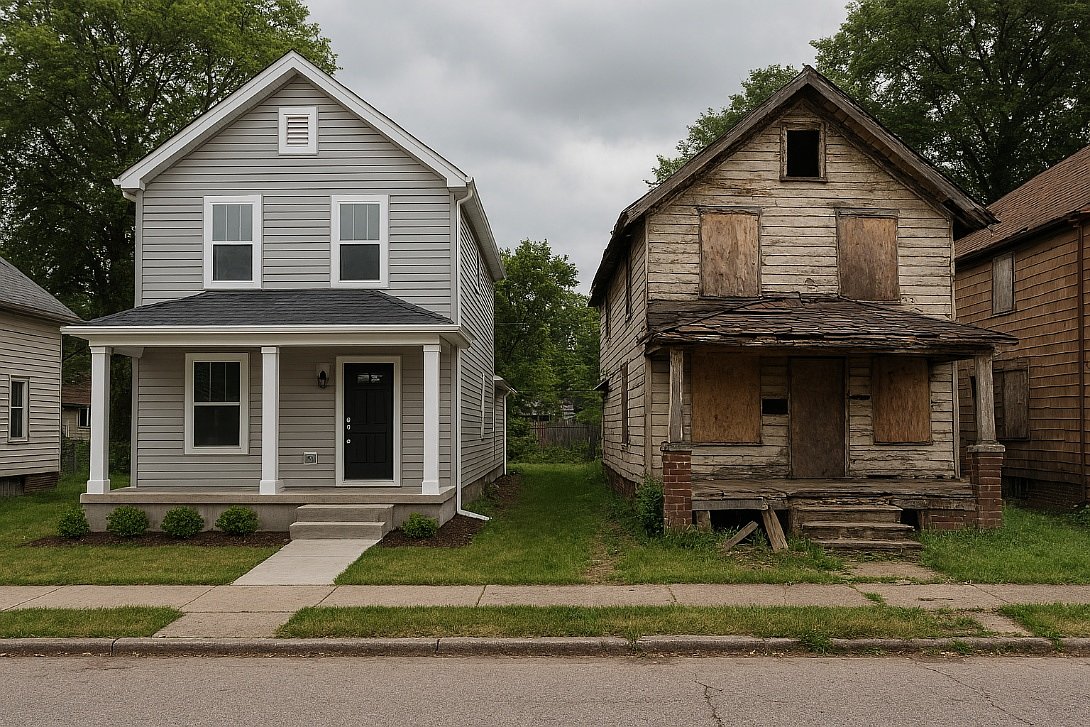
The impact of this financial trend is most visible at the local level. States with strong population growth and dynamic housing markets, such as Texas, Florida, California, Georgia, and North Carolina, have become hotspots for this type of investment. In metropolitan areas like Dallas, Atlanta, Los Angeles, and Charlotte, the sight of a boarded-up house being transformed into a modern home has become increasingly common.
These small-scale redevelopment projects do more than just add a single unit back into the housing stock. They often trigger a ripple effect of revitalization. Returning a vacant or derelict property to productive use can improve neighborhood safety, increase surrounding property values, and encourage further investment. In many urban submarkets, the work of these investors is a primary driver of neighborhood stabilization, tackling blight that might otherwise persist for years.
While large, master-planned communities are essential for long-term supply growth, the incremental rehabilitation and infill construction financed by private capital provides a complementary and more immediate solution. These projects are uniquely capable of improving existing housing conditions and making better use of established infrastructure, contributing to more sustainable urban development.
Faundare Capital’s report underscores that this is not about speculative frenzy but about facilitating well-structured projects. The firm emphasizes an underwriting approach focused on the viability of the asset and the feasibility of the project plan. “The objective is not speculative growth, but facilitating responsible, well-structured real estate projects,” Liu added. “When properly underwritten and executed, these projects can contribute to neighborhood revitalization and incremental housing supply.”
As the market continues to evolve, the partnership between private capital and local real estate investors appears poised to become an even more integral part of the solution to America's housing challenges. This decentralized model of finance and development is proving to be a resilient and effective mechanism for turning neglected properties into neighborhood assets.