
- $46M investment: Alectra Utilities is allocating $46 million in 2026 to upgrade Mississauga's electricity infrastructure.
- 75% demand increase: Ontario's electricity demand is projected to rise by 75% by 2050.
- 200,000 population surge: Mississauga's population is expected to grow by 200,000 by 2051.
Experts agree that Alectra's $46M investment is a necessary and strategic move to ensure grid reliability amid Mississauga's rapid growth and rising electricity demand.
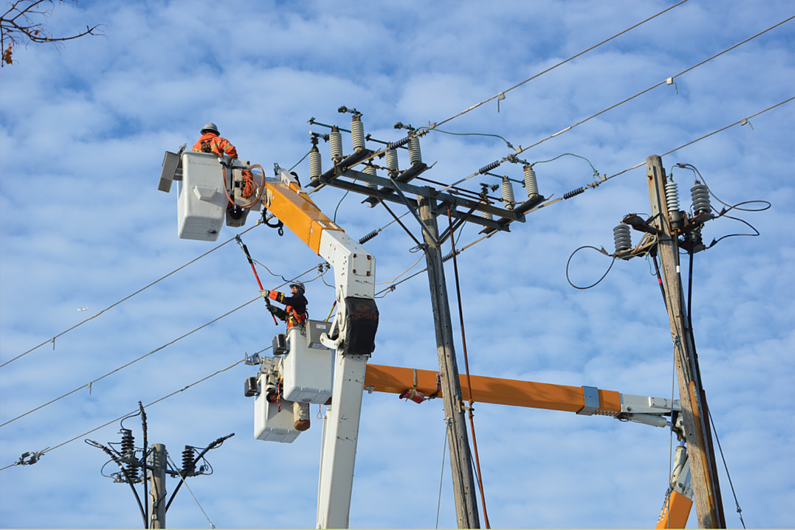
Powering Progress: Alectra's $46M Plan for Mississauga's Grid
MISSISSAUGA, Ontario – March 11, 2026 – As Mississauga undergoes a period of explosive growth, Alectra Utilities is set to inject approximately $46 million into the city's electricity infrastructure throughout 2026. The major investment aims to bolster an aging grid, improve service reliability, and ensure the power system can handle the demands of one of Canada's fastest-growing urban centers.
The planned capital work represents a critical response to the dual pressures of aging equipment and surging demand from new residential and commercial developments. Alectra officials state the investment is crucial for maintaining safe and reliable service for the more than one million homes and businesses the utility serves across the Greater Golden Horseshoe.
“Mississauga’s size and growth place significant demands on local electricity infrastructure,” said Chris Hudson, Senior Vice President of Network Operations and Safety, Alectra Utilities, in a statement. “This investment will strengthen critical equipment, expand system capacity and enable us to restore power faster during disruptions, helping ensure reliable service for residents and businesses across the city.”
A City on the Rise
The $46 million investment is not happening in a vacuum. It is a direct response to Mississauga’s aggressive growth trajectory. City and regional planners project that Mississauga's population will surge by over 200,000 people to nearly one million by 2051. This boom is fueled by massive development projects, including the "Square One District," a transformative plan featuring 37 high-rise towers and 18,000 residential units, and a new downtown hub with a convention center, hotel, and office towers expected to generate $4 billion in economic output.
With a provincial housing target of 120,000 new homes by 2034, the strain on the existing electrical grid is undeniable. This local expansion is unfolding against a backdrop of province-wide energy challenges. Ontario’s Independent Electricity System Operator (IESO) recently revised its forecasts, now predicting that provincial electricity demand will increase by a staggering 75% by 2050, driven by industrial growth, electrification, and the power needs of new technologies like artificial intelligence data centers. For local distributors like Alectra, this means preparing the grid not just for more homes, but for a fundamental shift in how energy is consumed.
A Strategic Overhaul of the Grid
Alectra’s investment plan is a multi-faceted strategy targeting the grid’s most critical areas. The largest portion, $29.3 million, is dedicated to renewing and replacing aging infrastructure to prevent failures and improve overall system performance.
A significant $15.0 million of this is allocated to rehabilitating underground cables using "cable injection" technology. This modern technique avoids the costly and disruptive process of digging up and replacing entire cable sections. Instead, a silicone-based fluid is injected into the aging cable, sealing cracks and restoring its insulation. The process can extend a cable's life by up to 20 years at a fraction of the cost of full replacement, minimizing traffic disruptions and construction noise for residents. Another $14.3 million will be spent on replacing traditional above-ground infrastructure such as poles, transformers, and switchgear that have reached the end of their service life.
Beyond simple replacement, the plan includes a strong focus on modernization. A $9.3 million investment will go toward building new substations and upgrading existing ones to handle increased capacity. Furthermore, $1.6 million is earmarked for deploying automated devices. These "smart grid" technologies, such as Fault Location, Isolation, and Service Restoration (FLISR) systems, can automatically detect a fault—like a fallen tree branch on a line—isolate the damaged section, and re-route power to restore service to most customers in seconds, long before a repair crew is even dispatched.
Finally, to directly support the city's expansion, $4.4 million will be used to connect new residential and commercial customers, ensuring the grid can safely accommodate the influx of new developments.
The Cost and Challenge of Reliability
While essential, such large-scale infrastructure upgrades raise questions about cost and disruption. Alectra’s investment is part of a broader trend across North America, where utilities are spending billions to modernize grids that were largely built in the mid-20th century. These expenditures are typically scrutinized and approved by regulatory bodies like the Ontario Energy Board (OEB), which balances the need for a safe and reliable system against the impact on consumer electricity rates.
The on-the-ground work will also present challenges. In a dense and growing city, coordinating major utility upgrades with other municipal projects, such as road construction and the Hurontario LRT development, is a complex logistical puzzle. Residents and businesses can expect some temporary disruptions from construction, though the use of less invasive technologies like cable injection is intended to mitigate these impacts.
This proactive investment, however, is widely seen as a necessary cost to prevent the far greater economic and social costs of an unreliable power grid. By strengthening its core infrastructure and embracing new technologies, Alectra is aiming to ensure that Mississauga’s bright future is not dimmed by power failures. The work planned for 2026 is a foundational step in ensuring the city’s electrical system can support its ambitious growth for decades to come.
Topics & Related
Sustainability & Climate
Smart Manufacturing
Revenue
Related Company Pulse