
- $836M Investment: Central Pattana's expansion of Central Phuket, set for completion in 2028.
- 40% Increase in Space: Development will grow to 500,000 square meters, solidifying its role as Phuket's commercial anchor.
- 113% Surge in Condo Sales: 2023 saw a record spike in luxury real estate transactions, positioning Phuket among the top global destinations for affluent buyers.
Experts view Central Phuket's expansion as a strategic pivot for Phuket's economy, transitioning from tourism-driven growth to a year-round luxury living and investment hub, though sustainability challenges remain critical.
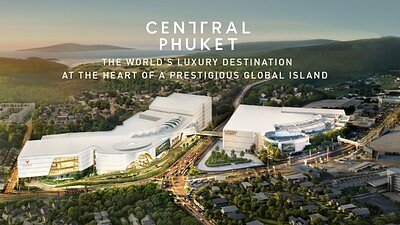
Phuket’s Luxury Leap: Central's $836M Bet on a Global Identity
PHUKET, Thailand – March 02, 2026 – Central Pattana Plc., the real estate arm of the retail giant Central Group, has announced a landmark expansion of its Central Phuket development, a move that signals a profound and strategic pivot for the entire island. The project, which will see the mixed-use development's total value exceed US$836 million upon completion in 2028, is positioned not merely as a retail upgrade but as the cornerstone of Phuket’s ambitious transformation from a seasonal tourist paradise into a year-round global luxury living and investment hub.
This major undertaking will increase the development's total space by 40% to approximately 500,000 square meters, cementing its role as the island's commercial anchor. The investment underscores a structural shift in Phuket's economy, moving beyond its traditional reliance on tourism to cater to a growing population of long-stay residents, high-net-worth individuals (HNWIs), and a steady influx of international capital.
A Strategic Bet on a New Global Identity
For over two decades, Central Phuket has been at the core of the island's retail economy. This new investment, however, represents a calculated bet on a different future. The vision is to create a sophisticated coastal metropolis that attracts and retains global wealth. This aligns perfectly with recent market trends that have seen Phuket's luxury real estate sector skyrocket.
Data reveals a market already in overdrive. In 2023, condominium sales transaction values surged by 113% compared to the previous year, with the first half of the year alone marking the highest number of units sold in a decade. The island now ranks among the top four global destinations for affluent property buyers, with a notable boom in branded residences. This influx of foreign buyers from Europe, China, and Russia has sent land prices soaring, demonstrating a clear appetite for the high-end lifestyle Central Pattana aims to serve.
The expansion is designed to be the gravitational center for this new demographic. It comprises three core components set for a phased rollout. By the end of 2026, Central Phuket Floresta will double its luxury footprint, creating a consolidated downtown district for flagship boutiques. By early 2028, Central Phuket Festival will become a major fashion hub with over 250 brands. Finally, a 5.5-acre Attractions Zone featuring a purpose-built arena for global entertainment is slated to open in the third quarter of 2028, adding a crucial cultural and entertainment dimension.
Redefining Southeast Asia's Retail Landscape
At the heart of the expansion is a strategy to create an unparalleled experiential destination. A central component is the development of Phuket's largest culinary hub outside of Bangkok, a sprawling 20,000-square-meter space designed to attract premium international dining concepts and Michelin-recognized restaurants. This move alone is intended to significantly elevate the island's global lifestyle positioning.
The retail component is equally ambitious. Central Phuket Festival is set to house Southeast Asia's largest ZARA flagship, alongside other major international brands like ALO, COS, H&M, Lululemon, and Orlebar Brown. By providing a strategic entry point for these global giants, Central Pattana is positioning Phuket as a critical market in Thailand, on par with Bangkok for luxury and bridge-line fashion.
This aggressive push does not exist in a vacuum. The island is witnessing a broader development boom, with competitors like Siam Piwat planning new outlets and developers such as Minor International and Assetwise PCL launching ultra-luxury residential projects. Central Pattana's strategy appears to be one of scale and integration, creating a comprehensive ecosystem of luxury retail, dining, and entertainment so vast that it becomes the island's undisputed commercial and social nucleus.
Building the Foundation for a Metropolis
Such a grand vision would be untenable without robust supporting infrastructure. Acknowledging this, both public and private sectors are engaged in a massive, island-wide upgrade. The Central Phuket expansion is timed to coincide with and leverage these critical infrastructure projects, which are essential for supporting a larger, wealthier, and more permanent population.
Phuket International Airport (PIA), a crucial gateway, is already slated for a Phase 2 expansion to increase its annual passenger capacity from 12.5 million to 18 million by 2029. Further afield, plans are advancing for a new US$2.2 billion Andaman International Airport in nearby Phang Nga, set to begin construction in 2027, which will alleviate pressure on PIA and further open up the region.
On the ground, a comprehensive overhaul of the transportation network is underway. Key projects include the widening of major highways and the construction of two major expressways—the Kathu-Patong and the Muang Mai-Koh Kaew-Kathu—scheduled to begin in 2025. Furthermore, a 42-kilometer light rail transit system connecting the airport to the south of the island is under study, with a target start date of 2027. These projects are vital for improving connectivity and ensuring that the island can handle the increased traffic generated by its new urban core.
Balancing Growth with Sustainability
While the promise of economic prosperity is alluring, the rapid, large-scale development raises critical questions about sustainability. Phuket has long grappled with the environmental pressures of mass tourism, and a shift toward luxury development does not eliminate these challenges—it simply changes their nature. Concerns over resource consumption, environmental degradation, and waste management are paramount.
The island currently generates more waste than its primary incinerator can handle, a problem exacerbated by the post-pandemic tourism rebound. The push for growth must be matched by a commitment to environmental stewardship if Phuket is to preserve the natural beauty that forms the bedrock of its appeal.
Encouragingly, a concerted effort towards sustainable development is gaining momentum. Phuket Old Town has set a goal to achieve carbon neutrality by 2030 through emissions cuts and improved waste management. Initiatives like the "Green Hotel Plus Phuket Sandbox" aim to certify hundreds of hotels for their sustainable practices. These efforts, combined with the island's broader goal of becoming a "Smart City," indicate a growing awareness that long-term success is intrinsically linked to environmental health.
By 2028, the expanded Central Phuket is projected to stand at the center of this new, globally competitive coastal economy. The project is more than an investment in retail; it is a declaration of intent for the future of the entire island. Its ultimate success will hinge not only on attracting luxury brands and wealthy residents but on the parallel success of massive infrastructure upgrades and a delicate, determined effort to balance spectacular growth with the preservation of Phuket's irreplaceable natural and cultural heritage.