
- 33% reduction in discovery cycle times under Studney's leadership at Merck
- $100 million in savings achieved within six months of a multi-year optimization program
- 18,000 scientists impacted by Studney's R&D infrastructure modernization at Merck
Experts view this leadership transition as a clear indicator of the biopharmaceutical industry's shift toward industrial-grade AI platforms for scientific data management, moving away from fragmented, project-specific approaches.
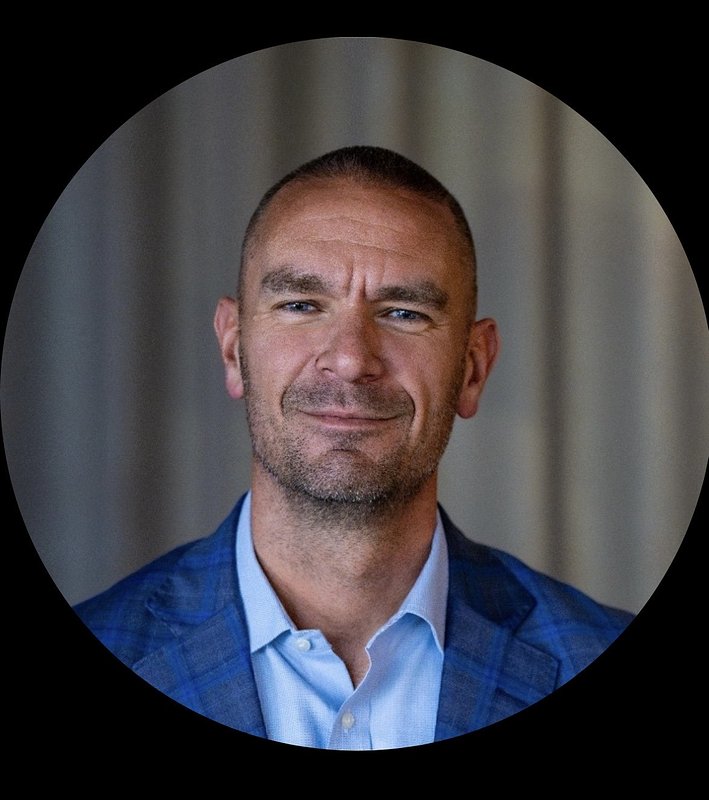
Pharma Veteran's Leap to AI Firm Signals Broader R&D Shift
BOSTON, MA – January 15, 2026 – In a move that underscores a fundamental transformation within the biopharmaceutical industry, TetraScience today announced the appointment of Matt Studney, a 24-year Merck veteran, as its new Chief Customer Officer. Studney’s transition from his role as Senior Vice President of R&D IT at one of the world’s largest pharmaceutical companies to a leadership position at the Scientific Data and AI firm is being viewed by industry observers as a powerful signal of biopharma's accelerating pivot away from bespoke internal projects and toward industrial-grade platforms for scientific intelligence.
Studney brings over two decades of experience operating at the complex intersection of science, data, and enterprise technology. His decision to join TetraScience reflects a critical inflection point where the sheer volume and complexity of scientific data, combined with the strategic imperative of artificial intelligence, are forcing a sector-wide architectural rethink. Companies are increasingly recognizing that competitive advantage in the AI era hinges on a new foundation for managing and leveraging their most valuable asset: scientific data.
The End of 'Artisanal' R&D
For years, biopharma R&D has been hampered by what many describe as an 'artisanal' approach to data management. Scientific data, generated by hundreds of different instruments and software systems, has remained locked in proprietary formats and fragmented silos. This makes it incredibly difficult to aggregate, contextualize, and analyze data at scale, forcing scientists to spend an inordinate amount of time on manual data wrangling rather than on discovery.
This fragmentation has been a persistent bottleneck, slowing down research, hindering reproducibility, and limiting the potential of advanced analytics and AI. The traditional model of tackling data challenges on a project-by-project basis has proven to be inefficient and unscalable.
"Matt has lived firsthand the limits of artisanal approaches to scientific data and AI," said Patrick Grady, Co-Founder and CEO of TetraScience. "His move to TetraScience signals that the center of gravity is shifting - from bespoke internal efforts toward shared platforms purpose-built to make scientific intelligence durable, cumulative, and scalable."
Studney himself articulated the necessity of this paradigm shift. "Over the course of my career in one of the world's most complex pharmaceutical organizations, I've seen firsthand what works - and what breaks - when you try to scale scientific intelligence inside global pharma," he stated. "The AI era makes clear that true transformation now requires a fundamentally new architectural foundation. Scientific intelligence cannot scale on fragmented data or bespoke workflows."
A Track Record of Transformation
Studney’s credibility stems not just from his long tenure at Merck, but from a proven track record of delivering tangible results by modernizing its R&D infrastructure for over 18,000 scientists. He led large-scale initiatives that modernized laboratory, clinical, and development platforms, directly enabling faster and more robust scientific decision-making.
His programs yielded remarkable outcomes that quantify the value of this modernization. Under his leadership, key initiatives helped reduce discovery cycle times by an average of 33% and accelerate regulatory submissions by up to four weeks. Furthermore, a multi-year optimization program he oversaw delivered more than $100 million in savings within its first six months. At Merck, he was also responsible for establishing and governing strategic partnerships with a host of technology leaders, including AWS, NVIDIA, and Accenture, demonstrating a deep understanding of how to build and manage a modern technology ecosystem.
This experience makes him a uniquely qualified leader to guide other pharmaceutical companies through similar transformations. As Grady noted, "Matt is a world-class operational leader with unparalleled credibility and relationships within the pharmaceutical industry, and his appointment represents a safe and trusted choice for pharmaceutical companies looking to partner with TetraScience on their scientific data and AI transformation journeys."
Building the Operating System for Scientific AI
At the heart of this industry shift is the technology itself. TetraScience has developed what it calls an 'operating system for scientific intelligence,' dubbed Tetra OS. The platform is designed to solve the foundational data problem by ingesting raw, unstructured data from any source - be it lab instruments, electronic notebooks, or contract research organizations - and re-engineering it into a standardized, harmonized, and AI-native format.
This process is handled by the platform's Scientific Data Foundry, which centralizes and prepares data according to FAIR (Findable, Accessible, Interoperable, Reusable) principles. Once the data is unified, the Scientific Use Case Factory and Tetra AI layers allow for the development and deployment of industrial-scale AI workflows, from accelerating lead clone selection in discovery to optimizing quality control in manufacturing.
"TetraScience has built the platform needed to industrialize scientific data and make learning cumulative across the enterprise," Studney commented. He praised CEO Patrick Grady's "long-standing vision for Scientific AI," which, combined with the company's technical depth, positions it as a "natural steward of this next phase of the industry."
The Power of Ecosystem and Expertise
Executing this vision requires more than just a powerful platform; it demands a robust ecosystem and deep domain expertise. TetraScience has fortified its position through strategic partnerships with the biggest names in cloud computing and AI, including NVIDIA, Databricks, Snowflake, Google, and Microsoft. These collaborations provide the foundational computational power, advanced analytics, and scalable infrastructure necessary to run demanding scientific AI applications.
However, technology alone is often insufficient to drive organizational change. To bridge the gap between platform capabilities and scientific outcomes, TetraScience employs a unique 'Sciborg' model. Sciborgs are an elite team of Ph.D.-level scientists and engineers who work side-by-side with customers. They act as translators and change agents, helping labs adopt the new architecture and deploy AI use cases that generate measurable scientific and economic value.
In his new role as Chief Customer Officer, Studney will oversee this critical function. His mandate is to partner closely with biopharma customers, leveraging the Tetra OS platform and the Sciborg model to move them beyond project-by-project modernization. The goal is to help them build a shared, enterprise-wide scientific data and AI capability that accelerates the entire R&D-to-manufacturing lifecycle, ultimately delivering new therapies to patients faster.