
- Indonesia's respiratory infections: Over 13 million cases reported through November 2025, with a 5% case fatality rate for community-acquired pneumonia.
- Adult vaccination gap: Pneumococcal conjugate vaccine (PCV) uptake falls below 40% in many Indonesian regions outside Java and Bali.
- Regional focus: Campaign spans Indonesia, Malaysia, Singapore, and the Philippines, targeting four nations with significant adult vaccination gaps.
Experts emphasize the urgent need for improved adult vaccination rates in Southeast Asia, particularly for respiratory illnesses, while also highlighting the complex role of pharmaceutical companies in shaping public health narratives.
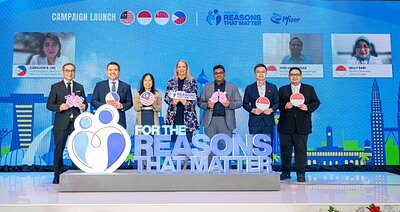
Pfizer Targets Hearts and Lungs in New Southeast Asia Health Push
JAKARTA, Indonesia – May 07, 2026 – In a major public health initiative spanning four Southeast Asian nations, Pfizer has launched a campaign that trades stark clinical warnings for an emotional appeal, urging adults to protect their respiratory health not just for themselves, but for the people and moments they can't afford to miss.
Launched to coincide with World Immunization Week, the "For the Reasons that Matter" campaign is rolling out across Indonesia, Malaysia, Singapore, and the Philippines. It aims to close a critical gap in public health: the chasm between adults' desire to stay healthy and their tendency to delay preventive action against serious respiratory illnesses like influenza, COVID-19, RSV, and pneumococcal disease.
"Across all four of our markets, we are seeing a clear gap between what adults want for their health and the steps they take to protect it," said Ms Deborah Seifert, Cluster Lead for Pfizer in the region, in a statement. "'For the Reasons that Matter' was created to make this conversation more relevant, more human and more actionable."
A New Chapter in Health Messaging
The campaign's strategy marks a significant pivot from traditional disease awareness, which often relies on fear and statistics. Instead, it frames vaccination and proactive health conversations as acts of love and responsibility—for the grandparent who is the family's anchor, the parent juggling work and childcare, and the daily moments that define a life.
This human-centric approach aligns with the global theme for this year's World Immunization Week, "For every generation, vaccines work," which emphasizes the life-course approach to immunization. Public health bodies like the World Health Organization have been urging countries to look beyond childhood shots and build robust vaccination strategies for adolescents, adults, and the elderly.
By focusing on the "why" behind health decisions, the campaign seeks to motivate adults who may feel disconnected from abstract health risks. It's a recognition that for many, the incentive to get a shot is not the prevention of a specific pathogen, but the preservation of their role in their family and community.
Indonesia's Looming Respiratory Crisis
Nowhere is the urgency behind this campaign more apparent than in Indonesia. With a population of over 280 million, the nation is not only one of the world's most populous but also one that is rapidly aging. According to BPS-Statistics Indonesia, the number of people aged 60 and above reached nearly 34 million in 2025, constituting 12% of the population.
This demographic shift is colliding with a formidable public health challenge. The Ministry of Health reported over 13 million cases of acute respiratory infections through November 2025 alone, making it the country's most-reported disease. For the most vulnerable, these infections can be deadly.
"What the data on Indonesia's rainy season tells us is that respiratory illness here is not random. It is seasonal, it is predictable, and for adults with cardiovascular disease, diabetes or other chronic conditions, it is genuinely dangerous," warned Dr. Dirga Rambe, an Internal Medicine Specialist involved with the campaign. He pointed to a sobering statistic: a case fatality rate of around 5% for community-acquired pneumonia. "That is not a number we should accept as inevitable," he stressed.
Despite recent government efforts to expand adult immunization—including adding an RSV vaccine to the national program in February 2025—significant gaps remain. A 2025 Immunization Coverage Survey revealed that uptake for crucial vaccines like the pneumococcal conjugate vaccine (PCV) falls below 40% in many regions outside of Java and Bali.
A Regional Health Gap
The challenge extends beyond Indonesia. Across the region, adult vaccination rates lag significantly behind the high coverage seen in childhood immunization programs.
In Malaysia, where pneumonia was the leading cause of death in 2023, experts lament low adult immunization uptake despite clear recommendations from medical societies. "Public education and consistent disease awareness campaigns are key to strengthening Malaysia's adult immunization landscape," commented one Malaysian public health expert, who noted the crucial role of healthcare professionals in initiating these conversations.
Even in Singapore, which boasts a well-structured National Adult Immunisation Schedule (NAIS) with subsidies to improve access, pneumonia remains the third leading cause of death. The Philippines faces its own hurdles, where a common misconception that vaccines are only for children is compounded by issues of cost and accessibility.
This regional disparity underscores the campaign's multi-pronged approach, tailoring its message to diverse healthcare systems while addressing the universal human motivations that transcend borders.
The Commercial Compassion Dilemma
While the public health benefits of such a campaign are clear, it also highlights the increasingly complex and powerful role of pharmaceutical companies in shaping public health narratives. Pfizer is a key player in the respiratory vaccine market, with several products directly relevant to the illnesses highlighted in the campaign.
Its 20-valent pneumococcal conjugate vaccine, Apexxnar, gained approval in Singapore in March 2023 and Malaysia in July 2025, offering broader protection than previous versions. The company's COVID-19 vaccine was central to the pandemic response across the region, and its RSV vaccine, Abrysvo, is a leading candidate for preventing illness in older adults.
This positions the "For the Reasons that Matter" campaign in a dual role: it is both a public service and a powerful market development strategy. By raising awareness of the dangers of pneumococcal disease, RSV, and influenza, the initiative simultaneously builds a case for the preventative solutions the company provides. This dynamic, sometimes termed "commercial compassion," is becoming a hallmark of modern public health, where industry-funded education fills gaps left by public resources.
There is little debate that raising awareness about preventable diseases is a net positive. However, it also raises important questions about the privatization of public health messaging and ensuring that patient care is driven by clinical need rather than marketing. As these campaigns become more sophisticated and emotionally resonant, they effectively steer health conversations, placing the responsibility on healthcare providers and regulators to ensure the advice remains independent and patient-centered.