
- $38 billion: Projected total addressable market for humanoid robots by 2035 (Goldman Sachs Research).
- 500,000: Skilled construction workers shortage in the U.S., with 1.4 million trade jobs expected to go unfilled by 2030.
- $27 million: Pre-seed funding raised by Persona AI in 2025.
Experts would likely conclude that Persona AI's strategic hiring of a manufacturing veteran signals a critical step toward scaling humanoid robot production, addressing a severe global labor shortage in industrial sectors.
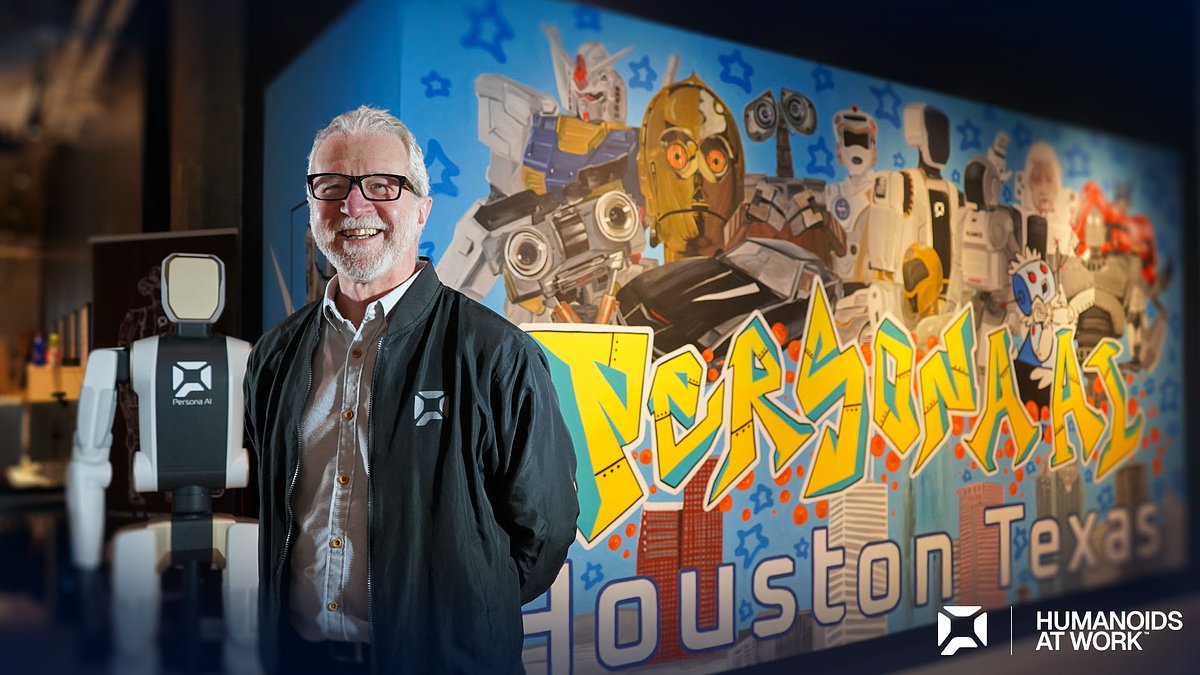
Persona AI Taps Manufacturing Veteran to Build Humanoid Robot Workforce
HOUSTON, TX – March 30, 2026 – As the race to build a viable humanoid robot workforce intensifies, Houston-based Persona AI has made a decisive move, appointing seasoned operations executive Brian Davis as its new Head of Global Manufacturing. The strategic hire signals a critical pivot for the robotics firm, moving from advanced research and development to the immense challenge of mass-producing industrial-grade humanoids destined for the world's most demanding worksites.
The appointment comes as Persona AI aims to deploy its robots in shipyards, steel mills, and energy infrastructure, sectors grappling with a severe and worsening shortage of skilled labor. Davis, a veteran with over 30 years of experience scaling operations for giants like Amazon Robotics and Dell Technologies, is tasked with building the manufacturing engine to turn ambitious prototypes into a global, deployable reality.
From the Lab to the Assembly Line
Brian Davis joins Persona AI at a pivotal moment. While the company has secured significant partnerships and demonstrated its technological prowess, the path from a functioning prototype to thousands of units operating reliably in harsh environments is notoriously difficult. Davis's background is precisely tailored to this challenge.
During his tenures at both Amazon Robotics and Dell, he oversaw manufacturing, supply chain, and logistics as the companies achieved a staggering 25x increase in manufacturing volumes within a four-year period. This experience in rapid, high-volume scaling is what Persona AI's leadership believes is necessary to capitalize on the current market opportunity.
“We’re building Persona to deploy humanoids in some of the hardest industrial environments. Now we need someone who has taken robots from the prototype phase to volume production and built the manufacturing engine to sustain it,” said Nicolaus Radford, CEO and Co-Founder of Persona AI, in a statement. “Brian’s proven track record of rapidly scaling production is exactly the experience this moment demands.”
Davis himself acknowledges the complexity of the task ahead, which extends far beyond simply assembling the robots. “Building industrial-rated humanoid robots and production-deployable AI is only one piece of the puzzle,” Davis stated. “Producing humanoids at scale will require systematic supply chain management, stringent quality control, and building the playbook for safe, high-volume manufacturing. That’s what I’m here to build.”
A Robotic Solution to a Human-Sized Problem
The urgency behind Persona AI's push for scale is rooted in a deepening crisis within global heavy industry. A structural shortage of skilled labor for welding, fabrication, and heavy maintenance is creating a capacity bottleneck that threatens key economic sectors.
Industry data paints a stark picture. The United States alone is facing a shortage of nearly 500,000 skilled construction workers, with projections indicating that 1.4 million trade jobs could go unfilled by 2030. This gap is fueled by an aging workforce—with more than one in five construction workers over 55—and a lack of new talent entering these physically demanding fields. For critical trades like welding, the U.S. anticipates over 240,000 job openings by the end of the decade.
Persona AI is positioning its humanoids to fill these "dull, dirty, dangerous, and declining" roles. The goal is not to replace human workers wholesale, but to augment teams, taking on the most hazardous and physically taxing tasks. This allows human operators to transition to higher-value roles focused on supervision, quality control, and complex problem-solving, while improving overall workplace safety.
Real-World Deployments Take Shape
Backed by a formidable funding base, including a $27 million pre-seed round in 2025, Persona AI is already translating its vision into concrete action through a series of high-profile partnerships. These collaborations are not just theoretical exercises; they are active pilot programs designed to test and refine the robots in the very environments they are meant to serve.
With South Korean industrial giant HD Hyundai, Persona AI is tackling complex welding tasks in shipyards. Following a successful feasibility assessment, the partners are developing a prototype targeted for completion by the end of 2026, with field testing set to begin in 2027. The project aims to leverage Persona's AI-based control and precision manipulation to boost productivity and safety in shipbuilding.
Similarly, an agreement with POSCO Group, one of the world's largest steel producers, is underway. A proof-of-concept program that began in February 2026 deploys humanoids to assist with logistics in steel mills. The robots work alongside human operators to attach heavy crane belts to massive steel coils, a high-risk task known for causing accidents and musculoskeletal injuries. POSCO, which has also invested $3 million in the robotics firm, is using the pilot to verify the robot's safety and collaborative capabilities.
Closer to home, a partnership with the State of Louisiana has placed Persona AI's systems inside SSE Steel Fabrication's facility in St. Bernard Parish. This pilot focuses on collecting real-world data on human movement and tasks, which is then used to train the humanoid's AI to perceive and work effectively alongside skilled tradespeople in a dynamic, complex environment.
Navigating a Competitive New Frontier
Persona AI is entering a market buzzing with activity and astronomical growth forecasts. Goldman Sachs Research recently revised its projections, estimating the total addressable market for humanoid robots could reach $38 billion by 2035. The field is populated by notable competitors, including Agility Robotics, which is deploying its Digit robot in logistics; Figure AI, which is piloting its system with BMW; and established players like Boston Dynamics, whose Atlas robot will be deployed in parent company Hyundai's factories.
Against this backdrop, Persona AI is carving out a distinct niche. Its unwavering focus on the heaviest, most challenging industrial sectors sets it apart from competitors targeting logistics or general manufacturing. The company's technological DNA, drawing on decades of expertise from building robotics for NASA and deep-ocean exploration, provides a unique foundation for creating robust and reliable systems. Furthermore, its Robotics-as-a-Service (RaaS) model, which eliminates the need for large upfront capital expenditures by clients, could significantly lower the barrier to adoption and accelerate deployment across its target industries.
With the appointment of Brian Davis, Persona AI has added a critical piece to its strategic puzzle. The company has the technology, the funding, and the market demand. Now, it has the proven manufacturing leadership to attempt the audacious goal of building a true industrial humanoid workforce.