
- The U.S. secondhand apparel market was valued at over $50 billion in 2024, growing at a rate five times faster than the broader retail clothing market.
- Over half of Gen Z shoppers prefer pre-owned options, with secondhand items making up nearly a third of their closets.
- Pacsun's PS Vintage launch includes thousands of one-of-a-kind pieces, with a physical rollout planned for 15 stores.
Experts view Pacsun's curated resale platform as a strategic pivot to stay relevant in the rapidly evolving retail landscape, leveraging Gen Z's preference for sustainability, authenticity, and unique self-expression.
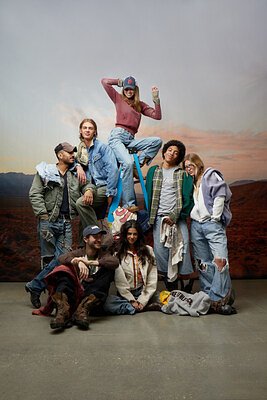
Pacsun's Vintage Play: Resale, Curation, and the Gen Z Consumer
LOS ANGELES, CA – December 11, 2025 – In a move that signals a significant shift in mainstream retail strategy, youth-focused retailer Pacsun today launched PS Vintage, a curated resale platform powered by a partnership with the sourcing specialist SPRINGY. While on the surface it appears to be a simple nod to the enduring popularity of retro fashion, this initiative is a calculated maneuver designed to tap into the booming secondhand market, a sector projected to grow nearly three times faster than the global apparel market at large.
This isn't merely about selling old clothes; it's a multi-faceted strategy aimed squarely at the heart of its core demographic: Gen Z. By blending the thrill of vintage discovery with the trust of an established brand, Pacsun is placing a major bet on a future where retail success is defined not just by newness, but by authenticity, sustainability, and deep consumer collaboration. The launch of thousands of one-of-a-kind pieces on its website, with a physical rollout planned for 15 stores, represents a critical test case for how legacy retailers can pivot to stay relevant in an industry being fundamentally reshaped from within.
The Resale Gold Rush: Following the Money and the Movement
Pacsun's entry into resale is not a speculative venture; it is a direct response to overwhelming market data. The secondhand apparel market is in the midst of an explosive growth phase, transforming from a niche interest into a dominant economic force. Projections show the U.S. secondhand market, valued at over $50 billion in 2024, growing at a staggering rate that outpaces the broader retail clothing market by a factor of five. By 2029, online resale alone is expected to become a $40 billion industry in the U.S.
The engine behind this disruption is Gen Z. For this demographic, secondhand shopping is not a compromise but a preference. Studies show that over half of Gen Z shoppers prefer pre-owned options when available, and these items already constitute nearly a third of their closets. While affordability is a major driver, with 74% citing it as a key motivator, the appeal runs much deeper. It is intertwined with a desire for unique self-expression, a rejection of the homogeneity of fast fashion, and a genuine concern for environmental sustainability.
This generation thrives on the “thrill of the hunt” and the discovery of items with a story, a sentiment Pacsun explicitly acknowledged in its announcement. Furthermore, the practice aligns with a growing 'shop to sell' mentality, where consumers view their wardrobes as fluid assets within a circular economy. By establishing a dedicated and reliable platform for authentic vintage finds, Pacsun is not just adding a new product category; it is embedding itself into a powerful cultural and economic movement that defines its most important customer base.
Curation as the New Competitive Edge
In a crowded resale landscape dominated by sprawling peer-to-peer marketplaces like Depop and Vinted, Pacsun’s strategy hinges on a key differentiator: curation. The collaboration with SPRINGY, described as an established authority in online secondhand retail, is central to this approach. Instead of offering an unfiltered ocean of used clothing, the “PS Vintage” collection is hand-selected by Pacsun's own experts to align with specific brand pillars—fashion, art, music, and sports—and resonate with current trends, most notably the Y2K style resurgence popularized on TikTok.
This model offers a powerful value proposition. It mitigates the primary friction points of vintage shopping: the time-consuming search and the risk of inauthenticity. By pre-vetting and organizing items by size, year, and category, Pacsun provides a guided, brand-approved experience. It transforms the chaotic thrift store dig into a focused discovery of trend-relevant pieces, effectively building a bridge between the accessibility of modern retail and the uniqueness of vintage apparel. This curated approach positions Pacsun not against massive platforms like ThredUp, but as a direct competitor to other retailers like Urban Outfitters with its “Renew” program or ASOS and its “Marketplace” for vintage boutiques.
The partnership model itself is telling. By leveraging SPRINGY's sourcing expertise, Pacsun can enter the complex logistics of the secondhand market with agility and credibility. This allows the company to focus on its core strengths—brand identity, trend forecasting, and customer experience—while relying on a specialist to handle the intricate work of acquiring and validating vintage stock. It's a symbiotic relationship that could become a blueprint for other large retailers looking to enter the circular economy without building a complex reverse-logistics operation from the ground up.
Building Authenticity from the Inside Out
Perhaps the most insightful component of Pacsun's strategy is its explicit reliance on its own target audience for guidance. The press release highlights that the PS Vintage initiative was developed with “direct input from Gen Z through Pacsun’s Youth Advisory Council.” This detail, while easily overlooked, is critical to understanding the company's approach to brand authenticity.
Gen Z consumers are notoriously skeptical of corporate attempts to co-opt their culture. A top-down effort to sell “cool” vintage clothing could easily be perceived as inauthentic and opportunistic. By formally integrating a council of young consumers into the development process, Pacsun is actively working to mitigate this risk. This council likely provided crucial insights into which styles, brands, and aesthetics would resonate, ensuring the curated collection feels discovered by the community, not just marketed to them.
This collaborative model serves a dual purpose. On one hand, it de-risks product development by grounding it in real-time consumer feedback. On the other, it builds a powerful narrative of community and co-creation. The message is not just “we have what you want,” but “we built this with you.” This fosters a sense of ownership and loyalty that is difficult for competitors to replicate. In an era where brand transparency and consumer-centricity are paramount, Pacsun's use of its Youth Advisory Council demonstrates a sophisticated understanding of how to build trust and relevance with a generation that values genuine connection over polished marketing.
As the retail landscape continues its seismic shift toward sustainability and personalization, Pacsun's foray into curated resale is more than just a new collection. It is a forward-looking business model that integrates market data, strategic partnerships, and deep consumer collaboration. The success of PS Vintage will not only determine Pacsun's position in the future of fashion but will also serve as a valuable lesson for any legacy brand navigating the disruptive currents of the modern consumer economy.