
- 172 escalators to be modernized across the London Underground
- 1.2 billion passenger journeys annually supported by the network
- Up to 30% reduction in energy consumption with new escalators
Experts agree that this modernization is critical for enhancing the reliability, safety, and sustainability of the London Underground, ensuring smoother operations for millions of daily commuters.
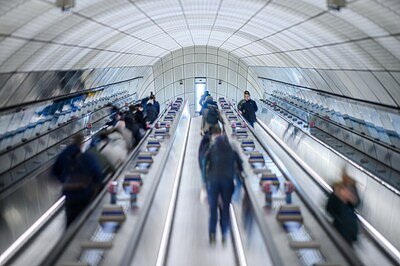
Otis to Modernize London Underground with Smart Escalator Overhaul
LONDON, UK – January 08, 2026 – Transport for London (TfL) has awarded Otis Worldwide Corporation a major contract to modernize and service 172 escalators across the London Underground, a critical investment aimed at enhancing the reliability and safety of one of the world's busiest transit systems. The program, set to begin in April 2026, represents a significant step in future-proofing the network's vital infrastructure, which supports 1.2 billion passenger journeys annually.
This new agreement will bring the total number of Tube escalators serviced by Otis to more than 300, reinforcing the company's central role in keeping the city moving. The project is not merely about maintenance; it is a comprehensive overhaul designed to address the challenges of aging equipment and meet the demands of a growing, tech-driven metropolis.
A Critical Upgrade for a City in Motion
The escalators of the London Underground are the unsung workhorses of the capital's economy, operating for up to 20 hours a day. While TfL reports an impressive overall operational reliability of 99.6%, this figure includes both planned maintenance and unplanned breakdowns. Commuters are all too familiar with the disruption caused by out-of-service escalators, which can lead to station congestion and frustrating delays.
Instances of prolonged outages, such as those seen at stations like Walthamstow Central and Blackhorse Road, highlight the strain on older machinery and the complexities of sourcing parts for dated models. This modernization initiative directly targets these issues, promising to enhance reliability by replacing end-of-life components and entire units where necessary. By reducing downtime, the project aims to ensure smoother, more predictable journeys, which are essential for the city's economic vitality and the daily lives of millions.
"Otis teams will carefully maintain, refurbish or completely replace escalators which have reached the end of their service life," said Aleš Korotvička, Vice President and General Manager at Otis UK & Nordics, in a statement. "With our deep experience in essential infrastructure that millions rely on every day, we're proud that our innovation and expertise... will help to keep the busy network flowing for many years to come."
A Partnership Forged Over a Century
Otis's relationship with the London Underground is as old as the network's escalators themselves. The company installed the very first passenger escalators on the Tube at Earl's Court station in 1911, a revolutionary step that transformed passenger flow in the burgeoning subterranean system. This new contract builds upon a partnership that has spanned more than a century, solidifying Otis's position as a key infrastructure provider for London.
This long-standing collaboration is not unique to the older lines. Otis also provides and services the escalators on the Elizabeth line, which supports around 800,000 passenger journeys daily. The scale of these contracts underscores the immense trust placed in the company's expertise. While the financial details of the new 172-escalator deal have not been disclosed, similar past agreements have involved substantial long-term investment. In 2012, for example, Otis secured a 30-year contract valued at approximately £190 million for escalators on the Elizabeth line, illustrating the significant capital required for such large-scale projects.
While the market includes formidable competitors like KONE and Thyssenkrupp, both of which are heavily invested in smart, energy-efficient technologies, Otis's deep historical ties and proven track record with TfL provide a powerful competitive advantage in securing these cornerstone public infrastructure contracts.
The Dawn of the Smart Escalator
This modernization goes far beyond simply replacing mechanical parts. It heralds the integration of 'future-ready' technologies designed to make the network smarter and more resilient. A key element of the upgrade is the implementation of connected systems for real-time performance monitoring, a move towards a predictive, rather than reactive, maintenance model.
Otis is a leader in this field with its Otis ONE Internet of Things (IoT) digital platform, which is natively integrated into its latest systems like the Gen360. This technology uses a suite of sensors to collect vast amounts of data on escalator performance. By applying big data analytics, the system can identify subtle anomalies and predict potential faults before they lead to a breakdown. This allows technicians to schedule proactive maintenance, minimizing service interruptions and maximizing uptime.
Furthermore, these connected systems enable remote diagnosis. Experts can often assess and even resolve issues from a control center without needing to dispatch a team to the site, drastically reducing response times. This digital 'drive by wire' approach replaces older mechanical safety components with continuously monitored electronic systems, enhancing the overall safety and reliability of the equipment.
Enhancing Safety, Reliability, and Sustainability
The tangible benefits of this overhaul extend across safety, passenger experience, and environmental impact. Modernized escalators incorporate the latest safety features, such as enhanced step demarcation and improved braking systems, to meet or exceed current compliance standards and help reduce the slips, trips, and falls that are a primary cause of passenger injuries.
A smoother, quieter ride will also improve comfort and accessibility for all travelers, contributing to a more pleasant journey. But perhaps one of the most significant long-term benefits is the focus on energy efficiency. The new and refurbished escalators are expected to align with TfL's ambitious sustainability goals by dramatically lowering energy consumption.
This is achieved through a combination of modern technologies. Regenerative drives capture kinetic energy from descending escalators and feed it back into the station's power grid, potentially reducing energy use by up to 30%. Motion-activated standby modes allow escalators to slow down or stop when not in use, while high-efficiency motors and the use of LED lighting further reduce the system's carbon footprint. These upgrades are often measured against international standards like ISO 25745, which provides a framework for energy performance, ensuring the modernization contributes to a greener, more sustainable public transport network for London's future.
Topics & Related
Digital Transformation
ESG
Decarbonization
Revenue
AI & Machine Learning
Insurance
Cloud & Infrastructure
Industrial Machinery
Related Company Pulse