
- $14 billion: The European orthopedic implants market in 2022.
- 450,000+ procedures: Global use of OrthAlign's technology.
- CE Mark approval: Under the EU Medical Device Regulation (MDR).
Experts would likely conclude that OrthAlign's cost-effective, single-use surgical navigation systems offer a clinically validated and economically efficient alternative to traditional robotic systems, aligning well with Europe's value-based healthcare priorities.
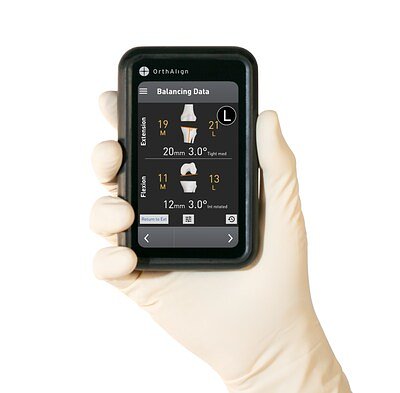
OrthAlign Targets Europe with Cost-Effective Surgical Navigation
IRVINE, Calif. – April 20, 2026 – California-based medical device company OrthAlign, Inc. has secured a critical regulatory approval that unlocks the entirety of the European market for its handheld surgical navigation systems. The company announced it has received CE Mark under the stringent EU Medical Device Regulation (MDR) for its Lantern® and OrthAlign Plus® platforms, enabling an immediate commercial launch across the continent.
The approval marks a significant milestone for OrthAlign, positioning its unique technology to address a growing demand within European healthcare systems for solutions that are both clinically effective and economically efficient. Unlike the large, capital-intensive robotic systems that have dominated the surgical navigation space, OrthAlign offers a fundamentally different approach designed for accessibility and cost control.
A New Model for European Orthopedics
At the heart of OrthAlign's strategy is a business model that directly confronts the financial pressures facing hospitals and surgical centers. The Lantern and OrthAlign Plus systems are delivered in a single-use, sterile format with a straightforward per-case pricing structure. This eliminates the need for multi-million-dollar capital equipment purchases, costly service contracts, and the complex infrastructure often associated with surgical robotics.
This model is particularly well-suited for the European market, where public and private healthcare providers are increasingly focused on value-based care and managing operational budgets. The European orthopedic implants market, valued at nearly $14 billion in 2022, continues to grow, driven by an aging population and a rising prevalence of conditions like osteoarthritis. However, this growth in procedure volume comes with immense pressure to control costs.
OrthAlign's technology allows facilities to adopt advanced navigation for joint replacement surgeries—including total knee, partial knee, revision knee, and total hip procedures—without a prohibitive upfront investment. This is a crucial advantage for smaller hospitals and the rapidly growing sector of ambulatory surgical centers (ASCs), which are built on principles of efficiency and lower overhead. By removing the capital barrier, the company aims to democratize access to precision tools that were previously the domain of large, well-funded institutions.
Navigating the High Bar of EU MDR
Achieving CE Mark under the EU's Medical Device Regulation is a significant accomplishment in itself and speaks to the technology's validated performance and safety. Implemented in May 2021, the MDR replaced the previous Medical Device Directive (MDD) with a far more rigorous and comprehensive legal framework. The regulation demands a higher level of clinical evidence, mandates extensive technical documentation, and enforces stricter post-market surveillance to monitor a device's performance throughout its entire lifecycle.
Successfully navigating this complex regulatory pathway provides OrthAlign with a powerful stamp of approval. It assures hospitals and surgeons across the European Union that the Lantern and OrthAlign Plus systems have met the highest contemporary standards for safety, quality, and clinical effectiveness. This is a critical factor for gaining trust and driving adoption in a market that prioritizes patient safety and proven outcomes.
For OrthAlign, which had previous approvals under the older MDD, recertifying under the new MDR demonstrates a continued commitment to regulatory excellence and positions the company for stable, long-term growth in the region.
Democratizing Advanced Surgical Technology
Beyond the economic advantages, OrthAlign's platforms are engineered for ease of use and seamless integration into existing surgical workflows. A key feature highlighted by the company is the absence of any requirement for pre-operative imaging, such as CT scans or MRIs. The handheld devices use proprietary sensor technology to provide the surgeon with real-time, intraoperative data on implant alignment and positioning.
"Our technology was designed to be accessible and easy to implement," said Eric Timko, CEO of OrthAlign, in the company's announcement. "With no pre-operative imaging requirements, minimal training, and rapid product availability, we enable surgeons to adopt technology without disrupting existing workflows."
This streamlined approach means surgical teams can incorporate the technology with minimal training, and its use is designed to be 'time-neutral' compared to traditional manual techniques. This avoids the extended operating room times that can sometimes accompany the setup and use of more complex robotic systems.
Furthermore, the technology operates as an 'open-platform' system. This is a critical distinction from many competitors whose robotic platforms are often tied to their own specific brand of implants. OrthAlign's compatibility with all major implant systems provides surgeons with the flexibility to choose the best implant for their patient, while allowing healthcare facilities to standardize on a single navigation solution across different implant vendors, simplifying inventory and training.
Global Ambitions and Strategic Rollout
OrthAlign's European expansion is not a launch from a standing start. The company reports that its technology has already been used in more than 450,000 procedures globally, establishing a strong track record in markets like the United States and Japan. This history of successful clinical use provides a foundation of evidence and experience as the company enters the competitive European theater.
The company has signaled its intent for a swift market entry, stating that an "immediate commercial rollout in key European markets" is underway. This launch will be supported by a network of distribution partners and a series of clinical education programs designed to familiarize European surgeons with the technology's capabilities and benefits.
By combining a proven technology with a disruptive business model, OrthAlign is poised to make a significant impact. It enters the European market not as a direct replacement for high-end robotics, but as a compelling and practical alternative that aligns clinical goals with economic realities. As the rollout begins, the European orthopedic community will be watching closely to see if this new model for surgical precision can reshape the standards of care across the continent.