
- $1.5 billion in financing to be deployed by the OPEC Fund between 2026 and 2028
- 24% surge in energy prices projected for 2026 due to geopolitical conflicts
- 42% reduction in trade volume through the Suez Canal due to Middle East tensions
Experts would likely conclude that the OPEC Fund's $1.5 billion E-STAR initiative is a critical and timely intervention to stabilize developing economies facing severe economic disruptions from inflation, energy price surges, and trade disruptions.
OPEC Fund Unveils $1.5B Lifeline to Stabilize Developing Economies
VIENNA, AUSTRIA – April 29, 2026 – The OPEC Fund for International Development today announced a major financial intervention to shield developing nations from a tidal wave of global economic pressures. The new Economic Stability, Trade and Resilience Initiative, or E-STAR, will deploy a US$1.5 billion financing envelope between 2026 and 2028 to help partner countries navigate severe disruptions in energy, commodity, and trade markets.
The announcement, made as the institution commemorates its 50th anniversary, comes at a critical juncture for the global south. Many nations are grappling with a punishing combination of high import costs, tightening credit, and fractured supply chains, threatening to derail years of development progress.
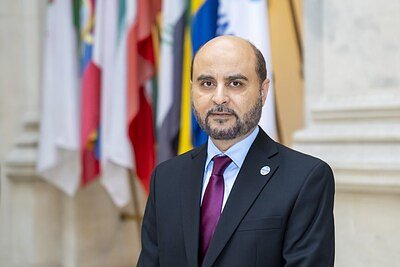
OPEC Fund President Dr. Abdulhamid Alkhalifa emphasized the initiative's rapid-response nature. "Many of our partner countries are facing immediate pressure from higher costs, tighter financing conditions and disruption to critical trade flows," he stated. "E-STAR is designed to respond quickly and where it matters most: helping countries keep essential services running, secure critical supplies and stay on track with their development priorities. At a time of uncertainty, this is about delivering practical support and reinforcing partnership."
A World on the Brink of Crisis
The E-STAR initiative is not a preventative measure for a distant threat; it is a direct response to a cascade of crises already battering developing economies. Global inflation, though moderating in advanced economies, remains a persistent scourge for others. The IMF projects that while global inflation may fall to 3.7% in 2026, many emerging markets and developing economies (EMDEs) will continue to struggle. In Sub-Saharan Africa, for instance, median inflation is expected to climb to 5% in 2026, while some nations face hyperinflationary spirals.
This inflationary pressure is being supercharged by extreme volatility in energy and commodity markets. Geopolitical conflicts, particularly recent developments in the Middle East, are projected to cause a 24% surge in energy prices in 2026. This has a direct knock-on effect, contributing to an expected 16% overall rise in commodity prices, fueled by escalating costs for fertilizer and key metals.
Compounding these issues are unprecedented disruptions to global trade. Tensions in the Middle East have led to a staggering 42% reduction in trade volume through the critical Suez Canal. Simultaneously, severe drought has choked traffic through the Panama Canal, and the conflict in Ukraine continues to reroute essential grain and oil shipments. For import-dependent nations, this translates directly into higher costs for food, fuel, and other essential goods, straining national budgets and household incomes.
A Three-Pronged Strategy for Stability
To combat this multi-faceted threat, E-STAR is built on a three-pronged strategy designed to provide both immediate relief and long-term reinforcement. The initiative's core pillars focus on stabilizing economies, maintaining trade flows, and building future resilience.
First, Counter-cyclical support will offer fast-disbursing financing to governments. This capital is designed to give policymakers the fiscal space needed to manage the dual pressures of soaring import costs and tighter credit markets, ensuring that budgets for essential public services like healthcare and education are not slashed.
Second, the initiative will bolster Trade finance. This component aims to keep the arteries of commerce open by providing working capital to countries and businesses. The goal is to ensure the reliable supply of critical goods—including energy, food, and agricultural inputs like fertilizer—by helping entities access the financing needed to navigate volatile and expensive global supply chains.
Third, E-STAR will invest in Resilience building. This forward-looking pillar moves beyond immediate crisis management to address underlying vulnerabilities. Through targeted investments in crucial energy, transport, and logistics infrastructure, the fund aims to strengthen supply chains, reduce exposure to future price shocks, and enhance the continuity of essential imports for the long term.
Geopolitics and the Flow of Aid
The timing and structure of E-STAR underscore a growing reality in development finance: geopolitical instability is now a primary driver of economic crises. The OPEC Fund's explicit reference to "recent developments in the Middle East" highlights how regional conflicts have immediate and severe global economic consequences. The disruption of key shipping lanes like the Red Sea is no longer a localized problem but a global one that inflates costs for nations thousands of miles away.
This initiative can be seen as a strategic deployment of development capital to counteract the fallout from geopolitical events. By providing a financial backstop, the OPEC Fund aims to prevent conflict-driven market volatility from triggering sovereign debt crises, food shortages, and social unrest in its partner countries. It represents an acknowledgment that in an interconnected world, economic stability is inextricably linked to geopolitical security.
Targeting the World's Most Vulnerable
The E-STAR funds will be directed toward the OPEC Fund's partner countries, with a historical focus on the Least Developed Countries (LDCs) that are most exposed and least equipped to handle such shocks. The need is acute across multiple regions. In Africa, 15 nations are already battling double-digit inflation, with debt payments consuming over a quarter of government revenue. In developing Asia, the Asian Development Bank has revised growth forecasts downward, warning that persistent conflict in the Middle East could shave over a percentage point off regional growth and push millions into poverty, particularly in South Asian countries like Bangladesh and Pakistan.
Across Latin America and the Caribbean, sluggish growth and high interest rates are creating debt distress, while in the Middle East and North Africa itself, neighboring countries like Egypt and Jordan are suffering from the economic spillovers of conflict, including plummeting tourism and trade revenue. For these nations, where a quarter of the population lives in countries spending more on interest payments than on health or education, a program like E-STAR offers a crucial financial buffer.
As the OPEC Fund marks a half-century of operations, the launch of E-STAR reaffirms its founding mission to drive development and empower people. By stepping in with a significant and targeted financial package, the institution is positioning itself as a critical force for stability in an increasingly turbulent world, working to ensure that today's crises do not become a permanent barrier to a sustainable future.