
- 4.99-megawatt Battery Energy Storage System (BESS) now operational in Cramahe, Ontario
- 880 MW of new battery storage secured under IESO's Expedited Long-Term RFP (E-LT1)
- 50% ownership held by a consortium of local First Nations communities
Experts view this project as a model for integrating renewable energy storage with financial viability and Indigenous partnership, setting a precedent for Canada's clean energy future.
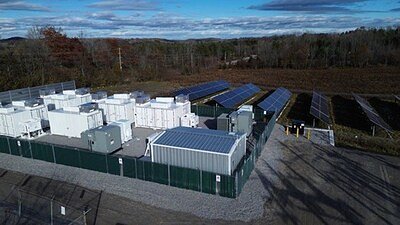
Ontario Grid Powers Up with New Battery and First Nations Partnership
CRAMAHE, ON – May 05, 2026 – A new front in Ontario's battle for grid stability and a cleaner energy future has officially opened. PowerBank Corporation announced today that its first Battery Energy Storage System (BESS), a 4.99-megawatt facility in Cramahe, Ontario, has achieved commercial operation and is now feeding into the provincial grid.
The project, known as BESS SFF 06, represents more than just a new piece of infrastructure. It is a confluence of strategic public policy, lucrative long-term financing, and a progressive partnership model that includes 50% ownership by a consortium of local First Nations communities, setting a new benchmark for renewable energy development in Canada.
A Critical Charge for Ontario's Grid
As Ontario's electricity demand is forecast to climb by as much as 75% by 2050, the province is in a race to secure reliable, clean power. Battery storage is emerging as a linchpin in this strategy. These systems act like giant rechargeable batteries for the grid, inhaling surplus power during times of low demand (like overnight, when wind turbines are spinning) and exhaling it during peak hours when demand soars. This capability is crucial for balancing the intermittent nature of renewable sources like solar and wind, making them more dependable.
The Independent Electricity System Operator (IESO), which manages Ontario's power grid, has recognized this necessity. The BESS SFF 06 project was awarded its contract under the IESO's Expedited Long-Term RFP (E-LT1), a procurement process designed to bring new capacity online quickly. This RFP round alone secured approximately 880 MW of new battery storage, a five-fold increase in the province's capacity, all slated to be in service by 2026. PowerBank's project is one of the first of this new wave to come online, demonstrating the speed at which the sector is now moving.
"Reaching commercial operation on BESS SFF 06 is a deeply meaningful milestone for our team," said Dr. Richard Lu, CEO of PowerBank Corporation, in a statement. "Battery energy storage is a critical pillar of a resilient, renewable grid — and this project proves that the technology, the contracts, and the partnerships are in place to deliver."
The Dollars and Sense of Decarbonization
Beyond its technical importance, the Cramahe project is a case study in the increasingly sophisticated financial architecture supporting Canada's green transition. The project has secured a 22-year revenue contract with the IESO, providing a long-term, predictable income stream that is highly attractive to investors.
The terms of the deal are particularly noteworthy. ProjectCo, the entity that owns the facility, will receive a fixed capacity payment of $1,221 per megawatt per business day. This is nearly 40% higher than the weighted average price of $876/MW for storage projects awarded under the same IESO program, underscoring the project's competitive strength and prime positioning.
Further bolstering the project's economics is its eligibility for the federal Clean Technology Investment Tax Credit (CTITC). Introduced in 2024, this refundable credit allows project owners to recoup up to 30% of eligible capital costs. For a capital-intensive asset like a BESS, this incentive dramatically improves financial returns and shortens the payback period, making such investments far more viable for private capital.
The project's development was financed through a $28.1 million loan from the Royal Bank of Canada, which covers both BESS SFF 06 and a second, similar project, BESS 903. This backing from a major Canadian financial institution, acting as a Green Loan Structuring Agent, signals strong institutional confidence in the viability of battery storage as a long-term asset class.
Forging a New Path with First Nations Partners
Perhaps the most forward-looking aspect of the BESS SFF 06 project is its ownership structure. PowerBank holds a 50% indirect interest, with the remaining 50% held by a partnership formed by First Nations communities in Ontario. This arrangement moves beyond simple consultation to direct equity participation, ensuring that the economic benefits of the green energy transition are shared with the Indigenous communities on whose traditional territories these projects are often built.
This model aligns with a growing movement across Canada and within the Ontario government to foster Indigenous leadership and partnership in the energy sector. Programs like the province's Indigenous Energy Support Program are being expanded to support such collaborations, recognizing them as a vital component of economic reconciliation. By providing a steady, long-term revenue stream, the Cramahe project offers its First Nations partners a powerful tool for economic self-determination, funding community services, and creating local opportunities for decades to come.
This collaborative approach transforms the project from a simple power asset into a vehicle for community empowerment and shared prosperity, setting a powerful precedent for future infrastructure development nationwide.
A Strategic Entry into a Surging Market
The successful launch of BESS SFF 06 marks a strategic pivot for PowerBank, a company with a long history in solar development. The project represents its first foray into the rapidly growing battery storage market, a sector that Fortune Business Insights predicts will swell to over US$31 billion globally by 2029. The company's interest in the project was acquired as part of its 2024 acquisition of Solar Flow-Through Funds Ltd., a move that is now clearly paying dividends.
With over 100 MW of completed projects and a development pipeline exceeding 1 gigawatt, PowerBank is leveraging its deep experience in renewable energy development to capitalize on this new market opportunity. The disciplined execution required to bring the Cramahe project from contract award to commercial operation in under two years speaks to the company's operational capabilities.
"BESS SFF 06 represents the engineering and operational excellence our team brings to every project," commented Andrew van Doorn, President & COO of PowerBank. "With over 30 years of experience delivering renewable energy infrastructure, I know firsthand that moments like this... are the result of years of disciplined execution."
As the lights stay on in Ontario homes and businesses, the silent work of the Cramahe battery facility will serve as a constant reminder of this new paradigm. It is a blueprint for a future where grid stability, financial innovation, and community partnership are not competing interests, but interconnected pillars supporting a sustainable and equitable energy system.