
- 90-acre multi-modal logistics hub launched in Chicago's Southside
- 210,000 jobs supported by the freight and logistics sector in the Chicago area (2024)
- 25% of U.S. freight trains and 50% of intermodal trains pass through Chicago
Experts view this project as a strategic reinforcement of Chicago's supply chain dominance, with potential economic benefits for Blue Island, though they caution that managing community and environmental impacts will be critical to its long-term success.
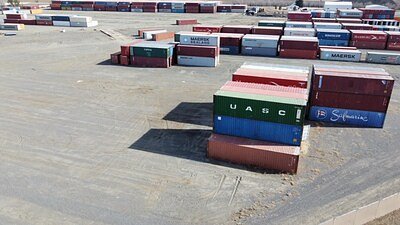
OmniTRAX Launches 90-Acre Rail Hub on Chicago's Southside
CHICAGO, IL – February 26, 2026 – OmniTRAX, a prominent rail and real estate firm, today announced the immediate operational launch of a sprawling 90-acre multi-modal logistics hub on Chicago's Southside. The new facility, situated in the City of Blue Island, represents a significant investment in the region's industrial infrastructure and is poised to become the city's largest logistics center of its kind.
The project, developed on a long-term lease, sits at the intersection of 119th and Division Streets within the Blue Island Commercial Center. It is designed to leverage its strategic location to provide direct access to Chicago's dense urban market and the broader American Heartland, while tapping into one of the nation's most extensive labor pools. Services will include bulk commodity transloading from rail to truck, as well as secure storage for containers, trucks, and trailers.
"This is an extremely rare rail-served industrial site in the heart of Chicago that offers unparalleled market access," said OmniTRAX Senior Vice President Chris Tecu in the announcement. He described the project as a "fantastic public-private partnership that is the model for shared success."
A Bet on Blue Island's Future
The development is being hailed as a major economic catalyst for the City of Blue Island, a community with deep industrial and railroad roots. The partnership with OmniTRAX, whose affiliate Chicago Rail Link has operated in the Blue Island Yard since 1992, is seen by local officials as a continuation of this legacy.
Blue Island Mayor Fred Bilotto expressed optimism about the hub's potential impact. "This project will bring new jobs and new investment to the City of Blue Island," he stated. "We are excited to partner with an experienced infrastructure company like OmniTRAX that brings national relationships and industry leading service to help our community attract new partnerships that build long-term community value."
Mayor Bilotto, who was elected in 2021 on a platform focused on economic development and infrastructure renewal, views the project as a key step toward his goal of making Blue Island a "premier destination." The promise of new jobs is particularly significant in a region where the freight and logistics industry is already a massive employer. In 2024, the sector supported over 210,000 jobs across the seven-county Chicago area. While specific job creation figures for the OmniTRAX hub have not been released, developments of this scale are typically major employment drivers.
However, the expansion of freight operations on Chicago's Southside is not without its complexities. Historically, communities in close proximity to major freight corridors have faced challenges, including increased traffic and environmental concerns. The success of this public-private partnership will likely depend on its ability to deliver the promised economic benefits while proactively managing its impact on the local community and environment.
Strengthening Chicago's Supply Chain Dominance
The new OmniTRAX hub does more than just revitalize a local industrial site; it strategically reinforces Chicago's undisputed status as the nerve center of North America's supply chain. The city is a critical interchange, with estimates suggesting that roughly 25% of all U.S. freight trains and 50% of all intermodal trains pass through the metropolitan area.
The Blue Island facility's key advantage is its exceptional connectivity. Through the 72-mile network of the Chicago Rail Link, tenants will have access to all seven of North America's Class I railroads. This seamless connection allows goods to be efficiently transferred between the continent's major eastern and western rail networks, a crucial function in modern logistics. In a market where intermodal volume was up nearly 8% year over year in 2025, the addition of this hub's capacity is a timely enhancement.
The facility enters a highly competitive landscape dominated by massive intermodal yards operated by giants like BNSF, Union Pacific, and Norfolk Southern. Yet, OmniTRAX is betting that the site's rarity—a large, rail-served parcel in the heart of the metro area with direct interstate access—provides a unique competitive edge for companies looking to streamline their distribution and last-mile delivery operations.
The OmniTRAX Blueprint: Integrating Rail and Real Estate
This project is a textbook example of the corporate strategy that has fueled OmniTRAX's rapid growth. As the rail affiliate of The Broe Group, a multi-billion-dollar private investment firm with vast real estate holdings, OmniTRAX operates a unique, vertically integrated business model. The company doesn't just manage railroads; it develops the industrial real estate around them.
This synergy between rail operations and property development has been successfully deployed across North America. For instance, The Broe Group's real estate arm won a 2022 industry award for a build-to-suit project for The Home Depot in Colorado, which featured a custom rail solution designed by OmniTRAX's Great Western Railway. This integrated approach allows the company to offer holistic supply chain solutions that competitors cannot easily replicate.
Other large-scale projects underscore this strategy, including the 3,000-acre Great Western Industrial Park in Colorado and the 2,750-acre Savannah Gateway Industrial Hub in Georgia, where OmniTRAX is the master developer. By controlling both the track and the land, the company can attract major corporate clients—it claims to have brought $5 billion worth of new business to rail since 2019—by offering purpose-built facilities with guaranteed rail access.
The Blue Island hub is the latest application of this powerful blueprint, leveraging an existing rail presence and a strategically located parcel of land to create a high-value logistics asset.
A Track Record of Ambition and Challenge
OmniTRAX and The Broe Group have built a reputation on ambitious, long-term investments in hard assets. This approach has yielded significant successes and established the company as a major force in private infrastructure. However, the company's history also includes complex challenges that highlight the risks inherent in such large-scale ventures.
One of the most notable cases involved the Hudson Bay Railway and the Port of Churchill in northern Canada. After acquiring the assets in the late 1990s, OmniTRAX faced a crisis in 2017 when severe flooding washed out the rail line, the only land link to the community. The company deemed the extensive repairs economically unfeasible, leading to a protracted dispute and a lawsuit from the Canadian government before the line was eventually sold. The episode drew criticism that the company had neglected a vital piece of infrastructure.
In another instance, the company abandoned a 67.5-mile stretch of track on its Central Texas & Colorado River Railway in 2019, citing years of operating losses after anticipated freight traffic failed to materialize. These cases demonstrate a corporate pragmatism that prioritizes economic viability, even if it means walking away from an underperforming asset.
As operations commence at the new Blue Island hub, it stands as the latest chapter in this dynamic history. It represents a significant bet on the future of Chicago's economy and the enduring strength of the North American supply chain, backed by a company with a proven formula for growth and a complex legacy of both building up and moving on.