
- $1.2 billion: Global value of the EUS market, projected to grow at over 6% annually
- May 1, 2026: U.S. launch date of the Aplio i800 EUS system
- 2024: Year the strategic partnership between Olympus and Canon was first announced
Experts view the Aplio i800 EUS system as a significant advancement in diagnostic imaging for gastrointestinal diseases, particularly for early detection and assessment of liver and pancreatic conditions, thanks to its suite of innovative, clinically validated technologies.
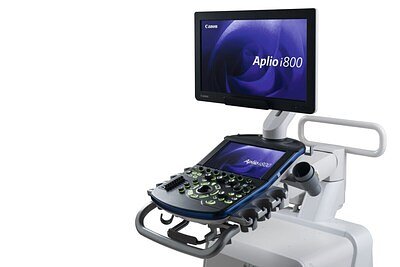
Olympus and Canon Launch Advanced EUS System to Combat GI Diseases
TOKYO and TUSTIN, Calif. – May 01, 2026 – In a significant move to advance diagnostic capabilities for complex gastrointestinal diseases, Olympus Corporation and Canon Medical Systems USA, Inc. have announced the U.S. launch of the Aplio i800 EUS premium ultrasound system. The new system, manufactured by Canon and distributed exclusively by Olympus, aims to provide clinicians with unparalleled imaging clarity to improve the early detection and assessment of conditions affecting the pancreas, liver, and other organs.
This launch marks a major milestone in the strategic partnership between the two medical technology giants, combining Canon's legacy in high-end diagnostic imaging with Olympus's market leadership in endoscopy. The collaboration addresses a critical need in a healthcare landscape grappling with rising rates of liver and pancreatic diseases, which are often challenging to diagnose in their early stages using conventional methods.
A New Frontier in Diagnostic Imaging
Endoscopic ultrasound (EUS) has become an indispensable tool in modern gastroenterology, allowing physicians to obtain high-resolution images from within the body. However, the Aplio i800 EUS system promises to elevate this standard by integrating a suite of advanced, clinically validated imaging technologies designed to provide deeper insights and quantitative data.
At the heart of the new system are several key innovations:
- Shear Wave Elastography (SWE): This tool provides objective, color-coded measurements of tissue stiffness. It is a critical feature for assessing pancreatic lesions and evaluating liver fibrosis, helping clinicians characterize tissue non-invasively.
- Attenuation Imaging (ATI): To address the growing epidemic of fatty liver disease, ATI visualizes and quantifies ultrasound beam attenuation. This gives clinicians a powerful tool for diagnosing and monitoring conditions like steatosis.
- Superb Micro-vascular Imaging (SMI): Going beyond traditional Doppler, SMI can visualize low-velocity, microvascular blood flow. This enhanced vascular detail can be crucial for characterizing lesions and understanding tumor angiogenesis.
- Smart 3D Imaging: The system can generate detailed three-dimensional images, giving physicians a more comprehensive understanding of complex anatomy and the spatial relationship of abnormalities.
"Liver disease spans a wide and complex range of pathologies, demanding imaging solutions that deliver clarity, consistency, and clinical confidence," said Dr. Marvin Ryou, MD, Director of Endoscopic Innovation at Brigham and Women's Hospital in Boston, Mass. "The Aplio i800 EUS system advances endoscopic liver assessment with its next-generation quantitative technologies...These quantitative tools enhance endoscopic assessment of hepatic stiffness and tissue composition, supporting characterization and a streamlined, endohepatology-driven diagnostic workflow."
A Strategic Alliance in a Competitive Market
The launch of the Aplio i800 EUS is more than a product release; it is a calculated strategic maneuver in the highly competitive and rapidly growing EUS market. Valued at over $1.2 billion globally, the EUS market is projected to grow at a compound annual rate of over 6%, fueled by an aging population and the increasing prevalence of GI cancers. The U.S. represents the largest segment of this market, making this launch a pivotal event.
The partnership, first announced in 2024, allows Olympus and Canon to challenge established competitors like Fujifilm and PENTAX Medical by leveraging their respective strengths. Canon provides the core ultrasound engine and its proprietary imaging technologies, while Olympus brings its world-class echoendoscopes and an extensive sales and distribution network that dominates the endoscopy space.
"We are excited to bring this state-of-the-art diagnostic technology to clinicians in the U.S.," said Miquel Àngel García, Executive Vice President and General Manager for Gastrointestinal Solutions at Olympus Corporation. "Our strategic partnership with Canon Inc. reflects a continued focus on innovation designed to meet evolving clinical needs and expand the possibilities of endoscopy-enabled care."
John Serovich, Vice President of the Ultrasound/X-ray Business Unit at Canon Medical Systems USA, Inc., echoed this sentiment. "Partnering with Olympus marks an exciting step forward as we work together to elevate the future of EUS."
Improving Patient Care and Clinical Workflows
Beyond the technology and business strategy, the ultimate goal of the Aplio i800 EUS is to improve patient outcomes. Early and accurate diagnosis is critical for diseases of the pancreas and liver, where prognosis is often tied to the stage at which the disease is detected. By providing clearer images and quantitative data, the system is designed to give clinicians greater diagnostic confidence, potentially reducing the need for more invasive and costly procedures like surgical biopsies.
This improved diagnostic capability is supported by a robust regulatory and reimbursement framework. The Aplio i800 and its key software components have secured 510(k) clearance from the U.S. Food and Drug Administration (FDA). Furthermore, established Current Procedural Terminology (CPT) codes for EUS procedures ensure that healthcare providers can receive reimbursement, facilitating the adoption of this advanced technology in hospitals and clinics across the country.
For patients, this means access to a diagnostic pathway that is not only less invasive but also more precise, leading to earlier interventions and more personalized treatment plans. The system's ability to perform a thorough evaluation within a single EUS-guided workflow also promises to enhance efficiency, a key consideration for healthcare systems focused on delivering value-based care.
To showcase these capabilities to the medical community, Olympus will be featuring live demonstrations of the Aplio i800 EUS system at the upcoming 2026 Digestive Disease Week in Chicago from May 3-5.