
- 18-seat exclusivity: La Table par Maîtres Cuisiniers de France will feature only 18 seats, creating engineered scarcity and prestige.
- 2027 launch: The new dining concepts will debut on the Oceania Sonata, set to launch in 2027.
- 30% suites: The Oceania Sonata will allocate 30% of accommodations to suites, enhancing luxury offerings.
Experts would likely conclude that Oceania Cruises is setting a new benchmark in luxury cruising by strategically investing in exclusive culinary partnerships and logistical mastery to create unparalleled, self-contained experiences at sea.
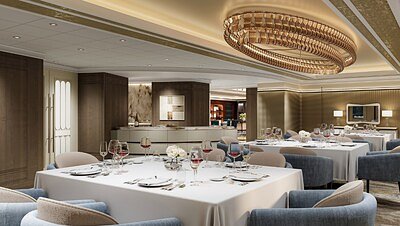
Oceania's Culinary Gambit: Building the Next Wave of Luxury at Sea
MIAMI, FL – December 03, 2025 – In the relentless push toward smarter, more connected forms of mobility, the conversation often orbits around autonomous vehicles, 5G-enabled traffic grids, and urban air taxis. Yet, a significant development in a more traditional mobility sector—luxury cruising—offers a compelling case study in how experience itself is becoming the most critical infrastructure of all. Oceania Cruises, a line that has built its brand on destination-rich itineraries and culinary prowess, has unveiled a strategic move that extends far beyond a simple menu update. The announcement of two entirely new dining concepts for its next-generation Oceania Sonata, launching in 2027, is not just about food; it's about engineering a new competitive benchmark in a fiercely contested market.
The debut of La Table par Maîtres Cuisiniers de France and Nikkei Kitchen aboard the first of the new Sonata Class vessels represents a multi-million dollar investment in what can best be described as 'soft infrastructure.' While cities invest in fiber optic cables and sensor networks to enhance livability, luxury cruise lines are investing in exclusive partnerships, specialized talent, and logistical mastery to build unparalleled, self-contained worlds at sea. This is the new frontier of competition, where the journey is no longer just a means to an end, but a meticulously curated mobile destination in its own right.
The Architecture of Exclusivity
At the heart of Oceania's announcement is La Table, an 18-seat fine-dining venue that serves as a masterclass in building brand value through engineered scarcity and unparalleled prestige. The restaurant will be the only one at sea launched with the official seal of approval from the Maîtres Cuisiniers de France (MCF), a globally revered institution dedicated to the preservation and advancement of French gastronomy. This isn't merely a collaboration; it's an anointment.
For a cruise line to secure this partnership is a world-first, creating a powerful, non-replicable asset. In the world of connected infrastructure, this is akin to a city securing an exclusive contract for a groundbreaking technology. The MCF endorsement acts as an immutable standard of quality and authenticity, instantly elevating the brand's culinary promise. This is reinforced by the fact that Oceania's two Executive Culinary Directors, Chefs Alexis Quaretti and Eric Barale, are both inducted members of the MCF—a distinction unique to the cruise line. They are not just licensing a brand; they are embodying its core principles from the top down. As Chef Quaretti noted, La Table allows them to create a dining experience that "honors the heritage of French gastronomy... and propels it forward."
The decision to limit seating to just 18 guests, coupled with a reservations-only policy and a "wine experience surcharge," further refines this strategy. It transforms dining from a simple service into a coveted event. This model mirrors the tiered access systems seen in smart city services, where premium, personalized experiences are available to those willing to invest in them. By creating this pinnacle of exclusivity, Oceania not only caters to its highest-value clientele but also creates an aspirational halo that elevates the perception of its entire culinary program.
Tapping the Global Supply Chain Network
If La Table represents an investment in heritage and prestige, the second new venue, Nikkei Kitchen, signifies an investment in global trends and logistical agility. Nikkei cuisine, the vibrant fusion of Japanese techniques and Peruvian ingredients, has surged in popularity in cosmopolitan centers from London to Dubai. By creating a dedicated restaurant for this culinary movement, Oceania is demonstrating a deep understanding of its passengers' evolving palates, which increasingly seek authentic, diverse, and sophisticated global flavors.
This move, however, goes far beyond simply following a trend. Executing Nikkei cuisine at sea is a significant logistical challenge that underscores the complexity of the modern cruise ship as a mobile piece of infrastructure. The concept relies on a delicate balance of impeccably fresh seafood, bright citrus, and specific ingredients like Peruvian aji peppers. Maintaining a consistent supply of these high-quality, often perishable, items to a vessel that is constantly moving across oceans requires a formidable and resilient supply chain network. This network is an invisible infrastructure, as critical to the guest experience as the ship's propulsion systems or satellite connectivity.
The collaboration with Chef Gustavo Sugay, an expert with over two decades of experience in Nikkei cuisine, further illustrates this point. Sourcing specialized talent is another form of infrastructure investment. Just as a tech hub attracts top engineers, a leading luxury line must attract and retain world-class culinary artists to execute its vision. The success of a small collection of Nikkei dishes previously introduced to the line's Red Ginger restaurant likely provided the data-driven proof of concept needed for this larger investment, showcasing a responsive and adaptive approach to product development.
The Floating Metropolis and the Battle for Supremacy
The introduction of these concepts on the new 1,390-guest Oceania Sonata—a ship where 30% of all accommodations will be suites—is part of a larger strategic narrative. Luxury cruise lines like Oceania, Silversea, and Regent Seven Seas are locked in an arms race where the battlefield is the guest experience. While competitors boast partnerships with celebrity chefs like Thomas Keller or offer their own acclaimed French and Pan-Asian venues, Oceania's move with La Table creates a new standard of official, institutional validation. Nikkei Kitchen, meanwhile, carves out a specific and highly relevant culinary niche.
These ships are, in effect, floating smart cities. They must provide power, water, waste management, connectivity, security, and a vast array of services for thousands of residents. In this context, the dining program is not just an amenity; it is the cultural and social heart of the metropolis. Jason Montague, the line's Chief Luxury Officer, stated that these concepts are "emblematic of what sets Oceania Cruises apart." This is the core of the strategy: differentiation through superior internal infrastructure.
As the next wave of mobility continues to evolve, it is clear that the focus is shifting from pure transportation to the quality of the time spent in transit. Whether in a fully autonomous car designed as a mobile office or in a luxury suite sailing the Mediterranean, the experience is paramount. Oceania Cruises' deep investment in its culinary infrastructure is a powerful statement that in the luxury mobility sector, the most advanced network is the one that connects with the passenger's palate, creating a world so complete that the journey itself becomes the ultimate destination.