
- 75% of female leaders in Nordic life science report encountering significant career barriers.
- 20% of women have experienced harassment or exclusionary behavior.
- The sector contributes €18 billion to Swedish and Danish economies combined.
Experts conclude that the Nordic life science sector faces a systemic 'conversion problem,' where qualified women are not advancing to leadership roles due to structural barriers, network exclusivity, and cultural biases, threatening the sector's economic competitiveness and innovation potential.
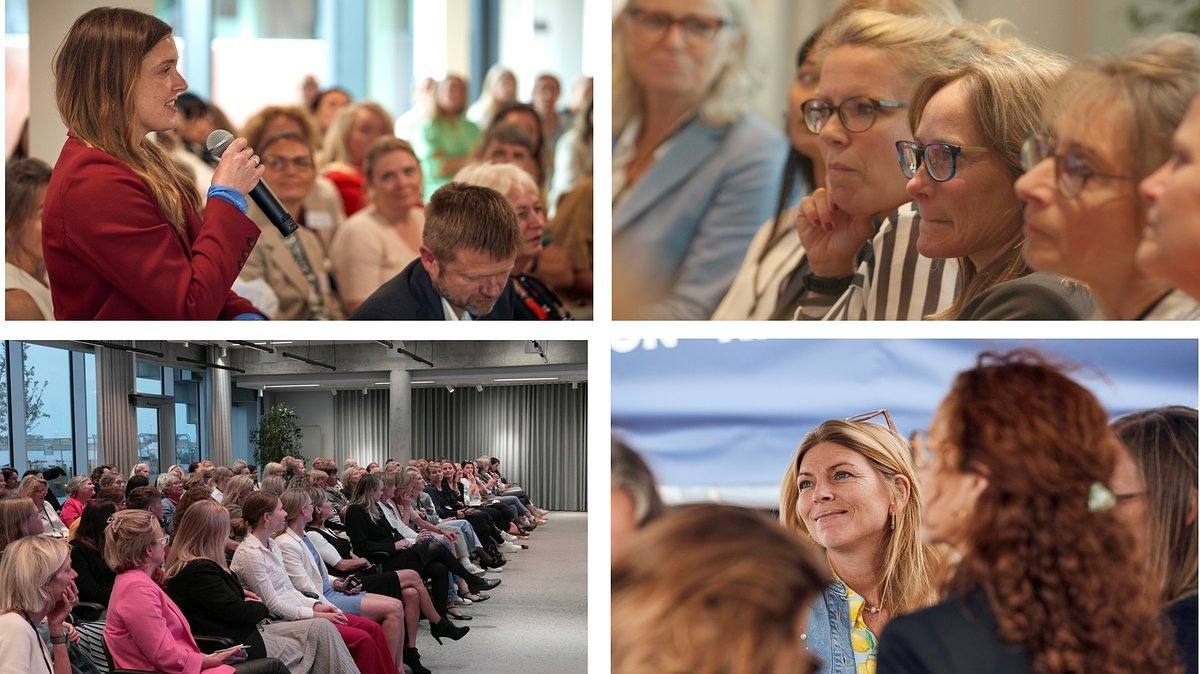
Nordic Life Science's 'Conversion Problem' Stifles Female Leaders
COPENHAGEN, Denmark – April 17, 2026 – The Nordic life science sector, a global engine of innovation and a cornerstone of the region's economy, is systematically losing its most qualified female talent at the gates of power. A landmark new white paper reveals that despite women forming the majority of the highly educated workforce, systemic barriers are preventing them from reaching the executive teams, boardrooms, and capital committees where their expertise is needed most.
The report, published by a collaboration of professional networks including Women in Life Science Denmark (WiLD), WiLD Norway, and VILDA Sweden, challenges the long-held assumption of a 'pipeline problem.' Instead, it argues the sector has a critical 'conversion problem.' Based on insights from 212 senior professionals, the findings are stark: three out of four female leaders have encountered significant barriers in their careers, and one in five report experiencing harassment or exclusionary behavior.
“The Nordic life science sector does not have a talent problem. It has a conversion problem,” stated Lene Gerlach, Chair of WiLD Denmark, in the report's announcement. “The system is not consistently turning qualified women into decision-makers.”
The Mid-Career Bottleneck
The white paper pinpoints the mid-career stage as the primary bottleneck where promising trajectories for women either accelerate into senior leadership or stall indefinitely. It is at this critical juncture, where deep expertise is expected to translate into formal authority, that the rules of advancement appear to shift. The report finds that progression becomes less about individual performance and more dependent on access to exclusive networks, high-level sponsorship, and visibility to incumbent leaders.
This phenomenon is not unique to the Nordics, mirroring global findings like McKinsey’s ‘broken rung’ theory, where the first promotion to a management role shows significant gender disparity. However, its presence in a region celebrated for its commitment to equality highlights a deep-seated structural issue. The report indicates that while both men and women are cited as sources of support, men are more frequently identified as contributors to the barriers, a reflection of the current distribution of power in leadership roles.
This structural bottleneck is reinforced by cultural and behavioral patterns. The finding that one in five women has experienced harassment or exclusionary conduct suggests that power is not only concentrated but is sometimes exercised in ways that actively push women out. As women climb the ladder, the report notes, support structures paradoxically weaken just as responsibilities increase, creating a perilous gap just below the highest echelons of leadership.
An Engine of Growth at Risk
The failure to convert female talent into leadership is more than a social issue; it is a direct threat to the economic competitiveness and innovative potential of a sector vital to the Nordic economies. The life science industry contributes an estimated €18 billion to the Swedish and Danish economies combined, with pharmaceuticals ranking as Sweden's top export product. In Denmark, home to giants like Novo Nordisk, the sector is credited with driving two-thirds of recent economic growth. This boom is centered in hubs like Medicon Valley, which employs over 65,000 people and has raised nearly $10 billion in funding since 2019.
When leadership fails to reflect the available talent pool, the entire sector risks developing blind spots. Decisions on which research to prioritize, how to allocate billions in capital, and which innovations reach patients are made by a homogenous group. This can lead to overlooked market opportunities and a failure to address critical health needs, including the much-discussed women's health gap.
“This is not only about leadership, but about who controls the money and makes the decisions, be it boards, public committees, and private capital forums,” remarked Chelsea Ranger, Chair of WiLD Norway. “If the Nordic model cannot translate talent into leadership in life science…we need to question how well the system is working.”
Christina Östberg Lloyd, Chair of VILDA Sweden, echoed this sentiment, framing it as a bottom-line issue. “If the Nordic life science sector does not fully utilize its leadership talent, it risks limiting both innovation and long-term competitiveness. This is not only about representation, it is about ensuring that the best ideas, expertise, and perspectives are brought into decision-making at the highest levels.”
A Roadmap for Systemic Change
Moving beyond diagnosis, the white paper outlines a concrete path forward with 17 targeted recommendations for companies, boards, investors, and policymakers. The proposed actions aim to dismantle the systemic barriers by shifting focus from isolated diversity initiatives to fundamentally altering how leadership systems operate.
Key priorities include a call to make leadership pathways transparent, removing the ambiguity that allows bias to flourish. The report urges companies to formalize sponsorship programs at senior levels, ensuring that high-potential women receive the active advocacy—not just mentorship—needed to advance. It also calls for opening access to decision-making arenas and increasing transparency in board and executive recruitment processes to break up closed networks.
Some industry leaders are already taking steps that align with these recommendations. Novo Nordisk, for instance, has set public targets to achieve a minimum of 45% women in upper management by the end of 2026 and utilizes employee resource groups and mentorship to foster an inclusive culture. The report's authors are also leading by example. WiLD's mentoring program, supported by the Novo Nordisk and Lundbeck Foundations, is in its third cohort, while WiLD Norway is offering dedicated board training and actively engaging men as 'ambassadors' for change.
The overarching message is a call to action for the entire ecosystem. The report urges organizations to rigorously track and act on leadership data, treating gender parity not as a vague aspiration but as a key performance indicator. By implementing these structural changes, the Nordic life science sector can move from merely having talent to truly leveraging it.
The conclusion is clear: the Nordic life science sector does not lack talent—it loses it at the point where power begins.