
- 90%+ cure rate for germinomas, with proton therapy enhancing long-term quality of life
- Precision proton therapy delivers minimal exit dose to healthy tissue beyond the tumor
- Reduced long-term side effects with proton therapy, including lower risk of cognitive impairment and secondary cancers
Experts agree that proton therapy is a transformative advancement in pediatric brain cancer treatment, particularly for highly curable cancers like germinomas, as it minimizes long-term side effects while maintaining high survival rates.
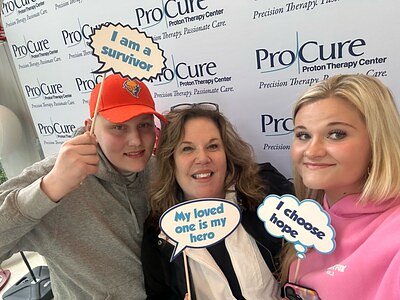
NJ Teen's Future Secured by Precision Proton Brain Cancer Therapy
SOMERSET, NJ – January 14, 2026 – Just over a year ago, as holiday decorations lit up neighborhoods across New Jersey, 14-year-old Jimmy’s world went dark. What he and his family thought was a stubborn sinus infection was revealed to be something far more sinister when he suddenly collapsed outside his pediatrician’s office.
The terrifying incident marked the beginning of a medical odyssey that would test his family’s resilience and ultimately showcase the life-altering power of precision medicine. The diagnosis was a rare brain tumor, a germinoma, but the treatment that followed has given him not just a clean bill of health, but a clear path toward a future he once feared he might not have.
A Crisis and a Critical Choice
The moments following Jimmy's collapse were a blur of fear and instinct. His mother, Janet, described a chillingly familiar scene. "I noticed my son's skin looking gray and white," she recalled. "My Dad passed of a brain tumor, and what I saw happening to Jimmy was frighteningly familiar. I looked at his eyes and knew something was very wrong."
Rushed to Hackensack Meridian Health's Jersey Shore Medical Center, the gravity of the situation became clear. The germinoma was obstructing the brain's fluid-flow channels, causing a life-threatening buildup of pressure. Neurosurgeons performed an emergency procedure to drain the fluid, a critical intervention that stabilized him and allowed for further testing. A subsequent biopsy confirmed the cancer diagnosis.
For his father, James Sr., the choice of hospital felt like a fateful turn. "When he collapsed, there were three hospitals we could have gone to," he said. "We now know it was a blessing that we chose Jersey Shore, where the right neurosurgeons were available. Anywhere else, they would have had to transfer him, and it might have been too late."
Following the emergency surgery, Jimmy began a course of chemotherapy. By April, the treatment had proven remarkably effective, eliminating the tumor and offering a strong prognosis. But for germinomas, which have a high cure rate exceeding 90%, the battle is not just about eradicating the primary tumor; it's about preventing recurrence and, crucially, preserving the patient's long-term quality of life. This is where the next phase of his treatment became paramount.
The Shift to Precision: Targeting a Rare Cancer
The team at Jersey Shore referred the family to ProCure Proton Therapy Center in Somerset, the tri-state area's first facility dedicated to this advanced form of radiation. Here, they met Dr. Timothy Chen, a radiation oncologist specializing in pediatric and central nervous system cancers.
Dr. Chen recommended proton therapy, a highly targeted form of radiation that differs significantly from traditional X-ray (photon) radiation. While both methods aim to destroy cancer cells, protons have a unique physical property: they deposit the bulk of their energy directly within the tumor and then stop, delivering minimal to no exit dose to the healthy tissue beyond.
"With proton therapy, we can support excellent long-term cognitive and functional outcomes by directing radiation only where it's needed," explained Dr. Chen in the press release.
This precision is especially vital in pediatric patients whose brains and bodies are still developing. Traditional radiation, while effective, can scatter dose to surrounding healthy tissues like the hippocampus (critical for memory), the pituitary gland (regulating hormones), and the cochlea (for hearing), increasing the risk of long-term side effects such as cognitive impairment, growth problems, and secondary cancers.
Dr. Brian Chon, Medical Director at ProCure, elaborated on this benefit. "Proton therapy delivers radiation directly into the tumor, sparing excess exposure to healthy brain tissue," he stated. "Children and teens need treatment that accommodates their growing bodies."
For Jimmy’s specific cancer, Dr. Chen drew on clinical experience from Japan, where germinomas are more common. The goal was to target the entire ventricular system—the fluid pathways where stray cancer cells can "escape and hide"—without irradiating large portions of the healthy brain. "Dr. Chen was confident and reassuring," said Janet. "He knows where these cancer cells like to hide in the brain and how to use proton therapy to keep them from coming back."
The Science of Sparing: Why Protons Matter for Young Brains
The decision to use proton therapy for a highly curable cancer like germinoma reflects a major shift in pediatric oncology. With survival rates already high, the focus has moved from merely surviving cancer to thriving after it. This involves "de-escalating" treatment to be as effective but less toxic as possible.
Historically, brain tumors were often treated with broad fields of radiation, like craniospinal irradiation. While effective, the long-term consequences for children were often severe. Modern protocols, aided by effective chemotherapy, have successfully reduced both the dose and the volume of tissue that needs to be irradiated. Proton therapy represents the pinnacle of this philosophy.
Independent research validates the approach. While studies show that proton and conventional photon therapies have comparable survival and tumor control rates for germinomas, the data on long-term side effects tells a different story. Multiple studies suggest that the reduced radiation dose to healthy brain tissue from proton therapy is associated with better preservation of cognitive functions, including IQ, over time. The theoretical risk of developing a secondary, radiation-induced cancer later in life is also believed to be significantly lower, a critical consideration for a young patient with a long life ahead.
A National Challenge and a Newfound Purpose
While Jimmy’s outcome is a testament to medical innovation, it also highlights the broader challenge of access to such specialized care. Proton therapy is significantly more expensive than conventional radiation, and there are only a few dozen centers in the entire country. Families often face hurdles with insurance coverage and may need to travel long distances, adding financial and emotional strain to an already stressful experience. Jimmy’s family was fortunate to have a world-class facility relatively close to home.
A year after his collapse, Jimmy is not just cancer-free; he is thriving. He is back to building theater sets for school plays, practicing his guitar, and earning top grades. The harrowing experience has not cast a shadow over his future but has instead illuminated a new path. Inspired by the medical team that saved his life, he now plans to pursue a career in healthcare.
His family is celebrating a new year filled with joyful moments they once feared were lost forever. For them, the treatment was more than a medical procedure; it was a source of inspiration and hope.
"At ProCure, they did more than treat Jimmy's cancer," Janet shared. "The entire team is uplifting, and Dr. Chen freely shares his wisdom with Jimmy. That has inspired the future our son is planning."