
- $6.4 billion to $9 billion: The lab automation market is projected to grow from $6.4 billion in 2025 to over $9 billion by 2030.
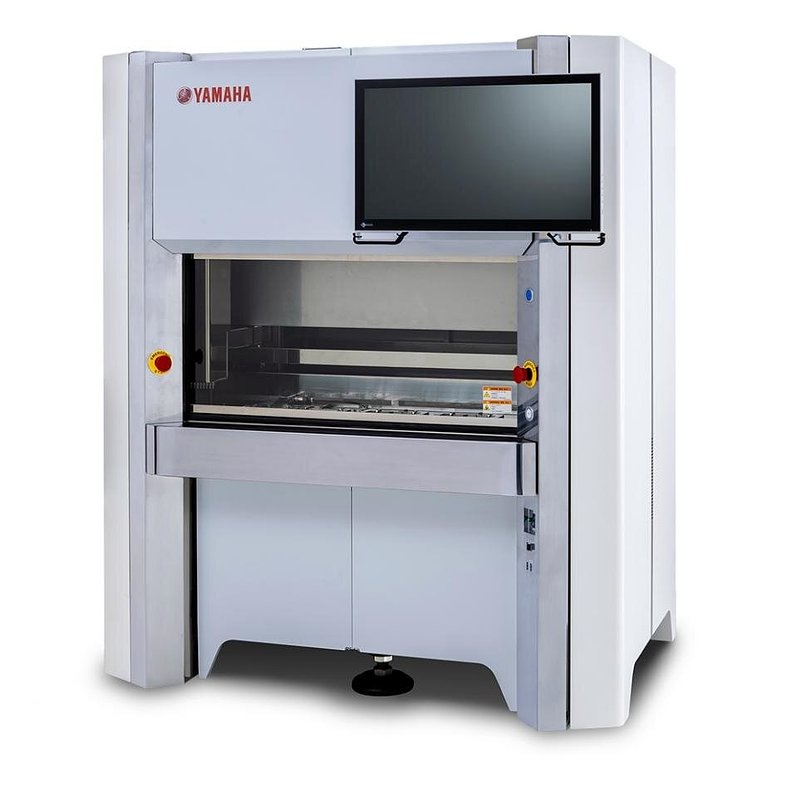
- Automated cell picking: Yamaha's CELL HANDLER 2 system can automatically identify and select target cells, solving a major bottleneck in research.
- Service-based access: Researchers can access the integrated imaging and cell-handling platform as a service through Nikon's BioImaging Lab, lowering barriers to innovation.
Experts would likely conclude that this partnership strategically positions Nikon and Yamaha to capitalize on the high-growth lab automation market, while also democratizing access to advanced drug discovery technologies for researchers.
Nikon & Yamaha's Bold Play to Automate U.S. Drug Discovery
BOSTON, MA – December 04, 2025 – In a move that signals a significant strategic shift for two of Japan’s most iconic brands, Nikon Instruments Inc. and Yamaha Motor Co., Ltd. have forged a partnership aimed directly at the heart of America’s booming drug discovery sector. The collaboration, announced today, will see Yamaha’s sophisticated CELL HANDLER 2 system installed at Nikon’s BioImaging Lab (NBIL) in the biotech hub of greater Boston, creating a powerful, integrated platform for researchers.
While a partnership between a camera and imaging giant and a motor company might seem unusual at first glance, it represents a calculated maneuver to capture a critical, high-growth market. This is not merely a product placement; it is the formation of a service-oriented hub designed to accelerate the painstaking process of developing new medicines by combining cutting-edge imaging with high-precision robotics. For investors and industry watchers, the alliance offers a compelling case study in how established industrial players are repositioning themselves to capitalize on the multi-billion dollar life sciences revolution.
The Robotic Hand and the All-Seeing Eye
At the core of this partnership is the fusion of two highly specialized technologies. Nikon, a name synonymous with optical excellence, has spent years building out its BioImaging Labs as premier contract research destinations. These facilities offer pharmaceutical and biotech clients access to state-of-the-art microscopy, including advanced confocal and super-resolution systems capable of visualizing the most intricate cellular processes. NBIL provides not just the hardware, but the crucial expertise in assay development and AI-driven data analysis, helping researchers evaluate how potential drugs affect cells both spatially and temporally.
Into this world of advanced imaging enters Yamaha's CELL HANDLER 2. Far from its origins in motorcycles and marine engines, Yamaha has invested heavily in the healthcare space, and this system is its flagship offering. Launched in March 2025, the CELL HANDLER 2 is an automated cell picking and imaging system designed to solve a major bottleneck in research: the slow, error-prone manual process of isolating specific cells for study.
Leveraging AI-powered software, the system can automatically identify and select target cells based on learned profiles, a task that was previously difficult and subjective. It can then precisely pick single cells or complex 3D structures like spheroids and organoids—miniature, lab-grown organs that are increasingly vital for accurately testing drug efficacy. By integrating Yamaha's robotic "hand" with Nikon's imaging "eye" under one roof, the partnership creates a seamless workflow that promises to dramatically enhance the speed, accuracy, and reproducibility of foundational drug discovery research.
Beyond the Lens: A Strategic Market Play
This collaboration is far more than a technical integration; it is a shrewd strategic move into the booming lab automation market, which is projected to grow from roughly $6.4 billion in 2025 to over $9 billion by 2030. Both companies stand to gain significantly by addressing a clear market need.
For Nikon, the move represents a crucial evolution of its business model. By embedding a partner's automation technology within its service-oriented BioImaging Lab, Nikon transcends its role as an equipment manufacturer. It becomes a provider of comprehensive, end-to-end research solutions. This enhances the value proposition of NBIL, making it a one-stop-shop for complex projects and solidifying its position as an indispensable partner in the drug discovery ecosystem. It also provides Nikon with invaluable insights into the integrated workflows that will inform its next generation of imaging and analysis products.
For Yamaha Motor, the partnership is a powerful market-entry vehicle. Breaking into the highly competitive and relationship-driven U.S. life sciences market is a formidable challenge. By teaming up with Nikon, Yamaha gains immediate credibility and a prime location within Boston's world-class biotech cluster. It allows potential customers to see the CELL HANDLER 2 in action on their own samples, effectively de-risking the adoption of a new and expensive technology. This "try-before-you-buy" model, facilitated by NBIL, is a clever way to build a user base and gather critical feedback for future product development, accelerating Yamaha's ambition to make healthcare a core part of its future business.
Lowering Barriers to Innovation
Perhaps the most significant impact of this alliance will be felt by the researchers on the front lines of biomedical innovation. The high cost of advanced automation systems—often running into hundreds of thousands of dollars—is a major barrier, particularly for academic labs and smaller biotech startups. These are often the very places where groundbreaking discoveries originate.
The Nikon-Yamaha model effectively democratizes access to this powerful technology. Instead of facing a massive capital expenditure, researchers can access the integrated imaging and cell-handling platform as a service through NBIL. This includes the support of Nikon’s expert staff, who can help design experiments, run the equipment, and analyze the complex datasets generated. This service-based approach mitigates the common challenges of adopting automation, such as the need for specialized training and the complexities of integrating new hardware into existing lab workflows.
By allowing scientists to conduct verification tests with their own proprietary cell lines, spheroids, or organoids, the facility empowers them to develop and validate custom workflows tailored to their unique research questions. This hands-on access is critical for building confidence in the technology and demonstrating a clear return on investment, whether that return is measured in faster results, more reliable data, or the ability to pursue research avenues that were previously impractical. The establishment of this hub in Boston places these capabilities at the epicenter of American pharmaceutical and biotech R&D, positioning it to become a vital resource for the entire region. The collaboration moves beyond a simple vendor-customer relationship, fostering a more dynamic ecosystem where technology providers and scientists work together to push the boundaries of what is possible in the quest for new therapies.