
- 1 GW initial supply of steel frames, scaling to 3 GW over three years
- 6% boost to domestic content calculation for solar projects using U.S.-made steel frames
- 25+ U.S. factories opened or expanded by Nextpower since 2021
Experts view this deal as a strategic validation of steel frames for solar durability and a model for leveraging policy incentives to strengthen U.S. clean energy manufacturing.
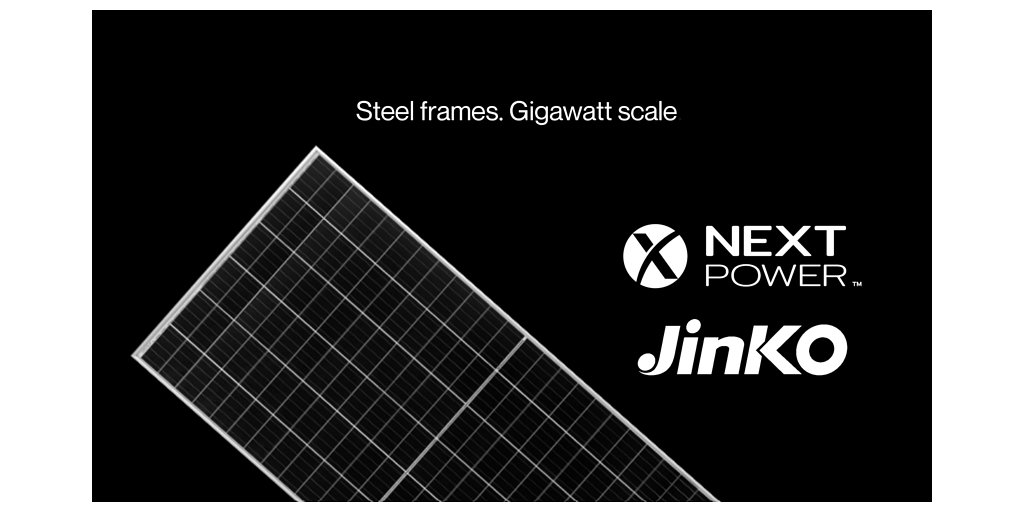
Nextpower, Jinko Solar Forge Gigawatt Deal for US-Made Steel Frames
FREMONT, CA – February 17, 2026 – In a landmark move poised to significantly strengthen the U.S. solar manufacturing base, intelligent power generation firm Nextpower™ announced a multi-year, gigawatt-scale supply agreement with Jinko Solar (U.S.) Industries Inc., one of the nation's longest-operating solar module manufacturers. The deal will see Nextpower supply its U.S.-manufactured steel module frames for Jinko Solar’s rapidly expanding production facility in Jacksonville, Florida, marking a pivotal moment for domestic supply chain localization and the adoption of next-generation, high-durability materials.
Under the terms of the agreement, Nextpower is set to provide an initial volume of over one gigawatt (GW) of its advanced steel frames, with a pathway to scale up to 3 GW over a three-year period. Production and delivery are slated to begin in mid-2026, directly supporting Jinko Solar’s ambitious U.S. output goals. This partnership represents Nextpower's second major commercial order for its steel frames and serves as powerful market validation for the technology, which promises enhanced structural integrity and cost-effectiveness for utility-scale solar projects.
Bolstering America's Solar Supply Chain
The agreement arrives at a critical juncture for the American clean energy sector, which is being reshaped by federal policies designed to onshore manufacturing and reduce reliance on foreign supply chains. The Inflation Reduction Act (IRA) has been a primary catalyst, offering a lucrative 10% domestic content bonus tax credit for projects that meet specific sourcing requirements. This Nextpower-Jinko Solar pact directly addresses those incentives.
According to U.S. Treasury Department guidance, domestically manufactured steel and iron components are crucial for qualifying for the bonus. The use of U.S.-made steel frames, like those produced by Nextpower, can contribute six percent to a project’s domestic content calculation, making it a highly attractive option for developers aiming to maximize federal support. This deal exemplifies the industrial strategy envisioned by the IRA, where policy incentives directly fuel domestic manufacturing ecosystems.
“This agreement with Jinko Solar represents clear market validation of steel frames as a reliable and cost-effective solution that supports both module durability and U.S. manufacturing priorities,” said Dan Shugar, founder and CEO of Nextpower. “It also reinforces how the U.S. solar industry is industrializing, aligning domestic manufacturing, policy incentives, and proven technology at gigawatt scale.”
To further streamline logistics and deepen its commitment to localization, Nextpower announced plans to expand its manufacturing presence into the Southeastern United States. This strategic move will enable direct, efficient supply to Jinko Solar’s Jacksonville facility, reducing transportation costs and reinforcing the regional supply chain. This follows a broader trend for the company, which has opened or expanded over 25 U.S. factories since 2021, including a recent expansion of its steel component manufacturing in Memphis.
The Engineering of Durability: Steel's Rise in Solar
Beyond the economic and policy implications, the shift toward steel frames marks a significant technological evolution in solar module design. While aluminum has long been the industry standard, steel offers superior structural properties that are becoming increasingly vital as solar projects are deployed in more challenging environmental conditions.
Independent testing and engineering data have consistently demonstrated steel’s advantages, including greater torsional stiffness and reduced deflection under heavy mechanical loads from wind and snow. This enhanced rigidity helps protect the fragile solar cells within the module from microcracks, a common cause of long-term performance degradation and failure. For project developers and asset owners, this translates into improved long-term reliability, lower maintenance costs, and a more resilient energy infrastructure.
This focus on durability is a key driver for project developers. “Arevon is excited about Nextpower’s introduction of advanced solar module frames that enhance module durability and are designed and manufactured in the USA,” commented Justin Johnson, COO of utility-scale solar developer Arevon. “Nextpower’s focus on component and system reliability is greatly welcomed for solar projects, especially in areas of extreme weather.”
Jinko Solar’s adoption of these frames aligns perfectly with its own focus on product robustness. “Improving module durability and strengthening domestic supply chains are closely linked priorities and areas where Jinko Solar has long been a leader,” stated Nigel Cockroft, General Manager at Jinko Solar (U.S.) Industries Inc. “Partnering with Nextpower to integrate domestically produced steel frames into our U.S. modules is a natural extension of that leadership, aligning with U.S. manufacturing priorities, while delivering greater durability at scale for customers and the broader solar industry.”
A Strategic Alliance for Market Leadership
The partnership is a calculated strategic play for both companies, positioning them to capitalize on the booming U.S. solar market. For Jinko Solar, the agreement secures a stable, domestic supply of a critical component needed to fuel its aggressive expansion in Jacksonville. The facility, which opened in 2019 with a 400 MW capacity, has since announced plans to scale to 2 GW and ultimately 3 GW of annual module assembly capacity. This agreement with Nextpower ensures that its frame supply can keep pace with this exponential growth while simultaneously bolstering the domestic content value of its final product.
For Nextpower, the deal solidifies its role as a key technology provider across the solar value chain. Already a leader in solar tracker systems, the company’s success with advanced steel frames diversifies its offerings and cements its U.S. manufacturing strategy. Securing a tier-one partner like Jinko Solar sends a powerful signal to the market about the viability and benefits of its steel frame technology.
The collaboration underscores a broader industry trend where procurement decisions are increasingly influenced not just by upfront cost, but by long-term reliability, climate resilience, and supply chain security. As the solar industry continues to scale, the ability to source high-performance, domestically produced components will become a decisive competitive advantage. This agreement between Nextpower and Jinko Solar is a clear blueprint for that future, demonstrating how strategic partnerships can simultaneously drive technological innovation and rebuild America’s industrial might in the clean energy sector.
Topics & Related
Digital Transformation
Trade Wars & Tariffs
Clean Energy Transition
Revenue
Related Company Pulse