
- 47,000 tons of CO₂-equivalent emissions prevented annually (EPA metrics)
- 610,000 MMBtu annual capacity of renewable gas, with 340,000 MMBtu projected for the first year
- 99% methane purity achieved through advanced purification technology
Experts view this project as a model for sustainable waste management, demonstrating how landfill emissions can be transformed into clean energy through innovative technology and strategic partnerships.
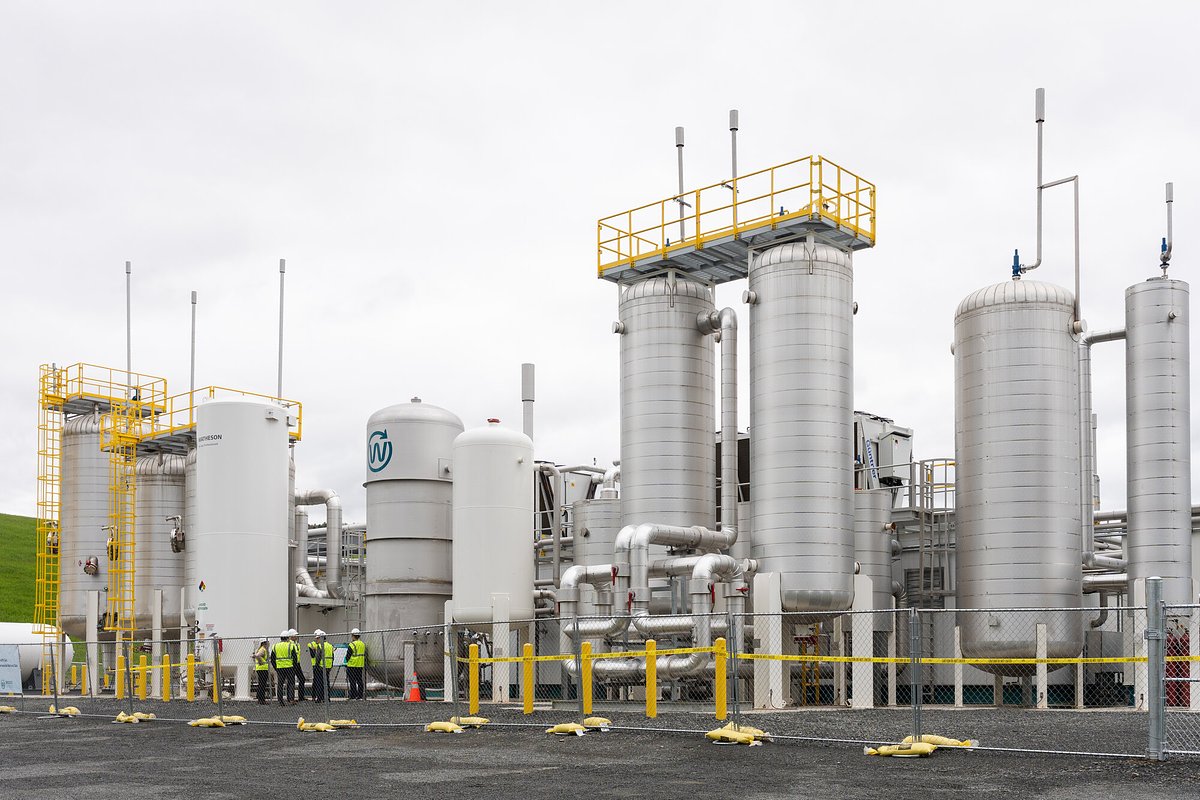
New York Landfill Now a Green Energy Hub with New RNG Facility
ELMIRA, NY – May 14, 2026 – What was once simply a final destination for waste is now a source of clean energy for Upstate New York. Casella Waste Systems and French energy-tech firm Waga Energy officially unveiled a state-of-the-art Renewable Natural Gas (RNG) production facility today at the Chemung County Landfill. The project, which has been quietly turning landfill emissions into pipeline-quality natural gas since January, represents a major leap forward in the region's approach to sustainability and the circular economy.
The ribbon-cutting ceremony celebrated the fusion of waste management and energy production, a partnership that transforms a potent greenhouse gas into a valuable, domestically produced fuel. The facility captures methane-rich gas produced by decomposing organic matter in the landfill and, using a sophisticated purification process, upgrades it for direct injection into the local gas grid.
“We’re excited to celebrate the opening of this facility as it represents a key piece of our strategy coming to life,” said Ned Coletta, President and CEO of Casella Waste Systems, Inc., during the ceremony. The project underscores a strategic pivot for the waste management giant, focusing on resource creation rather than mere disposal.
The Technology Turning Emissions into Energy
At the heart of the Chemung County facility lies the WAGABOX®, a patented technology developed by Waga Energy. This system tackles one of the biggest challenges in waste-to-energy conversion: purifying raw landfill gas, a volatile mix of methane, carbon dioxide, nitrogen, and other trace elements, to meet the stringent quality standards of public gas networks.
The WAGABOX® unit employs a unique dual-process method that combines membrane filtration with cryogenic distillation. While membrane systems are effective at separating carbon dioxide from methane, they often struggle with nitrogen, an inert gas that can reduce the energy content of the final product. By integrating cryogenic distillation—a process that cools the gas to extremely low temperatures to separate its components—the system can efficiently remove nitrogen, achieving a methane purity of over 99%. This high level of purity is critical for pipeline injection and ensures the RNG is a true substitute for conventional natural gas.
The environmental implications are substantial. The facility is designed to prevent more than 47,000 tons of CO₂-equivalent emissions each year, according to U.S. Environmental Protection Agency (EPA) metrics. This is achieved by capturing and utilizing methane, a greenhouse gas over 25 times more potent than carbon dioxide at trapping heat in the atmosphere. By converting this liability into an asset, the project not only mitigates climate impact but also improves local air quality by reducing the release of other volatile organic compounds found in landfill gas.
A Blueprint for Sustainable Infrastructure
The project's innovative financial and operational structure may be as significant as its technology. Rather than undertaking the massive capital investment and technical learning curve themselves, Casella entered into a 20-year partnership with Waga Energy. Under the agreement, Waga Energy funded, built, and now owns and operates the facility, while sharing the revenue from the gas sales with Casella.
This collaborative model provides a powerful blueprint for accelerating the development of green infrastructure. It allows landfill operators like Casella to create new, sustainable revenue streams and achieve ESG goals without diverting capital from their core business. For technology specialists like Waga Energy, it provides access to the necessary feedstock—the landfill gas—to deploy their solutions at scale.
“We made the decision several years ago to find great partners to develop these RNG projects at our facilities rather than invest the capital and embark on projects that are outside the scope of our expertise,” Coletta explained. “This project is a great example of the benefits of that approach.”
This model is gaining traction across the renewable energy sector, as it effectively de-risks complex projects by aligning the expertise and incentives of all partners. Waga Energy is incentivized to maximize production efficiency, while Casella benefits directly from the volume of high-quality gas sold.
“The successful commissioning of the Chemung facility demonstrates the strength of our partnership and Casella's leadership in renewable energy development,” added Guénaël Prince, CEO of Waga Energy Inc. “This project showcases how innovative collaboration can turn waste into a valuable resource for the energy transition.”
Fueling the Future in Upstate New York
The tangible output of this high-tech collaboration is now flowing directly into the Valley Energy natural gas distribution network, serving homes and businesses in the region. The facility has a designed annual capacity of up to 610,000 MMBtu (million British thermal units) of renewable gas. For its inaugural year, it is projected to produce 340,000 MMBtu, an amount of energy equivalent to what is provided by 2.4 million gallons of diesel fuel.
This infusion of locally sourced, renewable gas enhances regional energy security and diversifies the local energy portfolio, reducing reliance on fossil fuels from other regions. For the local community, the benefits extend beyond cleaner energy. The capture and processing of landfill gas can significantly mitigate odors, a common concern for residents living near landfills, and the project creates skilled jobs in a growing green-tech sector.
Riding the Green Wave of RNG
The Chemung County project is not happening in a vacuum. It is part of a massive expansion in the Renewable Natural Gas market across North America, which currently holds about 45% of the global market share. Driven by aggressive decarbonization goals and strong regulatory tailwinds, the industry is booming. Projections show the global RNG market could more than double in value over the next decade, reaching nearly $30 billion by 2035.
This growth is fueled by powerful economic incentives. The federal Renewable Fuel Standard (RFS) creates a market for tradable credits, known as Renewable Identification Numbers (RINs), which can make RNG projects highly profitable. State-level programs, like California's Low Carbon Fuel Standard (LCFS), provide additional revenue streams for producers of low-carbon fuels. Furthermore, the Clean Fuel Production Tax Credit (Section 45Z), set to take effect in 2025, will offer further support based on a fuel's greenhouse gas emissions performance, directly benefiting high-purity RNG.
The transportation sector, in particular, has become a major end-user, with heavy-duty trucks and fleet vehicles transitioning to RNG to meet emissions targets. For Casella, the Chemung facility is a cornerstone of its broader sustainability strategy, which increasingly views waste not as a problem to be buried, but as a resource to be managed and monetized in a continuous cycle.