
- $4.2 billion: The industrial wearable market in 2024, projected to triple by 2033.
- 63% decrease: Reduction in heat-related medical emergencies with AI-powered smartwatches in construction.
- 40% reduction: Injury rates in warehousing and logistics with wearable tech.
Experts agree that proactive, real-time monitoring of workers' physiological and environmental data significantly enhances workplace safety and reduces injury rates.
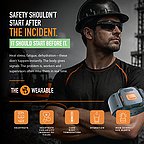
New Wearable Tech Aims to Predict and Prevent Workplace Disasters
PLANO, Texas – May 12, 2026 – A new connected safety platform is aiming to shift industrial safety from a reactive checklist to a proactive, life-saving system by monitoring workers' bodies and their environment in real time. Technology firm Zackat Labs, in collaboration with AT&T Business and RCW Energy Services, has unveiled a system that combines a physiological monitoring wearable with an integrated gas detector, designed to warn workers and supervisors of dangers like heat stroke and toxic gas exposure before they become critical.
The launch enters a rapidly growing market for connected worker technology, where the goal is no longer just to respond to accidents but to prevent them entirely. By providing a continuous stream of data from the field, the platform promises to give companies an unprecedented ability to protect their most valuable asset: their people.
A Digital Guardian for Industrial Workers
The cornerstone of the new platform is the W3, a wearable device that functions as a digital guardian for workers in demanding environments. Worn by an employee, the device continuously tracks vital physiological parameters, including core body temperature and heart rate variability, which are key indicators of heat stress, fatigue, and dehydration.
This data is transformed into objective warnings that are triggered before a worker reaches a dangerous threshold. Should the system detect a potential health risk, it sends immediate alerts to supervisors' mobile phones and a central dashboard. This allows for prompt intervention, such as mandating a rest period or providing water, mitigating the risk of a serious health incident.
Complementing the physiological monitoring, the platform includes a single- and four-gas monitor that connects to the W3 wearable via Bluetooth. This integration ensures that alerts for hazardous gas exposure are delivered through the same unified system, providing a comprehensive safety net for environments where both physical strain and atmospheric dangers are present.
"This innovative platform represents a significant leap forward in worker health and safety," said Brent Barrs, Vice President of Sales at Zackat Labs, in a statement. "By integrating physiological monitoring with environmental gas detection into a single, connected system, we are empowering companies to protect their workforce more efficiently and effectively against heat stress and gas hazards."
Zackat Labs' entry into this space places it within a burgeoning industrial wearable market valued at over $4.2 billion in 2024 and projected to more than triple by 2033. It joins a competitive field of established safety giants like Honeywell and MSA Safety, as well as specialized tech firms, all racing to provide integrated solutions that combine biometric data, environmental sensing, and advanced connectivity.
From the Field: Proving the Concept
For companies operating at the sharp end of hazardous industries, this technology addresses an urgent need. RCW Energy Services, a Texas-based provider of support services for the oil and gas and construction sectors, is not only an early adopter but also a distributor of the W3 solution.
Their field technicians frequently work in punishing conditions where the risk of heat stress is constant. "W3 gives our service technicians advanced, objective warnings of dangerous heat stress conditions, so they can act before an incident occurs," noted Brian Green, President of RCW Energy Services. "We're encouraging other service companies to adopt this technology to protect the health and safety of their crews."
The efficacy of such proactive monitoring is supported by a growing body of evidence. A recent study in the construction sector found that implementing AI-powered smartwatches for real-time heat monitoring led to a 63% decrease in heat-related medical emergencies. Similarly, other case studies in warehousing and logistics have shown that wearable technology can reduce injury rates by over 40% by identifying and correcting risky behaviors.
The timing of this technological push is critical, as regulatory bodies are also taking notice. The U.S. Occupational Safety and Health Administration (OSHA) is advancing a proposed rule for "Heat Injury and Illness Prevention in Outdoor and Indoor Work Settings," which would likely mandate employee monitoring and hazard alerts—functions directly addressed by systems like the W3 platform.
The Invisible Backbone of Real-Time Safety
Underpinning this real-time safety net is a robust and secure communications infrastructure provided by AT&T Business. The near-instantaneous transmission of data from a worker in a remote field to a supervisor's smartphone is made possible by AT&T's cellular IoT connectivity. In environments where a few seconds can make a critical difference, the reliability of this connection is paramount.
To manage a potentially massive fleet of devices, Zackat Labs will utilize the AT&T Control Center. This industry-leading platform allows for the centralized deployment, management, and scaling of thousands of connected devices, simplifying everything from activation to day-to-day oversight.
For AT&T, this partnership is a key part of its strategy to power the next generation of industrial IoT. By providing the secure and scalable connectivity essential for critical applications, the company positions itself as an indispensable enabler of digital transformation in sectors where safety and efficiency are inextricably linked.
The Business Case for Proactive Protection
While the primary motivation for adopting connected safety technology is the well-being of employees, a compelling business case is accelerating its adoption across the oil and gas, construction, and manufacturing industries. The cost of a single serious incident—in terms of lost workdays, insurance premium hikes, regulatory fines, and damage to company reputation—can be immense.
By investing in proactive monitoring, companies are finding a significant return on investment. Data from early adopters of wearable safety tech points to dramatic reductions in workers' compensation claims, sometimes by as much as 60%, and improved overall operational efficiency. Preventing just one serious injury can often pay for the cost of deploying the technology across an entire team.
As adoption grows, the vast amounts of data collected by these devices will offer even greater benefits. Aggregated, anonymized data can reveal previously invisible patterns, identifying high-risk tasks, locations, or times of day. This allows safety managers to move beyond individual interventions and redesign work processes themselves, engineering a safer and more productive environment for everyone.