
- 54% reduction in risk of death with gotistobart compared to standard chemotherapy
- 63.1% survival rate at 12 months for gotistobart patients vs. 30.3% for chemotherapy
- 20% objective response rate with gotistobart, over four times higher than docetaxel (4.8%)
Experts view gotistobart as a highly promising immunotherapy that significantly improves survival outcomes for advanced lung cancer patients, though careful management of immune-related side effects remains essential.
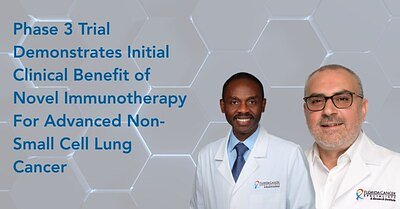
New Immunotherapy Offers Major Survival Hope for Advanced Lung Cancer
FORT MYERS, FL – April 07, 2026 – In a significant development for one of the deadliest cancers, a novel immunotherapy drug has shown a dramatic survival benefit for patients with an advanced, hard-to-treat form of lung cancer. Initial findings from Stage 1 of a global Phase 3 clinical trial, published in the prestigious journal Nature Medicine, reveal that gotistobart significantly extends the lives of patients with metastatic squamous non-small cell lung cancer (NSCLC) whose disease has progressed after standard treatments.
The results from the PRESERVE-003 trial offer a beacon of hope for a patient population with a grim prognosis and few effective options. The study, which included participation from Florida Cancer Specialists & Research Institute (FCS), demonstrated that gotistobart reduced the risk of death by 54% compared to standard chemotherapy.
A New Lifeline for a High-Unmet Need
Lung cancer remains the leading cause of cancer-related deaths worldwide, and for patients with squamous NSCLC that has spread and resisted prior therapies, the outlook is particularly challenging. Once patients have progressed through initial treatments—typically a combination of platinum-based chemotherapy and a PD-1/PD-L1 checkpoint inhibitor—their next line of defense is often limited to chemotherapy drugs like docetaxel, which offer modest benefits alongside significant side effects.
"Lung cancer remains the leading cause of cancer deaths worldwide and treatment options have historically been limited," said Gustavo A. Fonseca, MD, FACP, FCS director of research and clinical trials. "FCS clinical research is contributing to discoveries that are revolutionizing the treatment of these and other advanced cancers."
The PRESERVE-003 trial was designed to address this critical gap. It enrolled patients whose disease had worsened after receiving both standard immunotherapy and chemotherapy, pitting the investigational drug gotistobart directly against docetaxel. The control arm of the study underscored the existing challenge: patients receiving docetaxel had a median overall survival of just 10 months, with only 4.8% experiencing tumor shrinkage.
Unpacking the PRESERVE-003 Results
The early data from the trial's non-pivotal stage, presented at the European Lung Cancer Congress, has generated considerable excitement in the oncology community. The primary endpoint was overall survival (OS), the gold standard for measuring a cancer drug's effectiveness.
For patients receiving gotistobart, the results were striking. After a median follow-up of 14.5 months, the median overall survival had not yet been reached, indicating that more than half of the patients were still alive. This stood in stark contrast to the 10-month median survival in the docetaxel group. At the 12-month mark, 63.1% of patients on gotistobart were alive, compared to only 30.3% of those on chemotherapy.
"The clear separation in OS curves is highly encouraging," commented one independent thoracic oncology expert not involved in the study. "For a patient population with such limited options, seeing early survival data that is this impressive is truly intriguing."
While the drug did not significantly improve the median time it took for the cancer to progress (progression-free survival, or PFS), it showed a powerful, durable effect in a subset of patients. At one year, 25.2% of patients on gotistobart were alive without their cancer worsening, whereas no patients in the docetaxel group were. This pattern is a known hallmark of successful immunotherapies, which can provide long-lasting control for responders. The objective response rate—the percentage of patients whose tumors shrank—was also more than four times higher with gotistobart (20% vs. 4.8%).
The Science Behind Gotistobart: A "Smarter" Immunotherapy?
Gotistobart, co-developed by BioNTech and OncoC4, represents a next-generation approach to a class of drugs known as CTLA-4 inhibitors. These therapies work by releasing a natural brake on the immune system, allowing T cells to more effectively attack cancer. However, first-generation CTLA-4 inhibitors, like ipilimumab, are often associated with significant immune-related side effects that can limit their use.
Gotistobart is designed to be more precise. It features a unique pH-sensitive property that allows it to selectively deplete regulatory T cells (Tregs)—a type of immune cell that suppresses anti-tumor responses—primarily within the acidic tumor microenvironment. The goal is to unleash a powerful attack on the cancer while minimizing collateral damage to healthy tissues, potentially leading to a better safety profile.
The safety data from PRESERVE-003 showed that gotistobart's side effects were manageable, though not absent. The rate of severe treatment-related adverse events was slightly lower than docetaxel (42.2% vs. 48.8%). However, about 60% of patients experienced some form of immune-related side effect, and 13.3% had to discontinue treatment due to these events, compared to 4.9% in the chemotherapy arm. This nuanced profile highlights that while the drug is highly effective, careful patient management remains critical.
From Global Trials to Local Clinics
The success of a major global trial like PRESERVE-003 relies heavily on a network of dedicated research centers, including community-based practices. Florida Cancer Specialists & Research Institute played a key role, with its lung cancer experts, Dr. Adewale Fawole and Dr. Fadi Kayali, serving as co-authors on the Nature Medicine publication.
This involvement underscores a vital trend in modern oncology: bringing cutting-edge research directly to patients where they live. Through its partnership with Sarah Cannon Research Institute, FCS provides access to more than 180 clinical trials across Florida, allowing patients to participate in studies for drugs that may become the standard of care years before they are widely available.
Following the promising early results, the PRESERVE-003 trial has advanced into its pivotal stage. The study is now focused exclusively on enrolling patients with squamous NSCLC to confirm these findings in a larger population, a necessary step toward potential regulatory approval. While the journey is not over, the initial data has forged a new path forward, offering substantial hope for patients and families affected by this devastating disease.
Topics & Related
Oncology
Revenue
Related Company Pulse