
- $23 trillion: Estimated untapped value of the Congo Basin's forests.
- 4%: Share of global conservation funding received by the Congo Basin between 2017 and 2021.
- 590,000 hectares: Record primary forest loss in the Democratic Republic of Congo in 2024.
Experts view the Congo Basin Forest Finance Facility as a critical step toward unlocking private investment for conservation, leveraging blended finance to address long-standing structural barriers while emphasizing regional leadership and local empowerment.
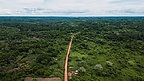
New Finance Facility Aims to Unlock Billions for Congo Basin Forests
WASHINGTON, DC – May 15, 2026 – A landmark partnership announced today aims to channel significant private investment into protecting the Congo Basin, the world's second-largest rainforest, by creating a new financial vehicle designed to overcome decades-old investment hurdles.
The World Institute for Conservation and Environment (WICE) and the Central African Forests Commission (COMIFAC) have signed a Memorandum of Understanding to develop the Congo Basin Forest Finance Facility. The initiative seeks to mobilize large-scale private capital for a region that is critical for global climate stability but has remained chronically underfunded.
Under the agreement, the two organizations will design a blended finance platform to build a pipeline of investable, nature-based projects focused on sustainable forestry, carbon finance, and biodiversity. WICE, a global women-owned development network, will provide technical expertise, while COMIFAC, the intergovernmental body representing 11 nations in the region, will supply political leadership and ensure regional coordination.
"The Congo Basin is one of the most important natural assets on the planet, yet it remains underfinanced," said Emily Weeks, Co-founder and CEO of WICE. "This Facility is designed to bridge that gap by building credible, investment-ready opportunities that protect forests, support communities, and unlock long-term capital at scale."
An Ecosystem at a Tipping Point
The urgency for such an initiative is stark. The Congo Basin, spanning approximately 3.7 million square kilometers, is a global heavyweight in climate regulation, storing an estimated 65 gigatons of carbon. It also supports the livelihoods of over 100 million people, including numerous Indigenous communities whose cultures and economies are inextricably linked to the forest.
Despite its importance, the region receives a disproportionately small share of global conservation funding. Between 2017 and 2021, the Congo Basin attracted only 4% of global finance for forest protection. Meanwhile, the threats are mounting. The Democratic Republic of Congo (DRC), home to 60% of the basin's rainforest, saw a record 590,000 hectares of primary forest loss in 2024. Drivers of deforestation range from small-scale agriculture and illegal logging to the increasing frequency of climate-change-induced fires.
While the World Bank estimates the basin's forests hold over $23 trillion in untapped value, a combination of structural barriers has historically scared off the private investment needed to realize this potential sustainably.
A New Blueprint for Conservation Finance
The Congo Basin Forest Finance Facility aims to change this dynamic by directly confronting the barriers that have long plagued the region. Its core is a blended finance model, an approach that uses public or philanthropic funds to "de-risk" projects, making them more attractive to private investors. This strategy has seen success in other conservation areas, such as the World Bank's "Rhino Bond" in South Africa.
The Facility will operate through a three-window structure designed to build a functioning market from the ground up:
- Enabling Environments: Focusing on policy alignment and strengthening governance.
- Project Preparation: Providing the technical assistance and seed funding needed to develop a pipeline of bankable projects.
- Large-Scale Capital Deployment: Mobilizing and channeling major private investment into mature, investment-ready opportunities.
This structure is intended to systematically dismantle hurdles like complex land tenure, the high perception of political risk, and the lack of project-ready pipelines. By creating a more stable and predictable investment environment, the partners believe they can attract capital that has traditionally flowed to other regions.
Regional Leadership and Local Empowerment
A crucial element of the new initiative is its emphasis on regional leadership. COMIFAC's central role ensures that the Facility's priorities are aligned with the development goals of the 11 member states. This marks a significant shift towards regional ownership in tackling environmental and economic challenges.
"This partnership reflects the region's commitment to leading its own sustainable development pathway," stated Hervé Martial Maidou, Executive Secretary of COMIFAC. "By aligning policy, investment, and local priorities, the Facility will strengthen forest economies while preserving the ecosystems that millions depend on."
Beyond high-level policy, the initiative's success will be measured on the ground. The Facility's initial focus areas—sustainable forestry, reforestation, and community-based forest enterprises—are explicitly designed to benefit the local populations. For decades, models like community forestry have shown promise but have struggled with inconsistent legal support and implementation. The new Facility aims to provide the financial and governance backbone needed to make these local enterprises viable and scalable.
Ensuring that Indigenous peoples and local communities are not just participants but primary beneficiaries is a stated goal. The framework includes the establishment of robust governance safeguards across environmental, social, and economic standards, which will be critical for securing land rights and ensuring equitable benefit-sharing.
The development will proceed in phases, beginning with a USD $2 million structuring round to design the operational and governance mechanics. The journey is long, but the partnership represents a strategic and hopeful new chapter for the protection of one of Earth's most vital ecosystems. The success of this ambitious facility will depend on its ability to translate this collaborative framework into tangible, equitable, and lasting change on the ground.